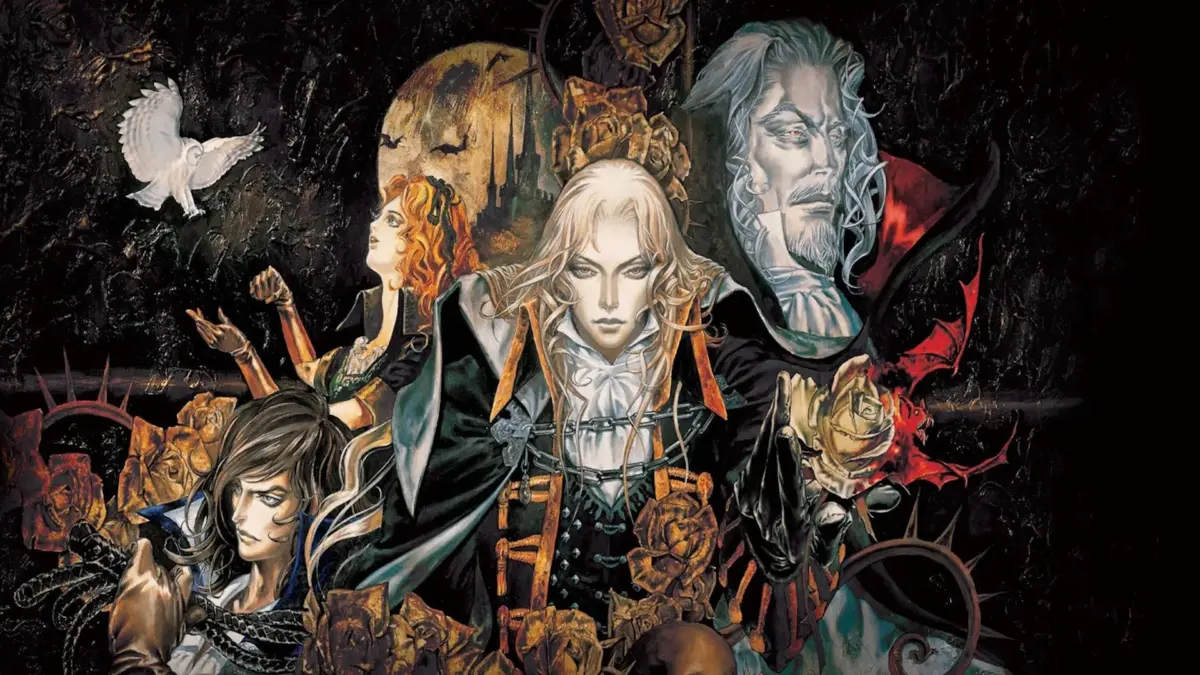
Few franchises in the history of interactive entertainment hold the enduring cultural footprint and atmospheric prestige of Konami’s Castlevania. Despite a notable thirteen-year hiatus that left fans wondering if the legendary vampire-hunting saga had been permanently consigned to the crypts of gaming history, the series recently roared back to life with the launch of Castlevania: Belmont’s Curse. This long-awaited revival has reminded players why the centuries-old battle between the Belmont clan and the forces of darkness continues to capture the imagination.

Over the decades, the franchise has evolved through multiple generations of hardware, shifting from linear 8-bit platformers to sprawling exploratory masterpieces and striking modern interpretations. With such a vast library of titles spanning various genres and design philosophies, diving back into the gothic lore can feel like navigating the shifting halls of Dracula’s castle itself. To help both returning veterans and curious newcomers find their footing, here is a comprehensive look back at the eight finest entries the series has ever produced, ranked from their classic roots to their most groundbreaking achievements.
8. Super Castlevania 4
When the franchise made its transition to the Super Nintendo Entertainment System, Konami faced the monumental task of proving the capabilities of Nintendo’s new 16-bit hardware. Released on October 31, 1991, Super Castlevania 4 answered that call with striking visual panache and refined mechanics. The game introduced a revolutionary multi-directional whip control, allowing protagonist Simon Belmont to lash out in eight different directions, even while airborne. Players could also use the whip as a defensive shield or grapple onto distant architectural points, vastly expanding the mobility options available in traditional platformers. Utilizing early Mode 7 graphical rotation and sophisticated parallax scrolling, the game brought its static gothic environments to vivid, eerie life. Beginning its journey on the harsh exterior grounds before plunging players deep into the labyrinthine halls of the castle, Super Castlevania 4 remains a quintessential starting point, conveniently accessible today through the Castlevania Anniversary Collection across modern platforms.

7. Castlevania: Bloodlines
The Super Nintendo was not the exclusive home for stellar 16-bit vampire hunting. Released on March 17, 1994, Castlevania: Bloodlines carved out its own unique identity on the Sega Genesis by introducing a distinct protagonist who wielded a spear rather than the traditional whip. This weapon mechanic allowed players to access vertical routes and alternate paths closed off to the traditional playstyle. Captured in the fast-paced, high-intensity design philosophy typical of many Genesis titles of the era, Bloodlines adopted a more modern historical setting, placing its narrative against the backdrop of World War I. Stages drew inspiration from real-world landmarks across Europe, such as the Leaning Tower of Pisa. Coupled with impressive hardware-driven visual effects and an evocative musical score composed by Michiru Yamane—who would later define the sonic identity of the franchise—this entry stands as a uniquely bold and memorable chapter.
6. Castlevania Chronicles
Originally developed by Konami for the Sharp X68000 personal computer in Japan under the title Akumajo Dracula, Castlevania Chronicles eventually found a broader audience when it arrived on July 23, 1993. Serving as a thorough reimagining of the original 1986 series debut, this iteration elevated the classical platforming style with drastically overhauled visuals, a moody soundscape, and some of the most unforgiving, high-difficulty challenges the franchise had ever engineered. While it maintained the strict linear structure of early games, clever adjustments to enemy layouts and stage design kept seasoned players on edge. For years, digital versions of its polished PlayStation port remained accessible via legacy hardware ecosystems, offering purists a definitive look at how the foundational adventure was originally envisioned by its creators.

5. Castlevania: Rondo of Blood
Had its distribution matched its immense quality, Castlevania: Rondo of Blood might universally be regarded as the absolute pinnacle of the classic linear style. Initially released on October 29, 1993, the game remained trapped as an exclusive for the PC Engine CD system in Japan for over a decade, preventing mainstream western audiences from experiencing it as intended. North American players instead received Dracula X on the Super Nintendo, a compromised adaptation that attempted to compress the grand scale of Rondo of Blood into a standard cartridge format with altered stage layouts and diminished presentation. Rondo of Blood itself featured breathtaking CD-quality audio, branching stage pathways, multiple playable characters, and vital narrative events that set the direct stage for subsequent masterpieces. Its eventual western ports ensured that modern audiences could finally appreciate the richness of a game that serves as a vital bridge in the series timeline.
4. Castlevania: Aria of Sorrow
Arriving on May 6, 2003, for the Game Boy Advance, Castlevania: Aria of Sorrow proved that intricate, deep gameplay systems could thrive on pocket-sized hardware. Taking place during the first solar eclipse of the 21st century, the narrative follows Soma Cruz, an ordinary young man who finds himself trapped inside Dracula’s resurrected castle. Players soon discover that Soma possesses a unique ability: he can absorb the souls and tactical essences of the monsters he defeats, incorporating their powers into his own arsenal. This innovative mechanic gave the game immense mechanical depth, allowing for varied combat builds and exploration strategies. Though sharing a hardware generation with other notable handheld entries, Aria of Sorrow cemented its legacy through its clever narrative twists and sophisticated design, and it remains easily playable today via modern compilations like the Castlevania Advance Collection.

3. Castlevania 3: Dracula’s Curse
While the foundational 8-bit era established the franchise as a cultural institution, the earliest NES titles often suffered from trial-and-error balancing and uneven pacing. Castlevania 3: Dracula’s Curse, released on December 22, 1989, perfected the formula of its generation. Pushing the NES hardware to its absolute limits, the game introduced multiple playable protagonists, each equipped with entirely distinct movement physics and combat capabilities. These diverse heroes and branching stage trajectories created a sprawling campaign that explored deep lore, later serving as the foundational narrative blueprint for the acclaimed Netflix animated adaptation. By blending challenging platforming with genuine player choice and atmospheric design, Dracula’s Curse stands as the definitive 8-bit masterwork of the franchise.
2. Castlevania: Belmont’s Curse
Marking a triumphant return for the legendary lineage, Castlevania: Belmont’s Curse arrived on October 15, 2026. Striking a delicate balance between historical reverence and forward-thinking design, the title embraced modern 2.5D visual aesthetics to grant each environment a profound sense of depth while retaining the responsive Metroidvania exploration mechanics that fans have cherished for decades. Featuring fluid combat mobility, a stellar atmospheric score that evokes the classic gothic mood, and a compelling new hero stepping up to the mantle, the game has quickly proven itself to be one of the finest modern achievements in the series, offering a tantalizing glimpse into what the future of vampire hunting might hold.

1. Castlevania: Symphony of the Night
Nearly three decades after its original release on October 2, 1997, Castlevania: Symphony of the Night remains an unassailable titan in video game history. The title successfully fused the exploratory, non-linear design philosophy popularized by Nintendo’s Metroid series with the dark, gothic aesthetic and role-playing progression native to Konami’s flagship franchise. Playing as Alucard, the brooding dhampir son of Dracula, players explored a vast, seamless castle filled with terrifying creatures, hidden secrets, and intricate weaponry. The game’s famous twist—revealing that exploring the inverted castle essentially doubled the scope of the adventure—remains one of the most celebrated surprises in interactive entertainment. Supported by timeless sprite art, orchestral compositions, and peerless environmental design, Symphony of the Night continues to stand untouched at the summit of the series.