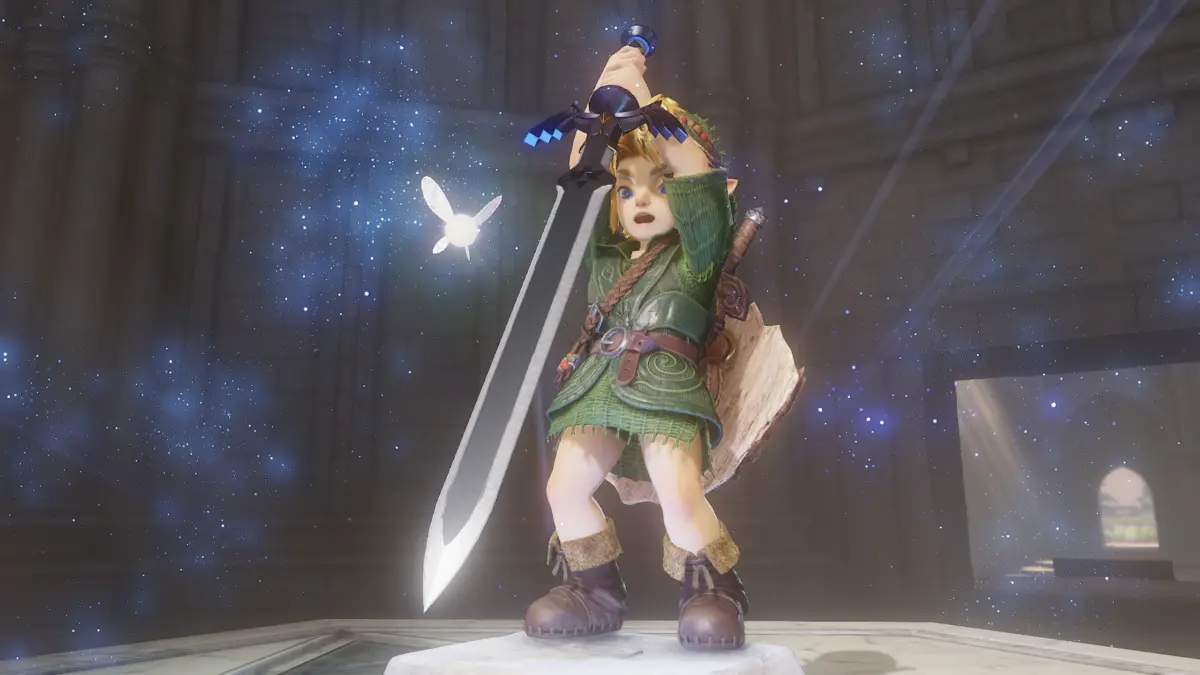
Nearly three decades after it first defined three-dimensional exploration on the Nintendo 64, The Legend of Zelda: Ocarina of Time is making a triumphant return. The newly announced remake for the Nintendo Switch 2 successfully bridges the past and the present, retaining the structural heart of the 1998 classic while infusing it with contemporary graphics, modernized mechanics, and fresh perspectives from a new generation of developers.
Behind this ambitious project are franchise veterans Eiji Aonuma—who served as a director on the original N64 release and now acts as the custodian of the entire Zelda franchise at Nintendo—and Hidemaro Fujibayashi, best known for directing modern open-world masterpieces like The Legend of Zelda: Breath of the Wild and its sequel, Tears of the Kingdom. However, the creative leadership was notably supported by a cohort of younger developers, some of whom had never even played the original game prior to joining the project.
According to Fujibayashi, these fresh voices brought a vital perspective that fundamentally shaped how the remake was approached. Speaking ahead of the game’s launch, Fujibayashi expressed surprise and admiration at how carefully the newer team members handled the legacy property.
“What really impressed me was the fact that they really embraced the theme of what not to change from the original,” Fujibayashi explained, noting that the younger staff approached the project with immense caution. He added that he felt confident they were not pursuing novelty simply for the sake of it, which could have cluttered or compromised the experience. Instead, their focus was on elegance—retaining only what was necessary and important from the original and determining how to carry that philosophy forward. Fujibayashi believes this disciplined mindset is a perspective these younger developers will be able to apply to future projects as well.

A great deal has changed in the video game industry since Ocarina of Time debuted in 1998, and Aonuma possesses the rare perspective of having worked intimately on both iterations. For him, the most staggering difference between then and now lies in the sheer scope and scale of modern game production.
“We used to have maybe just one person designing the backgrounds, and that’s something that you couldn’t do nowadays,” Aonuma noted. While he points out that many underlying production processes remain similar to the N64 days, the scale has expanded exponentially. Modern titles require vastly more time and significantly larger teams, which in turn presents entirely new management challenges.
Player perspectives have also evolved dramatically over the decades. The original Ocarina of Time was Nintendo’s pioneering first attempt to translate The Legend of Zelda into a three-dimensional space. Consequently, certain elements feel distinctly dated by modern standards, such as the inability to freely control the camera or jump at will. This feeling of limitation has only been exacerbated by recent entries in the franchise, which have heavily prioritized player freedom and open-ended exploration. After soaring through the skies on self-built flying machines in Tears of the Kingdom, returning to the linear confines of the original Ocarina can feel restrictive.
To bridge this gap, the development team implemented targeted quality-of-life updates, granting players complete camera control and the ability to jump anywhere. These adjustments serve as vital connective tissue between the retro classic and contemporary gaming standards.

“When you’re developing a game like this with the free jump, we have to adjust the world to compensate for that freedom of the player,” Aonuma acknowledged. Though he admits he was initially uncertain about introducing this mechanic to such a revered title, the execution won him over. “As soon as I felt it I thought, ‘Okay, this is a really good way to give players another way to approach a goal in the game.’ It adds just a little bit more freedom compared to the original Ocarina of Time. For me, bringing forward a little more freedom in this title is helpful because it carries something forward from Breath of the Wild and Tears of the Kingdom. Having that connection to the recent titles I think was really helpful.”
A similar philosophy guided the game’s overhauled visual design, which blends realism with a distinct fantasy art style, setting it apart from other entries in the series. Aonuma explained that the primary goal was to illuminate details of the world that were invisible in the 1998 release—ambitions the original team held but could not achieve due to the hardware limitations of the era.
Despite these modernizations, the core gameplay of Ocarina of Time holds up with remarkable resilience, particularly when compared alongside other early 3D titles. Fujibayashi, who was working at Capcom when the original game was released, vividly remembers anticipating how Nintendo would solve the vexing design problems that plagued early attempts at large 3D environments. Among the most revolutionary solutions was Z-targeting, a mechanic allowing players to lock onto enemies and drastically streamline intuitive combat.
“The solutions are something that still stick with me as a foundation for when I create 3D games,” Fujibayashi said.

For Aonuma, revisiting the project also provided a long-awaited chance to correct elements of the original game that had drawn criticism over the years. Chief among them was Navi, the diminutive fairy companion who guides Link throughout his journey. While well-intentioned, Navi’s frequent interruptions often crossed the line from helpful guidance into an overbearing nuisance. Although Navi remains present in the Switch 2 remake, her incessant chatter has been significantly reined in.
Reflecting on the original development process, Aonuma recalled the constant struggle of guiding players toward the end of an adventure without holding their hands entirely. Navi hints were originally added out of a palpable necessity to supply extra information, but striking the right balance is notoriously difficult. Developers want to avoid giving away solutions outright, preserving an information gap that encourages players to think critically.
“The more hints you add, the more Navi would talk, and that would change the player experience,” Aonuma said. In the remake, the team sought a more comfortable and streamlined solution, utilizing in-game text chronicles to summarize a player’s journey and past accomplishments, thereby helping them track their progress organically.
Another prominent hurdle addressed in the remake is the infamous Water Temple, widely regarded as the most punishing dungeon in the original game. Fujibayashi openly admitted to remembering the dungeon as quite difficult during his initial playthroughs. On the N64, navigating the area required battling an awkward camera and frequently pausing the game to equip essential items. In the Switch 2 version, these friction points have been modernized, granting clearer visibility and smoother underwater navigation. When informed that the new version of the temple feels noticeably more accessible, Aonuma reacted with visible relief.

“I think when people make comparisons from their memory now to the original version of the Water Temple they’re going to feel quite a difference,” Aonuma explained. “So this is really nice to hear. As soon as you said that I thought, ‘We did it.’”
Preserving Ocarina’s traditional gameplay style also carries symbolic importance as the franchise celebrates its 40th anniversary. While Breath of the Wild redefined Hyrule as a sprawling open world, and Echoes of Wisdom blended classic top-down mechanics with inventive new puzzles, Ocarina of Time offers a more focused, linear adventure. Aonuma believes that maintaining these diverse styles across the franchise is precisely what has secured its remarkable longevity.
“You need different approaches,” Aonuma stated, expressing hope that the fresh perspectives of newer developers will sustain this philosophy for decades to come.
“We’ve had opportunities to add to the playbook of Zelda, if you will, and the language of development,” he concluded. “You get to see the progression of these ideas across the franchise. And now, working with younger staff on this remake, we’re having the opportunity to bring in additional new ideas. I really look forward to the future and what’s possible coming from the new staff.”