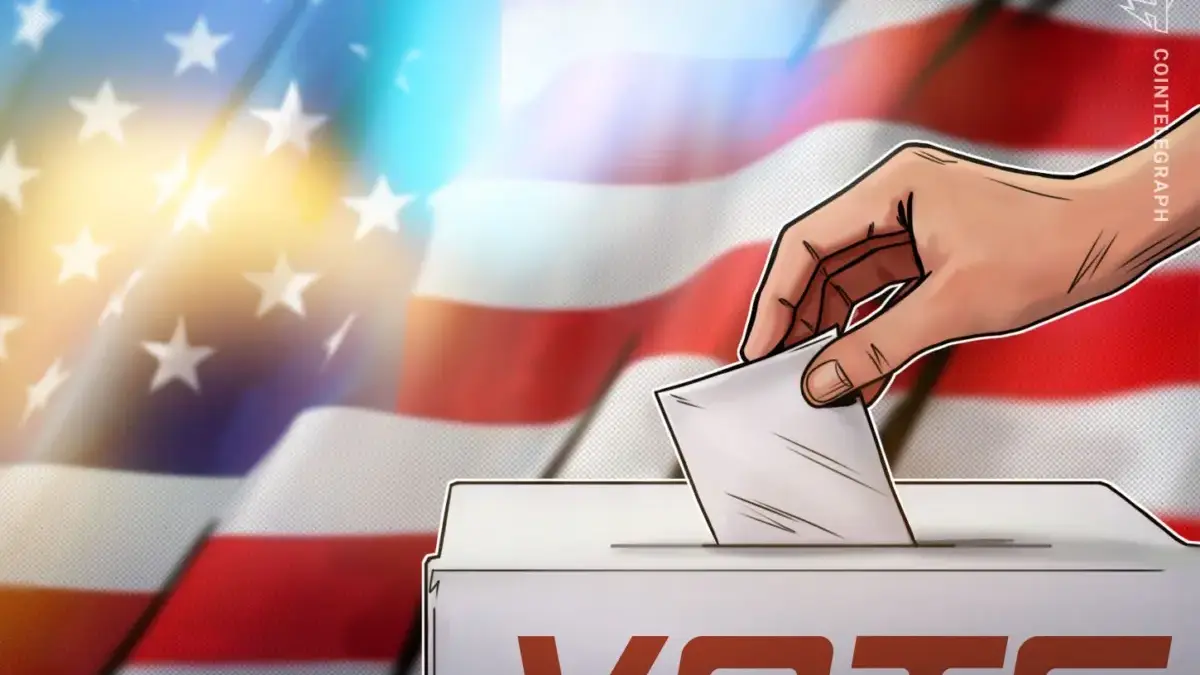
Within the next few hours, the United States will begin to learn whether President Donald Trump’s Republican Party has managed to retain control of the US Congress. The outcome of these high-stakes contests will fundamentally determine the administration’s ability to advance its legislative agenda during the final two years of his term.
Americans headed to the polls on Tuesday for the 2026 midterm elections, with all 435 seats in the US House of Representatives and 35 crucial Senate seats up for grabs. Heading into Election Day, Republicans held a slim majority in both chambers of Congress. The GOP controlled 53 seats in the Senate compared to 45 for the Democrats, alongside two independent lawmakers who caucus with the Democratic minority, and maintained a narrow advantage in the House of Representatives. To flip control of their respective chambers, Democrats needed a net gain of just four seats in the Senate and three seats in the House.
Beyond the broad partisan balance of power, the election results carry monumental implications for the future of US cryptocurrency regulation. The outcome could directly determine the fate of stalled legislative packages, including the CLARITY Act. Furthermore, if Democrats manage to secure a majority in either chamber, it could instantly intensify congressional scrutiny regarding President Trump’s private business ventures and family crypto initiatives. Just last week, Reuters reported that Democratic lawmakers were already preparing a fresh round of aggressive investigations into potential conflicts of interest involving the Trump family’s commercial operations should they capture either congressional branch.
Live election updates
As results roll in, political observers, investors, and industry stakeholders are closely following the latest developments in congressional races that have attracted heavy spending from the cryptocurrency sector. Observers are also tracking live election returns and immediate reactions from prediction markets. Updates on these shifting dynamics are being monitored closely through election data aggregated from the Associated Press.
Crypto super PACs spend millions to influence Congress
The digital asset industry has emerged as an unprecedented financial force during the 2026 election cycle. Crypto industry groups have poured approximately $176 million across more than 100 congressional races, according to data compiled by Reuters.
Fairshake, a dominant political action committee backed by major industry heavyweights including Coinbase, Ripple, and Andreessen Horowitz, has spearheaded the financial blitz through its affiliated super PACs, Defend American Jobs and Protect Progress. In early October, the coalition announced major financial support for 32 incumbent House candidates, comprising 19 Republicans and 13 Democrats. Notably, every single candidate endorsed and backed by the group voted in favor of the CLARITY Act during legislative votes in 2025.
Other prominent crypto-aligned political organizations have also made their presence felt across the map. These include the Digital Freedom Fund, which is heavily backed by Tyler and Cameron Winklevoss, the twin co-founders of major cryptocurrency exchange Gemini. Additionally, Fellowship PAC has actively supported pragmatic candidates from both sides of the political aisle who favor digital asset innovation.
Key crypto races to watch
The sheer scale of financial investment has turned several individual state contests into national battlegrounds for the future of blockchain technology. The Blockchain Association’s dedicated election dashboard identified 62 priority congressional races this cycle—including 18 Senate contests and 44 House races—based on overall competitiveness, the specific digital asset positions of the candidates, and whether incumbents or challengers sit on committees directly overseeing financial technology and digital asset legislation.
Ohio Senate: Jon Husted vs Sherrod Brown
One of the most expensive and fiercely contested races of the cycle is unfolding in Ohio, where Republican Sen. Jon Husted is facing off against Democrat Sherrod Brown, a longtime and vocal critic of the cryptocurrency industry. The matchup has attracted an astounding $63 million in total crypto industry spending alone. This eye-watering sum includes roughly $56 million deployed by Fairshake and another $7 million from the Winklevoss-backed Digital Freedom Fund, with both entities spending heavily to bolster Husted or actively oppose Brown.
Prominent crypto advocacy organization Stand With Crypto characterizes Brown as deeply opposed to the digital asset sector. The group points to 17 separate public statements and his pivotal 2024 vote against a congressional effort to overturn the Securities and Exchange Commission’s controversial SAB 121 crypto custody accounting guidance.
Brown was similarly targeted by heavy industry spending during his 2024 reelection campaign. In that cycle, Fairshake affiliate Defend American Jobs spent more than $40 million supporting Republican challenger Bernie Moreno, who ultimately defeated Brown in a closely watched Senate race.
Nebraska Senate: Pete Ricketts vs Dan Osborn
In Nebraska, Republican Sen. Pete Ricketts is defending his seat against independent challenger Dan Osborn. The contest has drawn significant outside capital, with Fairshake initially allocating nearly $11 million to support Ricketts, according to an October analysis by the Washington Examiner.
More recent campaign finance data shows that the Fairshake-affiliated super PAC Defend American Jobs spent approximately $13.5 million opposing Osborn, based on Federal Election Commission filings compiled by Bankrolled.
Ricketts, a sitting member of the influential Senate Banking Committee, has consistently backed digital asset legislation, including both the CLARITY Act and the GENIUS Act. According to Stand With Crypto records, he voted to advance the CLARITY Act out of committee in May and supported a subsequent, though ultimately unsuccessful, procedural vote on the legislation on the Senate floor in September.
Texas Senate: Ken Paxton vs James Talarico
Down in Texas, Republican candidate Ken Paxton and Democrat James Talarico are locked in a high-profile battle for a Senate seat. Interestingly, the Winklevoss-backed Digital Freedom Fund has thrown its support behind Paxton, even though both candidates have earned favorable “A” ratings from the advocacy group Stand With Crypto.
Paxton has publicly advocated for the passage of the CLARITY Act, arguing that establishing a transparent regulatory framework is vital to keeping the United States globally competitive in digital assets. In a policy statement released in June, he declared that the nation must strive to become the “crypto capital of the world” by deliberately fostering technological innovation and market growth.
On the other side of the ticket, Talarico has similarly called for clear regulatory guardrails that protect everyday consumers while simultaneously giving financial technology room to innovate. During his tenure as a Texas state representative, Talarico also voted in 2025 to establish a state-level strategic Bitcoin reserve, according to official legislative records cited by Stand With Crypto.
Wyoming Senate: Harriet Hageman vs James Byrd
In Wyoming, Republican Rep. Harriet Hageman is squaring off against Democrat James Byrd. The two candidates are competing for the high-profile Senate seat being vacated by Sen. Cynthia Lummis, a pioneering cryptocurrency advocate in Congress who chose not to seek reelection.
Lummis, who serves as the chair of the Senate Banking Subcommittee on Digital Assets, famously sponsored the BITCOIN Act of 2025 to establish a national strategic Bitcoin reserve containing up to one million bitcoins. She has also been a driving force behind both the CLARITY and GENIUS Acts.
Hageman has mirrored Lummis’s pro-crypto voting record in the House. She voted in favor of the CLARITY and GENIUS Acts in 2025, as well as the comprehensive FIT21 market structure bill in 2024. Furthermore, she cosponsored legislation specifically designed to prohibit the Federal Reserve from issuing a central bank digital currency, according to Stand With Crypto. By contrast, the advocacy group lists no documented public position on digital assets for her Democratic opponent, James Byrd.
Maine Senate: Troy Jackson vs Susan Collins
Maine Senator Susan Collins found herself at odds with the digital asset sector when she became one of just four Republicans to oppose advancing the CLARITY Act during a procedural vote in September. Collins, who expressed lingering concerns over the bill’s potential impact on traditional bank deposits, is now fighting to defend her seat against Democratic challenger Troy Jackson.
Unlike Collins, Jackson has embraced the need for clear digital asset legislation in the lead-up to the election. According to Stand With Crypto, which rates Jackson as very pro-crypto, the Democratic candidate has called for an end to the politically motivated debanking of lawful cryptocurrency businesses and has pledged to protect the fundamental right of American citizens to maintain self-custody over their digital assets.
As polls close and the first precincts report their totals, the entire political and financial landscape awaits the final verdict from voters.