
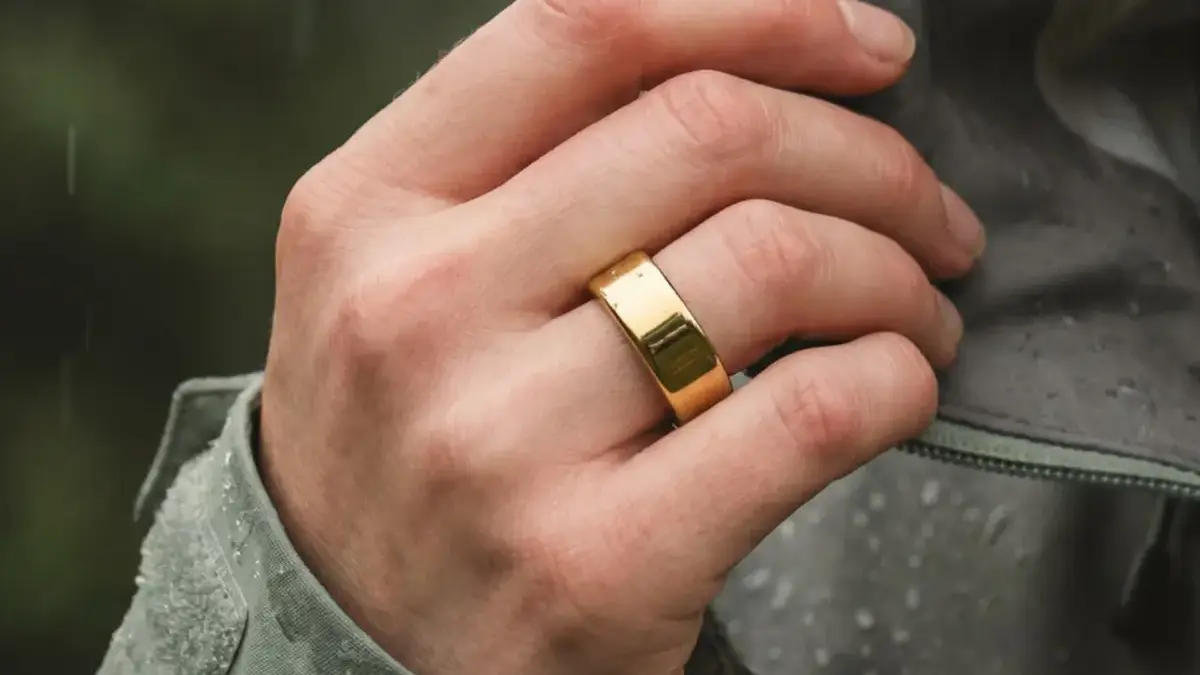
Smart ring pioneer Oura has escalated its legal battle against its Bengaluru-based rival Ultrahuman, filing a fresh patent infringement lawsuit in the United States designed to block the American sales of the startup’s flagship Ring Pro. The legal maneuver comes just months after a product redesign successfully guided Ultrahuman back into the lucrative U.S. market following a damaging import ban.
The federal lawsuit, filed Thursday in a Texas district court, marks the latest escalation in an aggressive campaign by Oura to protect its market dominance against a growing field of competing smart-ring manufacturers. Oura’s legal crosshairs have previously targeted industry heavyweights and emerging players alike, including tech giant Samsung, RingConn, Circular, and Zepp Health.
In its latest complaint, Oura alleges that Ultrahuman’s newly minted Ring Pro infringes upon two distinct patents held by the Finnish wearable technology company. These patents cover both the physical design of the ring and its complex internal architecture, including essential internal hardware components like the battery, circuit boards, magnets, and sensors. Consequently, Oura is pursuing monetary damages alongside a permanent injunction that would effectively halt the importation, manufacturing, and distribution of the Ring Pro within the United States.
The legal confrontation arrives on the heels of a hard-fought market reentry for Ultrahuman. The startup launched its redesigned Ring Pro in February, subsequently securing a favorable clearance ruling from U.S. Customs and Border Protection in March. That decision paved the way for the company to resume its commercial push in the United States, neutralizing an import ban that had previously crippled sales of its earlier model, the Ring Air. The original ban took effect after Oura successfully secured a favorable patent infringement ruling from the U.S. International Trade Commission in August of last year.
An Oura spokesperson pulled no punches when addressing the ongoing rivalry, issuing a statement asserting that Ultrahuman has a clear institutional history of borrowing innovations. According to the company, the 2025 ITC ruling clearly established that infringement took place, and while Ultrahuman introduced a redesigned product, it ultimately failed to resolve the underlying intellectual property overlap. Oura contends that the competitor is simply attempting to capitalize on the multi-year innovation cycles and market leadership Oura has built within the category.
To substantiate its claims, Oura maintains that the previous Customs clearance ruling strictly applied to the specific patent contested during the earlier administrative dispute, leaving the two new patents cited in the Texas lawsuit unaddressed. Those patents are identified in court filings as D804,471 and 12,769,363. Outlining the necessity of the legal action, Oura stated in its filing that it is now forced to initiate proceedings to safeguard its established intellectual property rights.
Adding a notable layer of timing to the dispute, patent number 12,769,363 is exceptionally fresh. It was officially issued to Oura on October 20, a mere two days before the company pulled the trigger on the federal lawsuit. The newly minted patent specifically targets smart-ring designs that incorporate tightly integrated internal components, such as curved batteries, miniaturized circuit boards, proprietary magnets, and advanced sensor arrays.
Oura’s legal strategy also broadens its scope by naming Texas-based electronics manufacturer SVTronics as a co-defendant. According to the complaint, SVTronics manufactures the Ring Pro at a specialized production facility located in Plano, Texas, operating directly under Ultrahuman’s direction and control. The lawsuit alleges that both entities share liability for infringing Oura’s patents through the coordinated manufacturing, importation, and commercial sale of the device in the American market.
Reacting to the developments, Ultrahuman co-founder and CEO Mohit Kumar expressed absolute confidence in the integrity of the Ring Pro and vowed that the startup would mount a robust defense against the fresh allegations. Speaking to reporters, Kumar pointed out the strategic timing of Oura’s legal filings, noting that the competitor chose to assert an entirely new set of patents, including one issued just forty-eight hours prior to the initiation of the lawsuit.
Kumar emphasized that Ultrahuman intends to address the claims thoroughly through the proper legal channels while defending its corporate position with vigor. He confirmed that no court order currently restricts the commercial availability of the Ring Pro, meaning the device remains fully available for purchase by consumers across the United States.
The intellectual property feud between Oura and Ultrahuman dates back to 2023, when Oura initially sued the Indian startup over the Ring Air—a device that had instrumentalized Ultrahuman’s early footprint in the U.S. wearable space. Oura subsequently escalated the matter by bringing a separate case before the U.S. International Trade Commission in 2024, culminating in the regulatory import ban that sidelined the Ring Air.
Ultrahuman, however, is far from the only competitor caught in Oura’s widening legal net. The market leader has pursued parallel patent infringement claims against an array of smart-ring makers, including Samsung, RingConn, Circular, and Zepp Health. While some of these disputes have evolved into protracted litigation, others have reached diplomatic resolutions. Companies such as RingConn and Circular ultimately opted to settle out of court, entering into multi-year patent licensing agreements that require them to pay ongoing royalties to Oura in order to legally maintain their products on U.S. store shelves.
This latest courtroom showdown unfolds against the backdrop of a rapidly expanding global smart-ring market. Market research firm IDC projects that worldwide shipments for wearable smart rings will increase by 12.8% this year, pushing total volume to approximately 4.9 million units, with expectations to surge toward 6.3 million units annually by 2030. While Oura maintains its status as the category’s dominant incumbent, Ultrahuman has aggressively carved out space as a formidable challenger.
The timing of the lawsuit also intersects with corporate maneuvers and financial milestones for both companies. Oura made headlines recently when it shelved its anticipated $2.2 billion initial public offering, attributing the decision to overarching economic uncertainty in the public markets. Despite stepping back from its IPO plans, Oura has continued to push forward with product development, rolling out sophisticated fitness and cardiovascular tracking metrics designed to help users monitor how workouts impact their long-term health.
Meanwhile, Ultrahuman has been aggressively shoring up its financial and technological foundation. In September, the startup closed a $70 million funding round backed by prominent institutional investors, including Qualcomm Ventures and Labcorp, bringing its valuation to approximately $365 million. Ultrahuman has also partnered with Qualcomm to develop a next-generation smart ring capable of executing advanced software directly on the device, positioning itself to expand past traditional health and fitness tracking into broader technological domains such as artificial intelligence interactions and gaming.


Leave a Reply