
As AI coding agents become increasingly autonomous, they are frequently tasked with making complex architectural decisions—from determining which software development kits (SDKs) to integrate, to deciding which specific underlying tools to call. While these systems can perform admirably on routine queries, tasks that flow effortlessly for a human developer can still cause autonomous agents to stumble, loop indefinitely, or fail entirely. To address this growing evaluation gap, Microsoft has introduced a new open-source platform known as Scope.
Formally developed under the banner of the Developer Agent Experience (DevAx) initiative, Scope is designed to rigorously test, evaluate, and benchmark existing coding agents. Released under the permissive MIT license and hosted on GitHub, the framework allows engineering teams to pit different agent setups against identical coding scenarios, scoring their outputs systematically to identify where automated systems succeed and where they break down.
How Scope Evaluates Autonomous Coding Agents
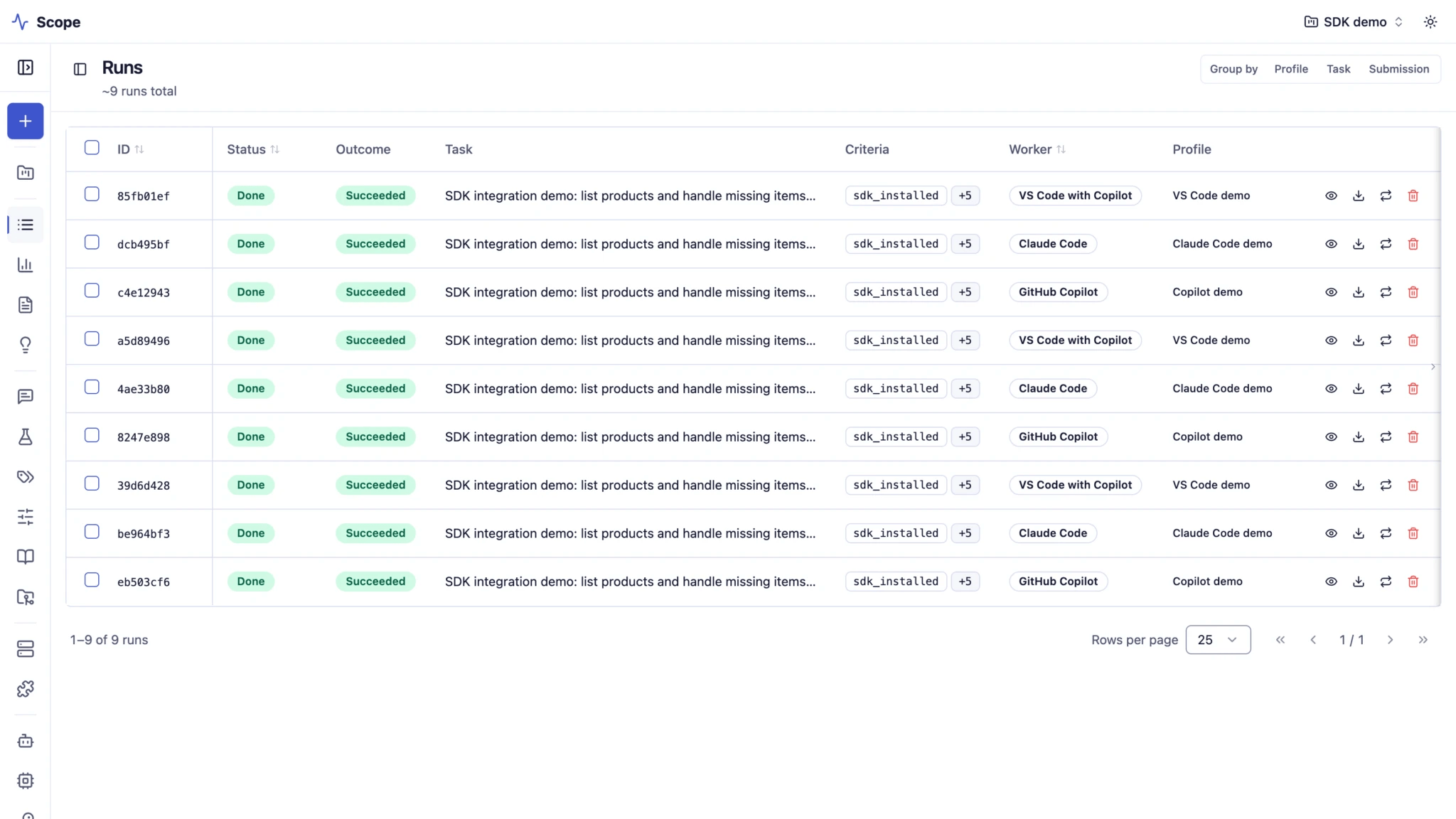
At its core, Scope operates by taking a defined task, an optional starting codebase, and a specific agent configuration. It then drives established coding agents—such as GitHub Copilot and Claude Code—through the execution of that task from start to finish, recording every action along the way.
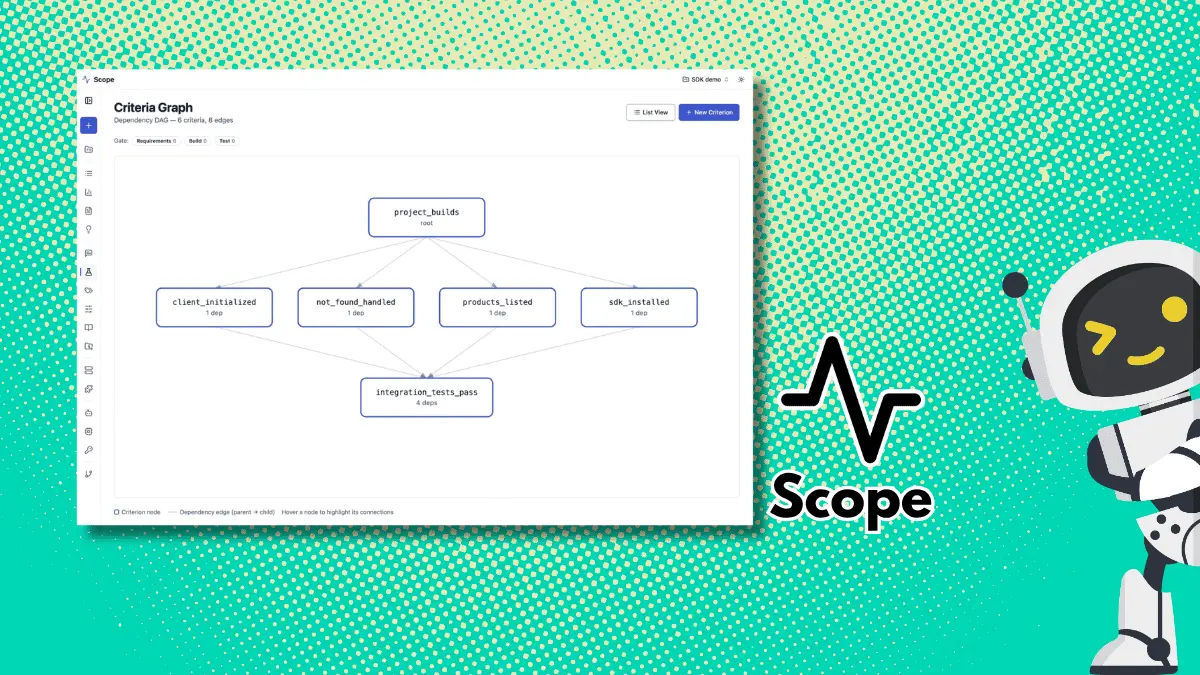
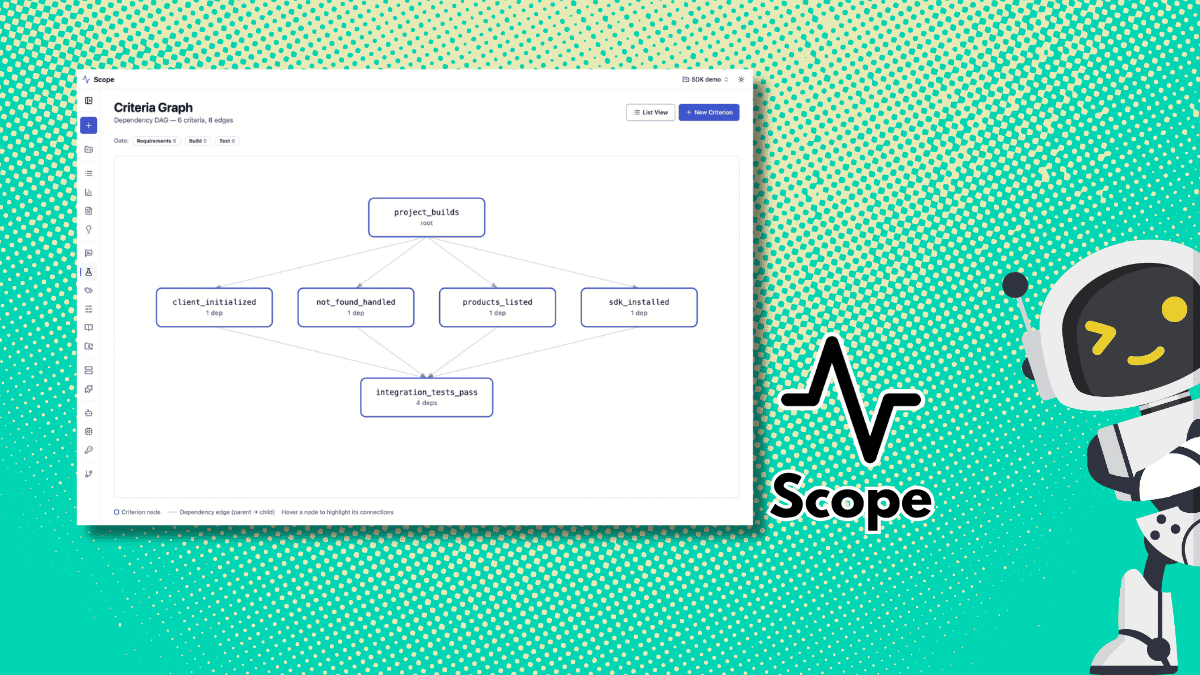
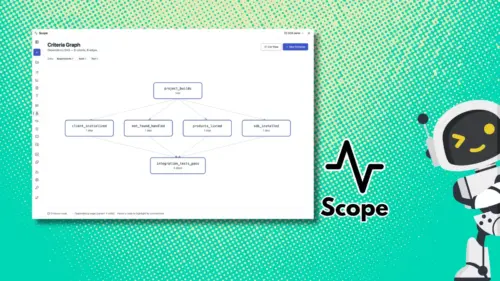
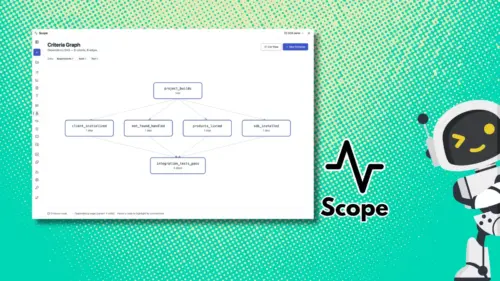
Success within Scope is not evaluated through rigid, monolithic tests, but rather through a structured dependency graph of criteria where one check can conditionally gate another. For example, a relatively straightforward evaluation scenario might involve asking an agent to scaffold a Node.js server and subsequently verifying that a specific GET request to a health route successfully returns a valid JSON response.
To handle these evaluations dynamically, Scope incorporates an LLM-based Judge service that scores each individual run against the predefined criteria. Recognizing that automated judges are not infallible, Microsoft emphasizes that important development conclusions and critical evaluation runs still warrant thorough human review.

Every execution within Scope captures comprehensive telemetry, including live logs, generated files, workspace snapshots, and detailed records of tool calls. If a particular criterion fails, developers can trace the failure step-by-step through the agent’s decision-making process. Furthermore, the platform utilizes versioned profiles to preserve the exact agent, underlying model, specialized skills, Model Context Protocol (MCP) servers, and extensions used during a run.
This level of granular control allows engineering teams to swap out a single variable—such as changing the model or adjusting a prompt—rerun the exact same task, and directly compare the results. Because LLM outputs and agent behaviors can vary significantly from attempt to attempt, repeating tasks enables teams to distinguish between isolated, stochastic failures and recurring systemic problems.
To simulate realistic interactions, Scope also features configurable user personas that establish the viewpoint, behavioral traits, and tone of the simulated user interacting with the agent. Teams can review the resulting performance data through an integrated web portal, or they can leverage the provided command-line interface (CLI) and REST API to feed evaluation metrics directly into automated scripts and continuous integration pipelines.
Practical Applications Across Software Ecosystems
The utility of Scope extends across multiple domains within software development and documentation maintenance. Documentation teams, for instance, can utilize the framework to monitor whether instructional guides contain ambiguous phrasing that causes coding agents to fail repeatedly. By identifying the exact point of failure, technical writers can refine the documentation and rerun the scenario to verify whether the agent’s performance improves.
Meanwhile, SDK maintainers can use Scope to determine whether an autonomous agent naturally chooses their SDK over competing alternatives when presented with a general architectural problem. They can also test whether introducing newly written sample code, specialized instructions, or custom skills successfully alters the agent’s selection behavior.
For developers maintaining command-line interfaces and Model Context Protocol servers, the detailed execution traces generated by Scope provide critical visibility into where an agent stalls out. These traces can highlight vague tool descriptions, confusing parameter requirements, or unhelpful error messages that leave an agent guessing rather than self-correcting.

Deployment Requirements and Considerations
While the source code for Scope is freely available on GitHub under the MIT license, adopting the platform requires significant local infrastructure. Scope does not currently offer a managed, hosted software-as-a-service version, meaning teams must deploy and manage the infrastructure themselves.
A local development setup requires a specific technology stack, including Docker paired with Compose version two, Node.js version 22, pnpm, mkcert for local SSL certificates, and the GitHub CLI. Microsoft provides local development documentation to guide engineers through the prerequisite configuration process.
Additionally, running the default worker environment requires an active GitHub Copilot entitlement, while the underlying Judge service necessitates valid credentials for a supported model provider. For organizations seeking a centralized, collaborative deployment, Scope can be installed on Kubernetes using an official Helm chart. Developers looking to contribute to the open-source repository on GitHub will also need to review and agree to the standard Microsoft Contributor License Agreement.
Leave a Reply