
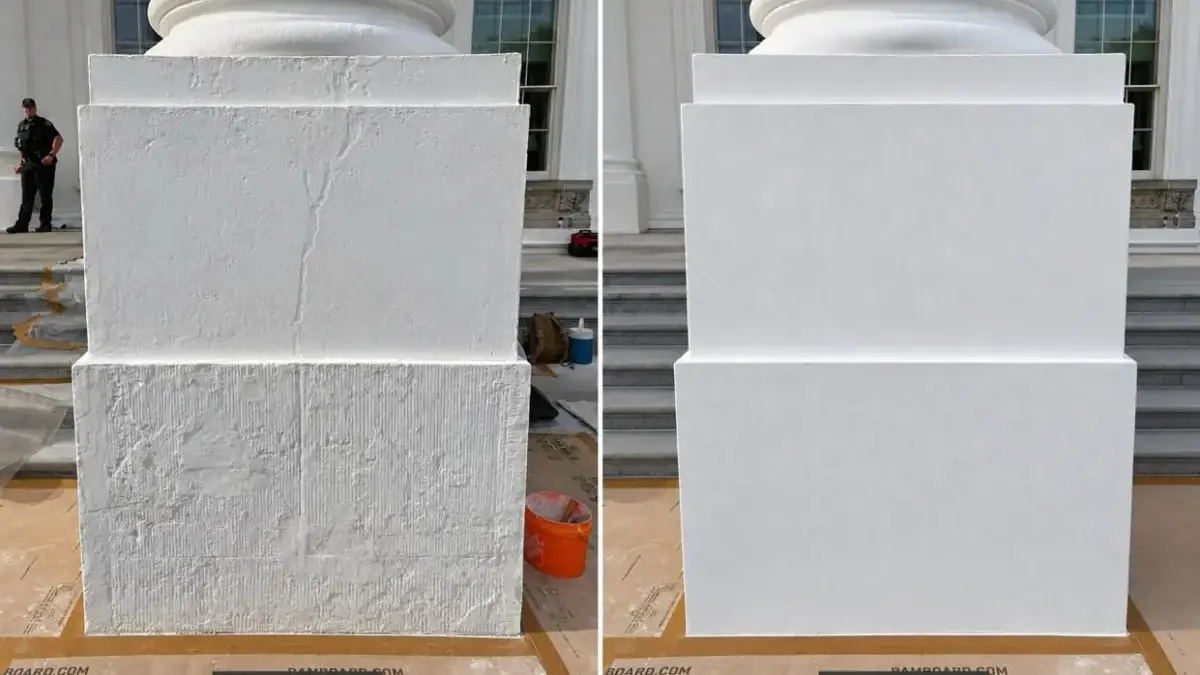
President Donald Trump recently shared a series of photographs on Truth Social intended to showcase ongoing renovations and aesthetic updates to the White House. However, digital sleuths and advanced detection tools quickly determined that at least one of the images had been modified using artificial intelligence. The specific picture in question, which offers a side-by-side comparison of an older White House architectural column paired with what is described as a "restored" counterpart, exhibits a number of visual anomalies. These inconsistencies immediately raised suspicions online before ultimately being flagged by Google’s specialized AI detection software as having been made or edited with OpenAI tools.

The visual discrepancies within the photo were first widely dissected and discussed by observant users on social media platforms, including Reddit. According to online analyses, the image depicting the newly finished column features a noticeably uneven count of steps on either side of the structural base. Furthermore, this architectural layout fails to match the physical configuration of the steps visible in the accompanying "before" photograph. Beyond the structural discrepancies, the two images share an uncanny and improbable level of consistency in composition and detail. The angle of the shot, the precise reflections cast within the nearby windows, and even the positioning of the protective cardboard placed at the bottom of the column to guard against construction wear appear virtually identical across both frames. Additionally, critics noted that the surface of the newly painted column displays an unnaturally smooth texture that deviates starkly from the tactile reality of physical stone or masonry work.
Following widespread public discussion regarding the authenticity of the image, The Verge independently verified that uploading the photo to Google’s SynthID Detector results in a definitive flag. The system, which is engineered to scan various digital media formats including images, videos, and audio files for an invisible embedded watermark, identified the file as having been created or modified utilizing AI technology.

Despite the digital alterations found in the comparative photo, the broader context of physical maintenance at the executive mansion remains grounded in actual events. Real-world photographs captured earlier in the year documented workers actively engaged in painting and cleaning the exterior facade of the White House, leaving open the distinct possibility that the architectural columns did indeed receive genuine physical touch-ups during maintenance cycles. The White House did not immediately respond to requests for comment regarding the specific origin of the photograph shared on the president’s account. Notably, the SynthID watermark warning was isolated exclusively to the comparative column image and was not triggered by other pictures shared in the same post by Trump, which featured the broader White House facade and the presidential heliport.
The incident highlights a growing trend surrounding the integration of synthetic media into contemporary political discourse and social media communication. President Trump is no stranger to the utilization of artificial intelligence tools for digital content creation, having frequently shared AI-generated caricatures and stylized images of himself across his social media channels. At the same time, official accounts associated with the administration have occasionally faced scrutiny over digital media practices, ranging from the dissemination of internet-style memes generated through AI filters to past controversies involving photographs that critics argued were deceptively edited to alter the portrayal of public protesters. As detection technologies like Google’s SynthID become increasingly sophisticated and accessible to the public, instances of digital manipulation in public communications continue to draw intense scrutiny from technology analysts, journalists, and online communities alike.



Leave a Reply