
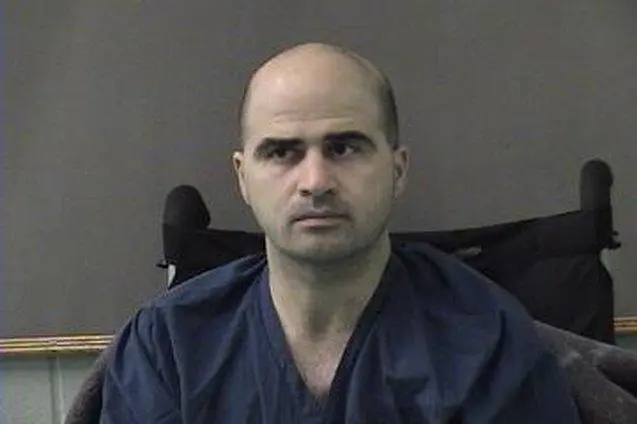
The reversal was made public by President Donald Trump through a statement posted on the social media platform Truth Social. In the post, Trump explained that while he initially believed broadcasting the execution could serve as a powerful global deterrent against terrorism, feedback from the public and trusted advisers prompted a change in course.
"I think streaming the execution for all to see might have been a strong deterrent for the World to witness how America deals with Terrorists and SCUM like Hasan but, many very good and well meaning people would rather not watch him die, through streaming, or through any other visual device," Trump wrote on Truth Social.
Despite the decision to cancel the broadcast, Trump confirmed that the sentence will still be carried out as scheduled. Hasan, a former United States Army major, is slated to die by firing squad. However, rather than being transmitted to screens worldwide, the event will remain closed to the general public, with an exception made solely for the immediate families of the victims, who will be given the option to witness the execution in person if they so choose.
The initial announcement by Secretary of Defense Pete Hegseth regarding the potential livestream had drawn immediate national attention and intense debate across legal, political, and cultural spheres. Had the execution been broadcasted to the public, it would have broken a nearly century-old taboo, representing the first public execution in the United States since the 1930s. Public executions were gradually phased out across the country amid concerns over voyeurism, human dignity, and the appropriate, sober role of state-sanctioned capital punishment.
The case stems from one of the most tragic mass shooting incidents on a domestic military installation in modern American history. In November 2009, Nidal Hasan opened fire at the Soldier Readiness Processing Center at Fort Hood in Texas. The attack resulted in the deaths of 13 people and left more than 30 others wounded. Hasan, who was serving as an Army psychiatrist at the time, was subsequently subdued by law enforcement officers on the scene, sustaining injuries that left him paralyzed from the waist down.

In 2013, a military jury convicted Hasan of 13 specifications of premeditated murder and 32 specifications of attempted premeditated murder. Following the trial, he was sentenced to death by lethal injection. The case has since wound its way through various levels of the military justice system, subject to extensive appeals and reviews standard for capital cases within the armed forces. Under the current administration, the method of execution was shifted to a firing squad, leading to the recent preparations and subsequent debate over how the event would be administered and observed.
The proposal to broadcast the execution ignited a complex ethical and legal discussion. Proponents of the livestreaming idea argued that transparency on an unprecedented scale could underscore the gravity of the crime and project American resolve in the face of violent extremism. They contended that modern technology offers a way to ensure accountability and provide a stark warning to those who would commit acts of terror against military personnel or civilians.
Conversely, critics and legal analysts raised profound concerns about the implications of televising an execution. Opponents pointed to long-standing judicial norms and ethical standards established over the past century that prohibit turning state executions into spectacles. Many expressed worry that a livestream could sensationalize violence, traumatize viewers, and diminish the solemnity that legal institutions strive to maintain around matters of life and death. Furthermore, legal scholars questioned whether broadcasting such an event would withstand constitutional scrutiny or violate established protocols governing federal and military capital punishment.
The intervention by the administration to cancel the broadcast resolves one aspect of the controversy, shifting the focus back to the traditional parameters of carrying out a capital sentence within the military correctional system. While the general public will not have visual access to the event, the allowance for immediate family members of the victims to attend in person preserves a form of closure for those most directly impacted by the 2009 tragedy.
As preparations continue for the execution by firing squad, the decision marks the end of a brief but intense public debate over the boundaries of transparency and state-sponsored punishment in the digital age. Hasan remains on death row at the United States Disciplinary Barracks at Fort Leavenworth, Kansas, where the sentence is scheduled to be carried out.



Leave a Reply