You put on a playlist to find something good to listen to, expecting a familiar routine of discovering a fresh artist or enjoying a classic track. Checking whether the singer actually exists wasn’t supposed to be part of the process, nor was it meant to require a deep investigative dive into liner notes and social media histories. But a song these days can fit your taste perfectly, matching your preferred tempo, mood, and instrumentation down to the finest detail, and still leave you wondering who, or what, made it.
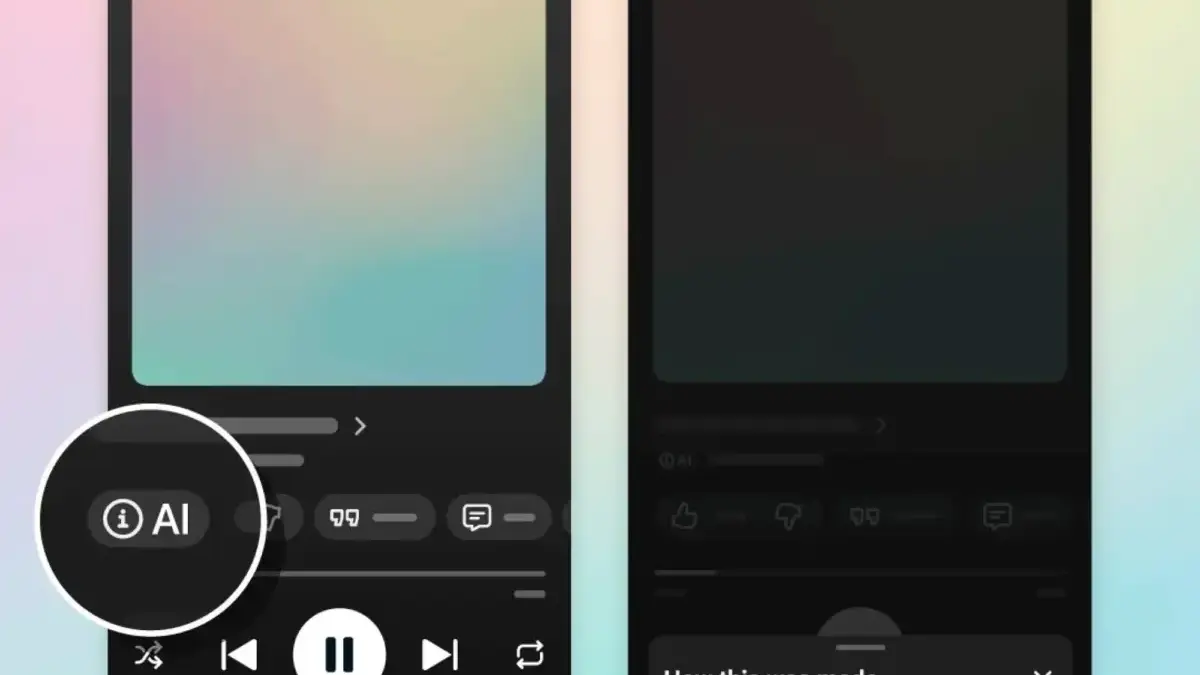
The blurring line between human artistry and algorithmic generation has transformed casual listening into a mild exercise in digital forensics. Fortunately, the music industry is beginning to respond to this mounting consumer confusion. This week, two major music streaming services—Google’s YouTube Music and the French platform Deezer—announced significant new features designed to make that question considerably easier to answer. YouTube Music is rolling out explicit labels to identify AI-generated songs, while Deezer is introducing a dedicated tool that will let listeners filter fully AI-generated music out of their search results entirely.
For listeners who have grown accustomed to opening unfamiliar artist profiles and hunting through the internet for evidence of an actual, living musician, these updates could mean considerably less homework. As the marketplace floods with synthetic audio, the fundamental nature of discovery is undergoing a profound shift, forcing platforms to decide how transparent they want to be about the machinery behind the music.
What’s changing when you press play?
The push for transparency is driven largely by direct feedback from users who feel increasingly detached from the art they consume. YouTube says its new labels are a direct response to something listeners have been asking for as generative technology becomes more accessible and widespread. As these production tools evolve rapidly, audience members have made it clear that they want absolute clarity and honesty when they are hearing an AI-generated track on their preferred devices.
Starting October 14, those descriptive labels will appear directly on the YouTube Music player interface for songs created primarily using generative artificial intelligence, encompassing generated compositions as well as synthetic vocals. Tapping on the label will open up more detailed information about the track’s origins. YouTube notes that it is actively working with music industry partners and utilizing its own proprietary detection tools to accurately identify AI-generated songs, with plans to bring these labels to the main YouTube application as well.
Deezer, meanwhile, is approaching the challenge by offering users an additional degree of personal control, allowing them to leave those synthetic tracks out of their search experiences altogether. We have seen a clear and consistent user demand for the ability to filter out AI-generated music from daily listening routines, Deezer CEO Alexis Lanternier explained in the company’s October 14 official announcement.
This filtering toggle is scheduled to launch worldwide before the end of 2026. When a user switches it on, fully AI-generated tracks, complete albums, and associated virtual artist profiles will vanish entirely from search results. When switched off, those same releases will remain accessible. This feature builds upon Deezer’s existing policy of keeping detected AI-generated songs out of its algorithmic and editorial recommendations, effectively extending that control to music that listeners actively seek out. The system specifically targets fully generated music, whereas songs that feature limited AI assistance embedded within a broader, human-driven creative process are treated differently by the platform’s categorization models.
The competitive landscape across the streaming industry reveals a variety of approaches to the same underlying problem. If you listen on Spotify or Apple Music, the current approach looks somewhat different. Spotify’s AI Persona badges, which were announced in August with a rollout beginning in mid-September, are designed to identify artist profiles that depict photorealistic, AI-generated individuals. Spotify also stated that it would exclude those synthetic personas from its editorial and algorithmic recommendations by default. While the badge successfully answers whether an artist’s public identity is entirely synthetic, it does not specify how the underlying music was actually produced.

Apple Music has taken a more granular path with its reported Transparency Tags, which get much more specific about the exact points where artificial intelligence was utilized. These tags allow music labels and distributors to disclose generated content across various components of a release, including recordings, musical compositions, album artwork, and accompanying music videos. However, this system relies heavily on the companies delivering the music to declare their use of AI in the first place. Under this framework, an AI-generated album cover and an AI-generated vocal track can receive entirely different tags—provided someone actually reports them accurately prior to distribution.
Your ears can only tell you so much
Consumers quickly realize that they do not have to go looking for AI music to find it; sometimes, your streaming service brings it directly to you through automated queues and smart recommendation engines.
That is precisely what happened to Mashable’s Features Editor Rachel Thompson when Spotify’s Smart Shuffle feature quietly slipped an AI-generated funk song into her active queue. The track fit seamlessly alongside music she already liked and listened to regularly, and she only discovered its true nature after investigating the artist behind it. That is a significant amount of administrative effort to ask of someone who simply wants to listen to some background funk music while working or relaxing.
There is a solid technical reason why the song did not immediately stand out as artificial. According to a comprehensive Deezer and Ipsos blind test published in November 2025, a staggering 97 percent of participants could not correctly distinguish two AI-generated songs from a human-made composition.
Once you start digging beneath the surface, even the usual traditional markers of an established artist can leave you guessing. A synthetic group called The Velvet Sundown managed to attract hundreds of thousands of monthly Spotify listeners in 2025, complete with professional promotional images and standard song credits. Yet its supposed band members had virtually no traceable existence or history beyond those suspiciously polished promotional pictures, and the official credits listed the band itself as the creator without ever naming a specific producer or songwriter.
A clear, upfront label could place that crucial contextual information right where listeners encounter the song, long before they have ever opened an artist profile or searched for background information on a band member. Plenty of listeners want that exact heads-up before pressing play. In that same Deezer and Ipsos survey, 80 percent of respondents indicated they wanted fully AI-generated music to be clearly labeled, while 45 percent of streaming users expressed a strong desire for the option to filter it out entirely.
There’s money behind all those uploads
A song showing up unexpectedly in your personal queue is one thing, but that same song collecting substantial financial royalties from thousands of entirely fake listeners is an entirely different challenge for the digital music ecosystem.
Deezer reports that it receives nearly 90,000 fully AI-generated tracks daily, yet these uploads account for just 1 to 3 percent of its total streams. Even more concerning is the origin of those plays; the company notes that up to 85 percent of streams for fully generated tracks were fraudulent in nature throughout 2025.

A North Carolina musician named Michael Smith capitalized directly on this massive gap between automated uploads and actual human listeners, turning it into a multimillion-dollar fraud scheme. On October 6, Smith was sentenced to 18 months in federal prison after pleading guilty to a single count of conspiracy to commit wire fraud. Federal prosecutors detailed how he generated hundreds of thousands of songs using artificial intelligence software, and then deployed automated script-driven accounts to stream those tracks billions of times. Through this elaborate operation, he collected more than $8 million in fraudulent royalty payments.
The sheer volume of generated songs was the primary mechanism that allowed him to evade detection for so long. By spreading the artificial plays across hundreds of thousands of individual tracks, Smith successfully avoided drawing immediate scrutiny to any single release. Those automated streams effectively drained money from a shared industry royalty pool that, according to prosecutors, should have gone to human musicians and songwriters with genuine audiences.
The question of who gets paid becomes even more complicated when traditional bots are not even involved in the equation. A virtual artist’s computer-generated face does not tell you whose actual voice or writing you are hearing on the recording.
Consider the controversy surrounding FN Meka. In 2022, the advocacy group Industry Blackout heavily criticized the virtual rapper project for cultural appropriation, arguing that it reproduced harmful racist stereotypes while capitalizing on the mannerisms of Black artists. Capitol Records subsequently dropped the project entirely. Furthermore, a real-world rapper named Kyle the Hooligan came forward to state that he had supplied the vocals for the virtual character without ever being compensated for his work. Representatives for the project later walked back earlier claims about artificial intelligence’s involvement, clarifying that humans had actually written and performed the vocals.
That specific scenario highlights the limitations of a simple AI badge. It might successfully flag the virtual character or the recording technique, but it often fails to explain who actually contributed to the underlying art.
Even with these complexities, YouTube Music’s new labels and Deezer’s upcoming search filter provide listeners with a much-needed starting point. An early heads-up directly on the player interface could easily spare you an unnecessary trip through an artist’s profile, while a search filter gives you the autonomy to decide whether you want fully generated music included in your results at all.
Ultimately, the long-term utility of these controls will depend heavily on what platforms can reliably identify moving forward. If a song features no label, does that indicate it is genuinely human-made, or simply that it has not yet been detected by automated systems? And when human-written lyrics meet synthetic vocals, will the platform’s disclosure accurately explain the mix?
For now, the immediate industry promise is relatively straightforward: finding something good to listen to on a streaming service could soon involve considerably less detective work. The next step is ensuring that the information presented on your screen answers the exact questions that sent you searching in the first place.