
For PC gamers looking to revitalize their setups, the current hardware market presents a frustrating dilemma. Upgrading the internal components of a gaming rig has become an increasingly expensive endeavor. Memory and storage prices remain persistently high, while high-end graphics cards command steep prices that show little sign of dropping significantly anytime soon. Furthermore, meaningful CPU upgrades frequently force consumers into purchasing a brand-new motherboard and fresh memory kits to match, turning a simple processor swap into a costly platform overhaul. Building or substantially upgrading a traditional gaming PC is harder to justify than it has been in years, leaving many enthusiasts with a dilemma when they have discretionary income to spend on their hobby.
Rather than sinking hundreds or thousands of dollars into internal silicon that yields incremental gains, industry experts suggest a shift in perspective. Instead of focusing solely on the components humming away beneath the desk, gamers can turn their attention to the piece of hardware they stare at during every single session: the monitor.
Enter Alienware’s AW2726DM, a 27-inch display that brings the breathtaking visual fidelity of an OLED panel down to a remarkably accessible price point. Retailing at just $350, this monitor makes a compelling case for skipping internal hardware upgrades entirely and focusing instead on a visual overhaul. Reviewers testing the unit have found it to be an astounding value, signaling a turning point for display technology that has historically been locked behind luxury price tiers.
The Evolution of OLED Accessibility
The journey of OLED technology in the desktop monitor space has been rapid, moving from exotic luxury to mainstream reality in a remarkably short span. A few years ago, Alienware helped kick off the OLED gaming monitor revolution with the legendary AW3423DW, a pioneering ultra-wide display that launched at a staggering $1,400. Despite its high cost, that monitor earned critical acclaim and industry awards for its unmatched contrast and visual dominance, proving that organic light-emitting diode technology was the undisputed future of gaming displays.

In the years that followed, OLED monitor prices slowly drifted downward, primarily appearing at reduced rates during major promotional sales events. However, the release of the AW2726DM represents a fundamental shift. Dell has planted a definitive flag in the market by establishing an everyday, non-sale price of $350 for a high-performance OLED display. This pricing strategy finally bridges the gap between premium visual quality and the budgets of ordinary PC gamers, transforming what was once a decadent luxury into a practical upgrade path.
A QD-OLED Panel That Dominates the Experience
At the heart of the AW2726DM is a Quantum Dot OLED panel, commonly known as QD-OLED, which serves as the undeniable star of the package. This panel technology delivers the core traits that make OLED displays so revered in the home theater and gaming communities: true absolute blacks, phenomenal contrast ratios, intensely vibrant colors, and near-instantaneous pixel response times.
When combined with a crisp 2560-by-1440 resolution and a buttery-smooth 240Hz refresh rate, games simply look and feel transformative. Dark, moody scenes in modern video games feature actual depth and shadow detail instead of the washed-out gray haze typically associated with traditional IPS liquid crystal panels. Meanwhile, motion remains razor-sharp and blur-free, even when the player is whipping the camera around in fast-paced competitive shooters or high-speed action titles.
Industry observers note that this type of upgrade offers a fundamentally different kind of satisfaction compared to a raw performance boost. While purchasing a faster graphics card might push a game’s frame rate from 90 frames per second to 115 frames per second, a high-end display fundamentally changes how every single one of those frames is rendered to the human eye. The visual payoff is immediate, constant, and striking, making standard games look remarkably rich and vivid.

Smart Compromises to Hit the $350 Price Point
Achieving a $350 price tag for a high-refresh-rate OLED monitor required deliberate choices and calculated compromises on Dell’s part. The AW2726DM is not a flawless, thousand-dollar flagship display, and observant users will notice where costs were managed during manufacturing.
For instance, the inherent quirks of OLED subpixel layouts mean that text fringing is still present. Users who look closely at fine lines on stark white backgrounds will notice subtle color artifacts around typography. While this phenomenon rarely bothers most users during intense gaming sessions, individuals who spend eight hours a day staring at dense spreadsheets, word processors, and text-heavy documents might want to carefully consider their primary use cases before diving in. Mixed work-and-play consumers should understand that this display is heavily optimized for entertainment rather than office productivity.
Brightness is another area where compromises were made. The AW2726DM does not achieve the blindingly high peak brightness levels found in more expensive modern OLED monitors, whether running standard dynamic range or high dynamic range content. Buyers should not expect retina-searing highlights or a screen capable of easily overpowering a sun-drenched living room. Because the panel lacks extreme luminance, it performs best in dimly lit rooms or controlled lighting environments. Gamers utilizing this display in bright spaces will achieve the best results by drawing the curtains during midday sessions to let the OLED contrast ratio truly shine.
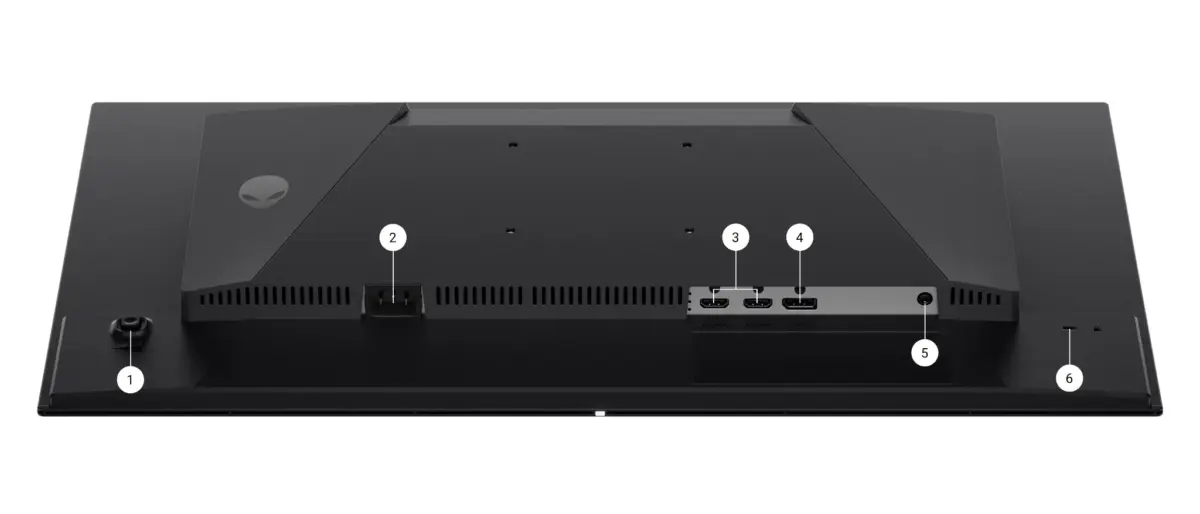
Connectivity has also been stripped down to the bare essentials to keep production costs low. The monitor features a single DisplayPort 1.4 connection alongside a pair of HDMI ports. However, the onboard HDMI connections are limited to a maximum 120Hz output rather than the panel’s full 240Hz potential. Owners connecting a modern gaming PC will need to utilize the DisplayPort interface to unlock the screen’s full speed, while the HDMI ports remain well-suited for console gaming accessories like a PlayStation 5 or Xbox Series X running at 120Hz. Furthermore, the monitor completely omits integrated USB hub functionality, peripheral pass-through ports, and built-in stereo speakers.

Evaluating the Trade-Offs for the Modern Gamer
For many industry analysts and consumer advocates, these specific omissions and limitations represent smart engineering rather than deal-breaking flaws. Traditional desktop speakers and dedicated gaming headsets offer vastly superior audio performance compared to the tinny, integrated monitors built into typical displays, rendering internal speakers largely redundant for enthusiasts. Similarly, the absence of a USB hub is a minor inconvenience for users who already plug their peripherals directly into their PC chassis or dedicated desktop hubs.
By shedding these secondary features and accepting moderate constraints on peak brightness and text clarity, Dell successfully delivered a world-class visual experience at a fraction of the expected cost. Reviewers emphasize that trading away auxiliary ports and heavy HDR luminance is a completely reasonable price to pay for a glorious QD-OLED panel that fundamentally elevates the gaming experience.
The emergence of the AW2726DM has also pressured competing hardware manufacturers, with rival brands already beginning to adjust their pricing strategies to match Alienware’s aggressive positioning in the budget-conscious OLED market. This competitive pressure is precisely what industry observers hoped to see, as it signals a broader democratization of advanced display technologies.
For players whose primary digital pastime involves gaming rather than all-day office productivity, the AW2726DM represents an exceptionally strong value proposition. In a hardware market where internal system upgrades remain stubbornly expensive and difficult to justify, Alienware’s budget-friendly OLED monitor offers a refreshing and immediately noticeable path forward for modern PC setups.

Leave a Reply