
For millions of women navigating the menopausal transition, the exhaustion that settles in by mid-week is entirely distinct from ordinary, run-of-the-mill bad sleep. Menopause sleep disruptions typically manifest at both ends of the night: making it markedly harder to fall asleep initially and even harder to stay asleep through the early morning hours. Data from the landmark Study of Women’s Health Across the Nation (SWAN), which meticulously followed 3,045 women aged 42 to 52 at the time of enrollment, demonstrates that the statistical odds of experiencing both types of sleep trouble escalate steadily across the menopausal transition.
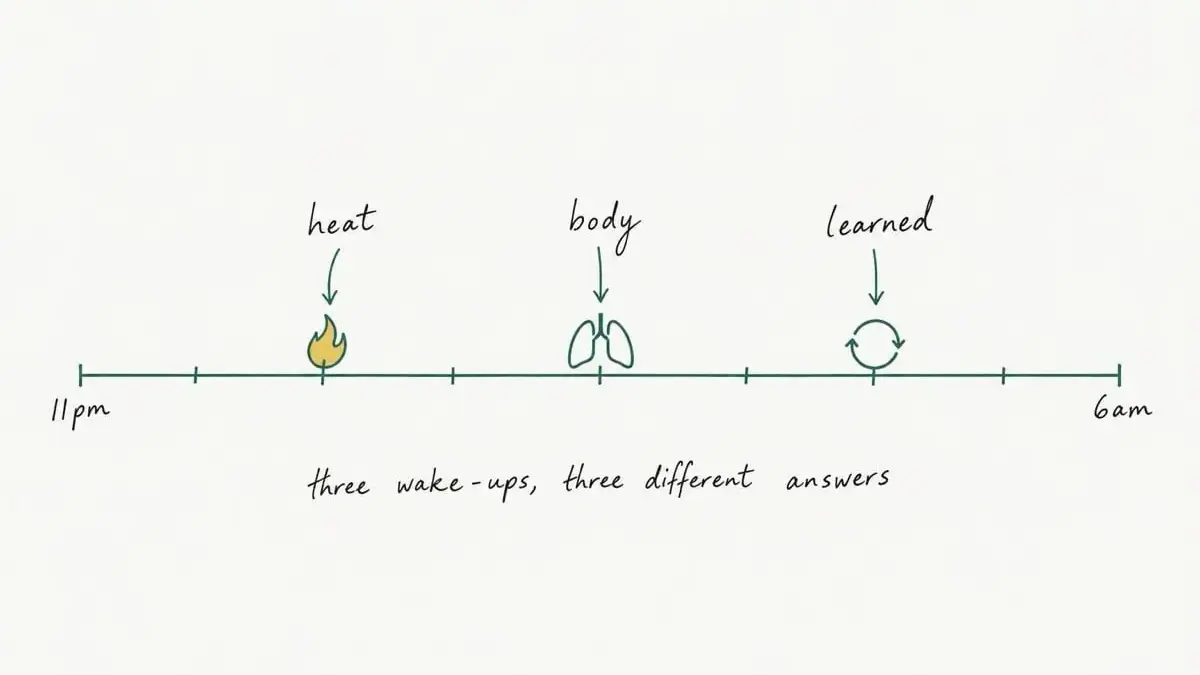
The pattern often repeats with rigid predictability. A woman may fall asleep easily by 11 p.m., only to jolt awake at 2:40 a.m. feeling damp, frantically kicking off the covers, and then pulling them back up moments later as a chill sets in. There may be another awakening at 4:15 a.m., followed by the final rising alarm at 6 a.m., dictated entirely by the demands of a professional schedule that offers no margin for fatigue. By Thursday, this accumulated deficit manifests as uncharacteristic irritability with loved ones and the cognitive fog of reading the exact same professional email four separate times.
A secondary analysis spanning ten years of data from the same SWAN cohort revealed that self-reported insomnia symptoms affected 31% of women in early perimenopause during the first year, climbing to 39% by year ten. Among women in late perimenopause, the prevalence started at 32% and rose to 48%. These figures reflect self-reported symptoms occurring at least three times a week rather than clinically diagnosed insomnia, yet they clearly demonstrate how sleep disruption fluctuates across distinct stages. Crucially, this reality underscores that a woman tossing and turning at 3 a.m. is not an isolated outlier, even though the silence of the house makes her feel that way. Over time, this chronic cycle breeds a new and insidious psychological burden: the growing dread of the bed itself, a development that clinical experts note ultimately matters far more than any casual remedy found on a pharmacy shelf.
Why the Usual Natural Remedies Keep Failing You
Standard natural remedies for midlife sleep disturbances frequently fail because they arrive as an unorganized assortment of options devoid of clear sequencing, physiological mechanisms, or rigorous grading of evidence. Melatonin serves as a prime example of this disconnect. When data is pooled across four randomized trials specifically involving menopausal women, the measured effect on overall sleep quality fails to reach statistical significance. In scientific terms, this indicates uncertainty rather than definitive disproof, yet this nuance is entirely absent from retail product labels.
Botanical alternatives like valerian root fare no better under scientific scrutiny. An umbrella review conducted in 2024 synthesized eight systematic reviews examining valerian for sleep disturbances and concluded that the existing evidence was weak, inconclusive, and lacked any demonstrable efficacy for treating insomnia. Consequently, when a midlife woman attempts one of these solutions, gives it two weeks, notices zero improvement, and quietly concludes that the failure rests with her own biology, she is mistaken. Instead, she was handed an overwhelming retail shelf and forced to guess blindly—a profoundly ineffective approach to managing a complex physiological problem rooted in multiple distinct biological drivers.
Menopause Sleep Problems Are a Wake-Up Pattern, Not One Problem
Clinical specialists emphasize that menopause-related sleep disruption is not a singular, uniform condition. Rather, it encompasses at least three fundamentally different wake-up patterns wearing the disguise of a single symptom: heat-driven awakenings, body-driven awakenings rooted in issues like disordered breathing, and learned awakenings that persist long after vasomotor symptoms have faded. A remedy tailored exclusively to one pattern will yield little to no benefit for the other two. Determining which specific pattern dominates a person’s nights transforms a random list of tips into a coherent medical decision.
Heat-driven awakenings represent the most widely recognized manifestation. In an actigraphy-based study monitoring 168 midlife women, 78% of objectively recorded nocturnal hot flashes coincided directly with an awakening episode, with participants significantly more likely to be awake in the five minutes immediately following a flash than in the minutes preceding it. While statistical concurrence does not automatically prove that every awakening initiates with a thermal surge, the physiological link is undeniable.
Body-driven awakenings, conversely, are frequently missed in standard primary care settings. Data from the Sleep in Midlife Women Study revealed that the adjusted apnea-hypopnea index—a standard measure of respiratory events during sleep—was approximately 31% higher post-menopause than it was pre-menopause. Because women with obstructive sleep apnea often present to their physicians reporting primary symptoms of insomnia, profound fatigue, and low mood rather than classic snoring, the underlying condition frequently remains undiagnosed.
Finally, learned awakenings explain why many women find themselves wide awake at 3 a.m. years after their hot flashes have completely subsided. Over time, the bed transforms in the subconscious mind from a place of rest into an arena for calculating tomorrow’s obligations. This phenomenon is no longer driven by fluctuating hormones, yet it represents the specific pattern backed by the most robust non-pharmacological clinical evidence.
Natural Remedies, Ranked by the Evidence Behind Them
When evaluated strictly by the strength of supporting clinical data, natural and non-pharmacological interventions for menopause sleep problems occupy a clear hierarchy: cognitive behavioral therapy for insomnia ranks first, regular exercise places second, and nutritional or herbal supplements trail as a distant third. In a randomized controlled trial involving 106 midlife women experiencing frequent hot flashes and insomnia, telephone-delivered cognitive behavioral therapy for insomnia (CBT-I) improved insomnia severity scores by an impressive 5.2 points more than a menopause-education control group at eight weeks, with those therapeutic gains fully maintained at the 24-week mark. No dietary supplement possesses clinical evidence approaching that magnitude.
As a structured behavioral treatment rather than a casual tip, CBT-I typically involves a short course of four to eight sessions delivered by a trained clinician, specialized therapist, or guided digital platform. It directly targets the mechanical underpinnings of sleeplessness: establishing a single, rigid wake-up time adhered to seven days a week, restricting time spent in bed to match actual sleep duration, breaking the habit of lying awake ruminating, and dismantling the psychological thought loops that trigger midnight alertness.

Professional medical organizations recognize this hierarchy. The American College of Physicians recommends CBT-I as the primary, first-line treatment for all adults suffering from chronic insomnia, backed by a strong recommendation derived from moderate-quality evidence, while positioning medication as a secondary option for shared decision-making.
Exercise occupies the second tier of evidence. Pooled individual-participant data across four trials conducted by the Menopause Strategies: Finding Lasting Answers for Symptoms and Health (MsFLASH) research network demonstrated that regular physical activity reduced Insomnia Severity Index scores by an average of 2.1 points relative to control groups. While a two-point reduction represents a modest yet genuine clinical improvement, it is not sufficient to carry the entire burden of sleep restoration on its own.
Supplements reside firmly in the third tier, with their limited and highly variable evidence attached. Because these compounds interact unpredictably with prescription medications and with one another, medical professionals universally advise discussing any supplement use with a primary care clinician or pharmacist before initiation. Furthermore, despite ubiquitous lifestyle advice regarding bedroom temperature, researchers note a distinct absence of controlled clinical trials demonstrating that lowering room thermostats can successfully treat menopausal insomnia. While a cool room and breathable bedding undoubtedly enhance physical comfort during a night sweat—making the experience less miserable—adjusting the thermostat will not dismantle a deep-seated nocturnal thought loop.
What One Week of This Actually Looks Like
In practical terms, adopting an evidence-based approach to midlife sleep disruption is systematic rather than glamorous. It begins with establishing a single, non-negotiable wake-up time and holding it every day, including weekends. Each morning, keeping a brief written log tracking the hour of awakening, the presence of thermal heat, and any respiratory symptoms or daytime fatigue allows the data—rather than product marketing—to reveal which specific wake-up pattern is dominating the night.
Consider two contrasting clinical profiles. Tricia, aged 49 in early perimenopause, logs four nighttime awakenings over seven days, three of which involve soaked sheets requiring linen changes and immediate fan use, with zero respiratory symptoms. Her pattern is distinctly heat-driven. Rather than purchasing an array of supplements, her strategy centers on maintaining a fixed 6:15 a.m. wake time, incorporating daily walks, utilizing breathable bedding, and compiling a concise summary of her weekly night sweats for her upcoming physician appointment.
Marlene, aged 54 and two years post-menopause, experiences no hot flashes, yet consistently wakes at 3:10 a.m. spending 90 minutes mentally drafting tomorrow’s to-do list. Her log also captures occasional snoring noted by her partner and daytime sleepiness caused by dozing off in front of the television by 8 p.m. Her strategy requires a dual approach: consulting a doctor about CBT-I to address the learned wakefulness pattern while simultaneously evaluating potential sleep-disordered breathing during the same medical visit. In the interim, she steps out of bed whenever she has been awake for 20 minutes, preventing her brain from associating the mattress with wakeful rumination.
Both individuals maintain their logs for a full week before altering any other variables, avoiding the common pitfall of simultaneously introducing magnesium, blackout curtains, expensive pillows, and sleep-tracking applications, which only obscures what is actually working.
When This Needs a Clinician, Not a Remedy
Certain nocturnal symptoms signal that sleep disruption has moved past the realm of simple self-management. Severe snoring, breathing that repeatedly pauses and starts throughout the night, gasping or choking sounds, and persistent daytime exhaustion are hallmark indicators of obstructive sleep apnea. Major health authorities, including the U.K. National Health Service, advise consulting a physician for these specific symptoms rather than experimenting with over-the-counter remedies. Similarly, sleep difficulties persisting at a frequency of three nights a week or more for three months or longer meet the clinical threshold for chronic insomnia defined by the American Academy of Sleep Medicine.
Medical experts caution that dismissing severe midlife sleep disturbances with the casual assumption that "it’s just menopause" frequently delays proper diagnosis and treatment by months or years, particularly because sleep-disordered breathing in women often presents as insomnia, fatigue, and low mood rather than loud snoring.
For women experiencing sleep disruption directly tied to vasomotor symptoms, hormone therapy remains an important clinical consideration. Position statements from professional organizations such as The Menopause Society identify hormone therapy as the single most effective treatment for moderate to severe hot flashes and night sweats, noting subsequent improvements in sleep quality when the disturbance is driven by those thermal events. However, hormone therapy is not prescribed as a stand-alone treatment for primary chronic insomnia, and its suitability requires a thorough, individualized benefit-risk assessment conducted in direct consultation with a qualified healthcare provider.
Start With One Night, Not Eight Changes
For those struggling to regain restorative rest, the most effective initial step requires no financial investment, no specialized application, and no complex routine. Beginning tonight, placing a simple notepad by the bedside with three dedicated columns—tracking the hour of awakening, whether heat played a role, and any observations regarding breathing or daytime exhaustion—provides the necessary baseline data. Maintaining that single wake-up time and recording observations for seven consecutive nights transforms a confusing array of conflicting wellness advice into a clear, actionable diagnostic picture for both the individual and their physician.
Leave a Reply