
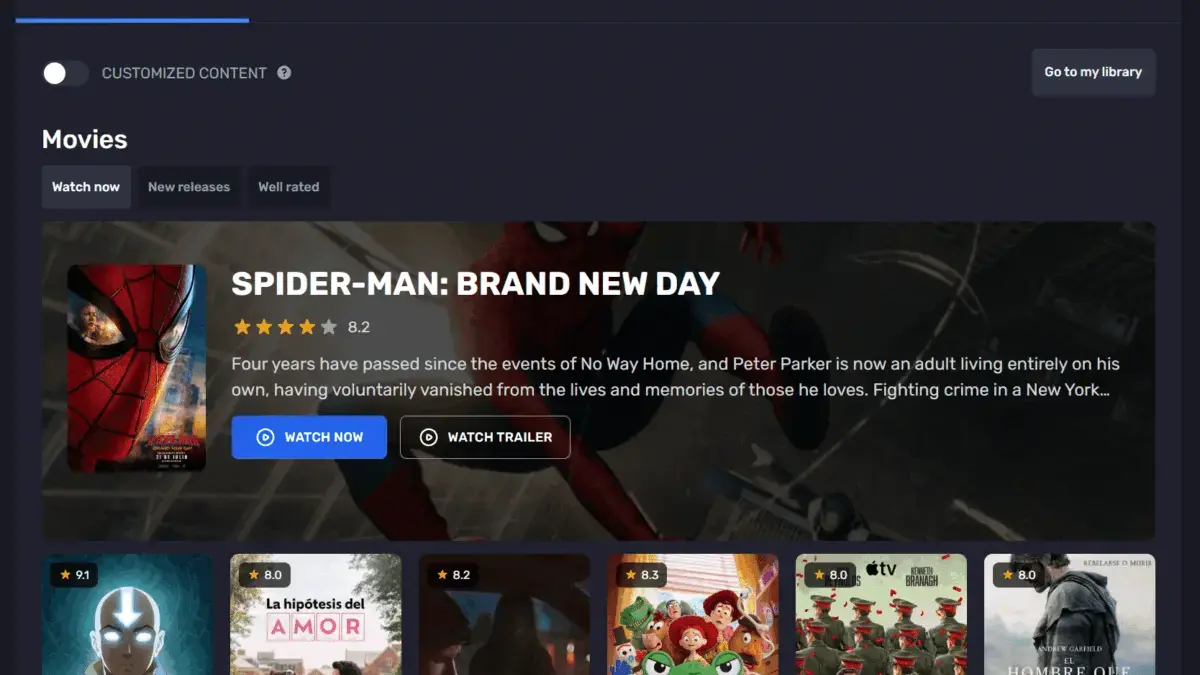
Series.ly once stood as one of Spain’s most prominent and widely recognized digital platforms for indexing and sharing media links. Though its original operation abruptly dropped its piracy-related links back in late 2014 amid intense regulatory pressure and subsequent criminal investigations that culminated in years of legal battles for its former administrators, the domain itself retained significant historical brand value.
That residual value led to a turning point in 2021, when a completely new team purchased the domain at an auction. According to the current operators, this fresh iteration of Series.ly has no corporate or structural connection to the original founders or the controversial management team that preceded them.
Operating under new management, the revamped Series.ly quickly carved out a substantial audience on the internet. Requiring users to log in before gaining full access to the portal, the site managed to attract nearly two million monthly visitors. Demographic data showed that roughly 90% of this heavy traffic originated directly from Spain, making it a prominent domestic destination for entertainment enthusiasts looking to track television shows and movies.
However, that renewed visibility and rapid growth did not fly under the radar of major rightsholders. The entertainment industry, continually vigilant against unauthorized digital distribution, showed it had not given up on stamping out the platform. In May, the prominent film and television producers’ trade group EGEDA—Entidad de Gestión de Derechos de Audiovisual—decided to take formal action. EGEDA filed an official complaint with the Second Section of Spain’s Intellectual Property Commission, a specialized regulatory body operating under the umbrella of the Ministry of Culture, with the explicit goal of forcing the site offline.

The legal machinery moved swiftly following the industry group’s submission. The Commission’s assigned investigator undertook a preliminary review, checking a sample of 42 specific titles out of the total 110 works listed in EGEDA’s initial complaint. The findings revealed that 35 of those sampled titles could be readily streamed or downloaded directly through Series.ly at the time of the inspection. Armed with this evidence, the Commission issued an administrative order in July demanding that Series.ly voluntarily remove the infringing material. According to regulatory records, however, the site operators never formally responded or complied with the takedown directive.
From Google to a Libyan Registrar
With the administrative warning ignored, the Commission escalated its approach at the end of July by sanctioning a comprehensive suite of anti-piracy enforcement measures directed squarely at third-party internet intermediaries. Rather than targeting only the platform’s direct infrastructure, the sweeping resolution mandated that major search engine operators, including Google and Bing, completely scrub the site from their search index results. Furthermore, domestic internet service providers (ISPs) holding a market share greater than 1% were legally instructed to block the domain name entirely.
As part of these blocking protocols, the affected ISPs were directed to actively redirect any unsuspecting users attempting to visit the site to an official government-administered landing page. This informational notice explicitly informed visitors that the Commission had blocked the domain "for having illegally facilitated access to content protected by intellectual property rights."
The broad regulatory order also cataloged several other critical technical intermediaries. These included the web performance and security giant Cloudflare, the Ukrainian hosting provider Virtual Systems—whose Kyiv-based data centers were notably impacted by missile strikes earlier in the conflict—and Series.ly’s specific domain name registrar, the Libyan Spider Network. Crucially, the enforcement provisions were structured to apply not only to the platform’s current domain name at the time, but also to any potential alternative domain names that the operators might subsequently adopt to achieve the same operational purpose.

Because administrative commissions in Spain require judicial backing before imposing restrictions that impact constitutional rights like freedom of information and commerce, the resolution had to wind its way through the courts. That necessary judicial approval arrived on September 28. A judge presiding at the Central Court of First Instance in Madrid reviewed the case and concluded that the proposed enforcement measures were entirely proportionate, legally sound, and formally approved them as requested by the authorities.
The Libyan Registrar Acts
Just over a week after receiving the judicial green light, the enforcement mechanism began to bite. Early in the week, Series.ly abruptly lost access to its domain name when its registrar, Libyan Spider, intervened directly.
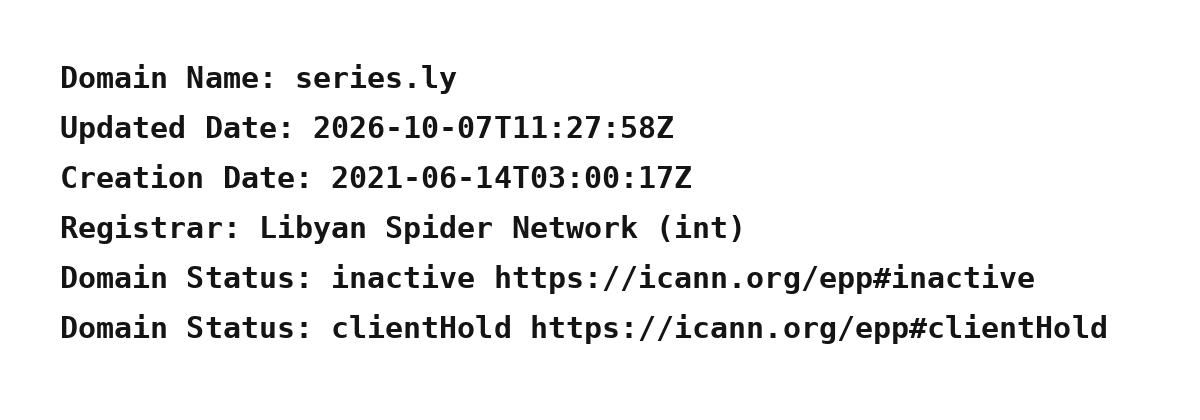
WHOIS domain registration records verified that the series.ly address had been slapped with a "clientHold" status—a specialized administrative marker set by a domain registrar that effectively pulls a web address completely offline. This action removes the domain from the active .ly zone file, ensuring that traffic can no longer resolve to the site’s servers.
While Libyan Spider chose not to issue a public statement regarding the abrupt technical suspension, the operator of Series.ly confirmed that they received formal notice citing the Spanish regulatory order. The communication reportedly reached them through the digital auction house that had originally sold them the domain, which acts as a local reseller for the registrar.
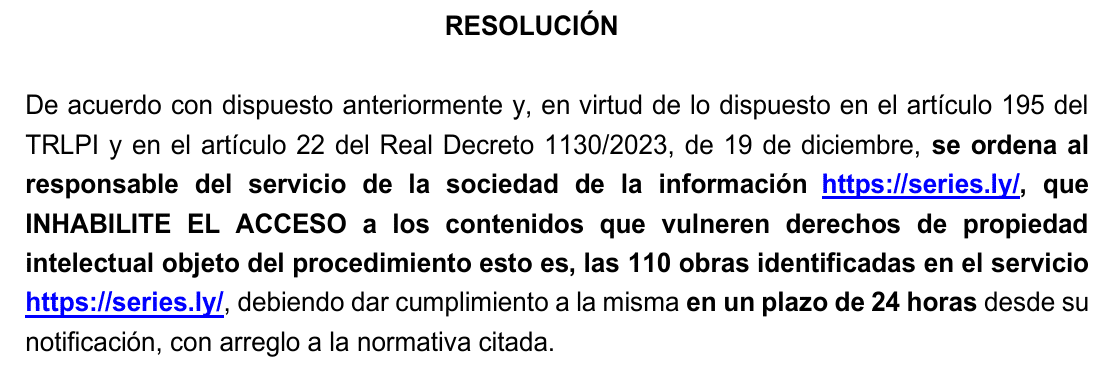
"The reason they gave us was a Spanish copyright resolution and a court order authorizing suspension measures against the domain," the Series.ly operator explained in comments translated from Spanish.
It remained unclear immediately following the action whether other targeted intermediaries, such as domestic ISPs or search engines, had fully implemented their respective blocks. However, the underlying court order remained fully valid and enforceable.
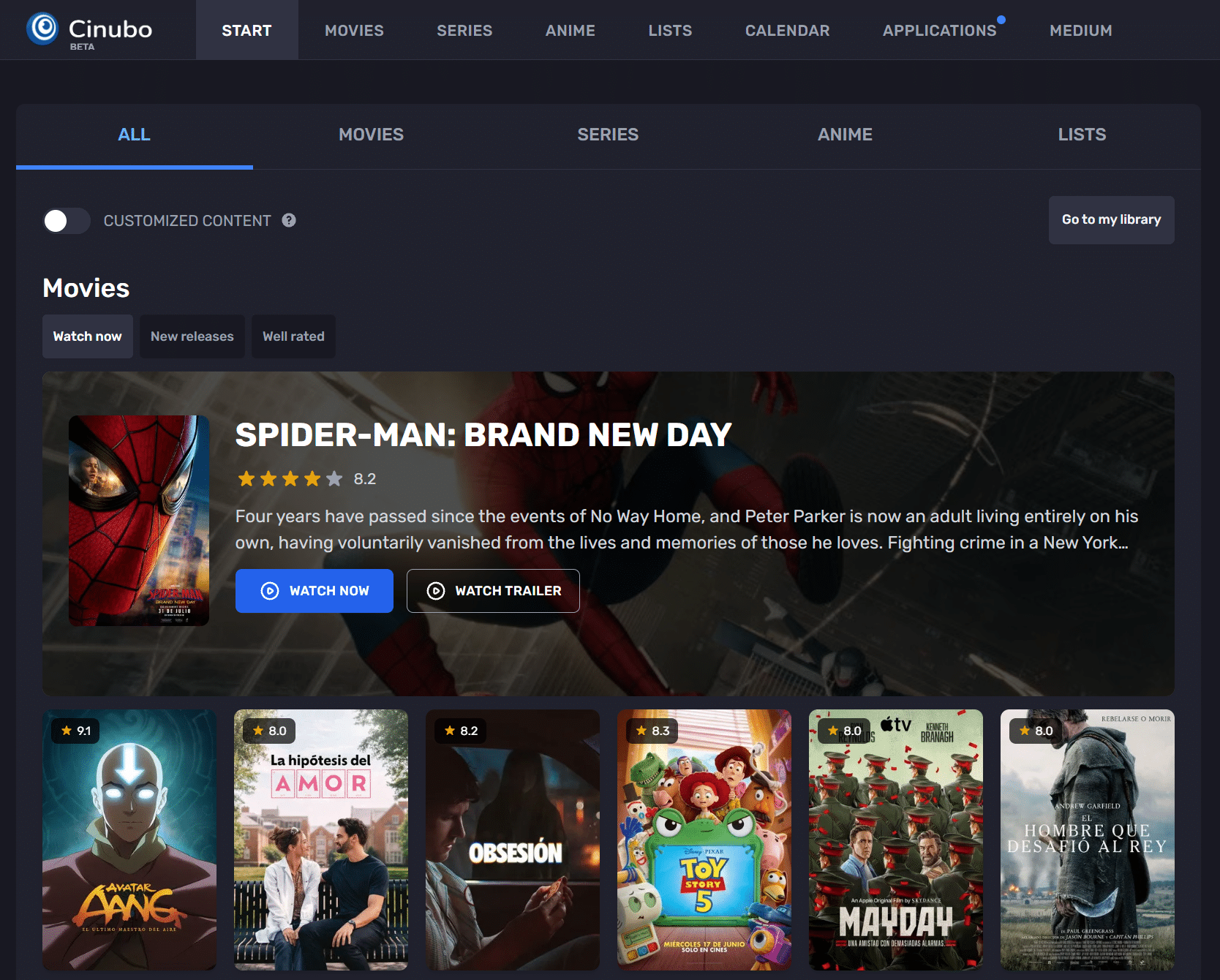
Curiously, in the immediate aftermath of the domain suspension, a remarkably similar alternative platform operating under the brand name Cinubo surfaced on the web. Simultaneously, the official Series.ly community channels on Telegram and Discord were hastily rebranded to reflect the new Cinubo identity, signaling a potential pivot by the operators.
No Plans to Appeal
Discussing the sudden disruption, the site operator maintained that they had failed to notice the regulatory warnings before the domain was pulled. An email sent by EGEDA regarding the matter had apparently been routed to an internal address, while a separate contact email was listed publicly on the site.
Defending the platform’s operational model, the operator emphasized that Series.ly functioned as a non-profit project that had generated zero revenue since its relaunch. Furthermore, they pointed out that the site never actually hosted any video or media files on its own servers; instead, hyperlinks pointing to external third-party services were submitted entirely by the user community.
"Our position is that complaints about those video files should be directed at the services that host or distribute them," the operator argued. "We think it’s disproportionate that a complaint about content hosted by third parties ends up getting our entire domain suspended, including email and the personal library features."
Despite the severity of the penalty, the operator initially stated there were no active plans to mount a formal legal appeal against the Spanish order. Highlighting the fact that the corporate entity behind the project is legally based in the island nation of Nevis, the operator questioned the international reach of Spanish regulatory bodies.
"We question whether a procedure handled in Spain justifies suspending our domain worldwide, which also affects email and services that have nothing to do with the works in question," the operator noted.
The saga, however, took an unexpected administrative twist days later. Shortly after the initial blackout, the series.ly domain unexpectedly reverted back to the control of its owner. The registrar lifted the technical suspension, though the operator stressed that the domain could no longer be utilized to share or link to copyright-infringing material. In its new iteration, the Series.ly web address transformed into an archival portal documenting the historical timeline of the domain itself, abandoning its previous life as a media-linking destination.
Leave a Reply