
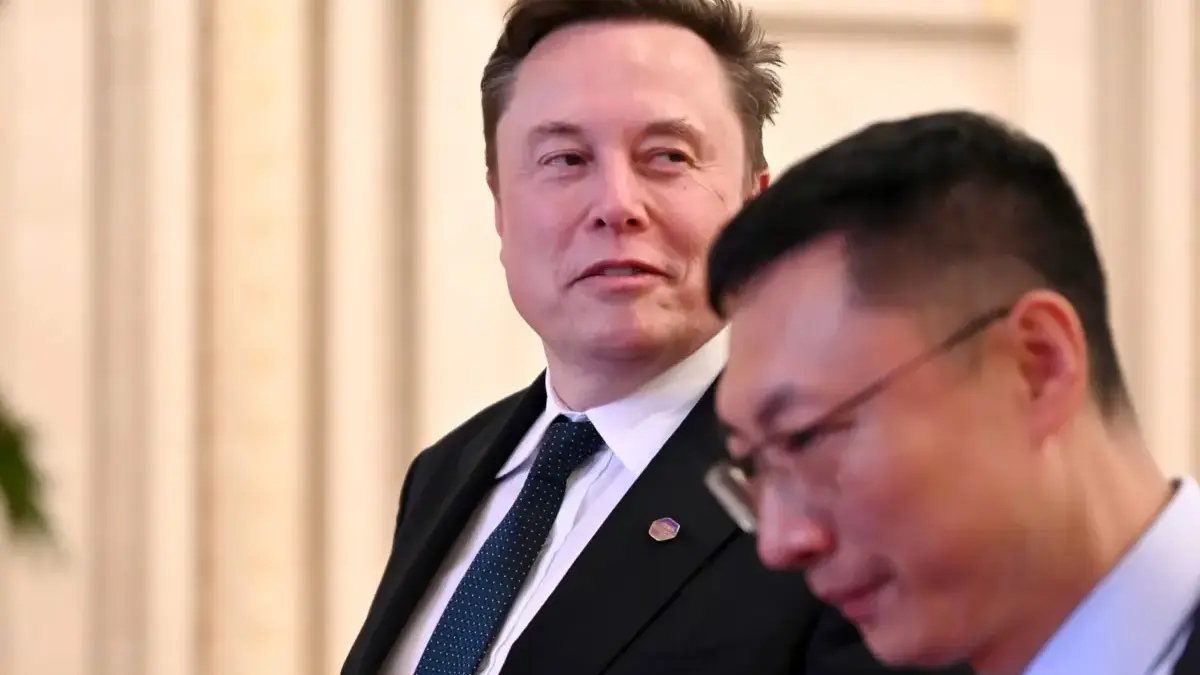
As SpaceX continues to face persistent hurdles in launching its Starlink satellite internet service in India, billionaire Elon Musk has sharply escalated his public attacks on Indian industrialist Mukesh Ambani. In a series of provocative statements, Musk mockingly referred to the Reliance Industries chairperson as the country’s "prime minister" to suggest he wields outsized control over the government, while directly accusing him of blocking Starlink from entering the market to protect his commercial interests.
The friction highlights the high-stakes battle for dominance in the world’s most populous nation, a critical market boasting over a billion internet users. While SpaceX has spent years attempting to secure the final regulatory greenlight to offer commercial satellite broadband in India, the process has run into prolonged delays, setting off a war of words between two of the world’s most influential business magnates.
A Public War of Words on Social Media
The latest round of confrontation played out on the social media platform X, formerly known as Twitter. Musk renewed his direct criticism of Ambani, arguing that Starlink’s entry into India would provide immense societal and economic benefits by connecting remote and underserved areas, giving children enhanced educational opportunities, and enabling small businesses to reach a worldwide customer base.
Challenging the billionaire head of Reliance Industries directly, Musk wrote on X, "Naturally, you would prefer to maintain your monopolistic exploitation of the great people of India, but would you nonetheless consider allowing Starlink to compete?" Reliance Jio, the telecommunications arm of Reliance Industries, did not immediately respond to requests for comment regarding Musk’s remarks.
Musk’s aggressive stance follows similar accusations made earlier in the week, when the SpaceX founder claimed that unnamed "oligarchs" were orchestrating delays to Starlink’s launch to shield their own business empires. Those comments drew a swift pushback from India’s Ministry of Communications, which rejected the allegations and maintained that the country’s regulatory framework for satellite communications is completely fair and non-discriminatory.
Undeterred by the government’s response, Musk doubled down on his rhetoric, questioning Ambani’s political influence in a separate post by asking, "Is Ambani the real boss of India?"
Regulatory Hurdles and the Battle for Spectrum
The road to India for SpaceX has been fraught with complex regulatory hurdles and strategic maneuvering. Last year, in a surprising turn of events, SpaceX struck distribution agreements with both Reliance Jio and Bharti Airtel—India’s second-largest telecom operator—to offer Starlink services once all necessary regulatory approvals were secured. Despite these partnerships and securing key regulatory clearances earlier in May of last year, Starlink has yet to receive final authorization from New Delhi to commence commercial operations.
The delay comes on the heels of an intense pre-launch clash between Starlink and Reliance Jio over how satellite spectrum should be allocated in India. Musk’s company vigorously advocated for spectrum to be assigned through an administrative process, a standard global practice for satellite operations, whereas Jio fiercely pushed for an auction-based allocation. Ultimately, the Indian government decided to proceed with administrative assignment, a decision that favored Starlink’s operational preferences.
However, government officials have firmly rejected the narrative that Starlink is being singled out or delayed due to external pressure. In an official statement, the Indian communications ministry explained that Starlink along with two other licensed satellite operators are currently undergoing mandatory security assessments. These evaluations must be completed before any of the entities can be formally assigned satellite spectrum. The ministry emphasized that all three competing operators are currently at broadly the same regulatory stage.
Other major players are also positioning themselves to launch rival satellite internet services in the subcontinent. Jio has established a joint venture with Luxembourg-based SES, while Bharti Airtel is a major shareholder in Eutelsat OneWeb, both of which are striving to deploy satellite broadband connectivity across India.
High Stakes in a Crucial Market
For Musk, expanding deeper into India represents both a massive opportunity and a formidable diplomatic challenge. India is an indispensable market for global technology companies due to its sheer scale and rapidly expanding digital economy. However, establishing a footprint requires navigating a complex corporate landscape dominated by powerful local conglomerates like Reliance Industries. Reliance owns India’s largest telecom operator, Reliance Jio, and maintains close strategic alignment with Prime Minister Narendra Modi’s government on major national infrastructure and economic projects.
The current tensions surrounding Starlink echo the obstacles Musk has faced while trying to establish Tesla in the Indian automotive market. After years of anticipation and delay, the electric vehicle maker officially launched in the country last year. Despite the fanfare, Tesla registered a modest 699 vehicles in its first 12 months of deliveries, according to data cited by Electrek.
Steep import duties have presented a major barrier to adoption, pushing the launch price of vehicles like the Model Y to nearly twice its U.S. price point. Although Tesla instituted price cuts earlier in the year, its automobiles remain significantly more expensive for Indian consumers compared to western markets.
As the standoff over Starlink continues, Indian officials have maintained a firm stance against accusations of unfair play. Indian Telecom Minister Jyotiraditya Scindia pushed back against Musk’s monopoly claims, asserting unequivocally that the country "does not allow a monopoly in any sector." With regulatory security assessments still underway and political rhetoric running high, the timeline for Starlink’s official commercial debut in India remains uncertain.

Leave a Reply