
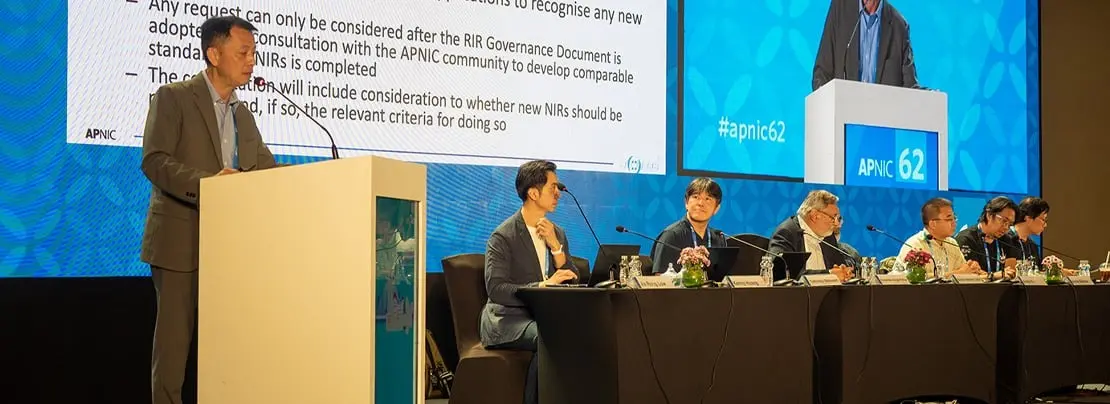
The recent APNIC Member Meeting (AMM) held during the APNIC 62 conference successfully brought together Internet number registry members, regional technical experts, and community stakeholders to evaluate current organizational performance and debate the evolving priorities for the future of the Asia-Pacific Internet. As the regional Internet registry for the Asia-Pacific, APNIC serves a critical role in managing and distributing Internet number resources—such as IPv4, IPv6, and Autonomous System Numbers—while supporting the development of a stable, secure, and open infrastructure across dozens of diverse economies.
The conference served as a vital forum for transparent dialogue between the APNIC Executive Council (EC), the Secretariat, and the broader membership base. On behalf of the APNIC Executive Council, leadership expressed deep appreciation to everyone who participated in APNIC 62 and the AMM, engaging actively both in-person at the venue and remotely through online channels.
Overall, APNIC 62 drew an impressive turnout of 584 registered participants representing 54 distinct economies from across the globe and the Asia-Pacific region. Throughout the multi-day event, more than 50 community members took to the floor during open mic sessions to voice opinions, pose operational questions, and suggest policy directions. Furthermore, the Executive Council maintained an active schedule of direct consultations, meeting extensively with individual Members, community representatives, and key regional partners to ensure grassroots perspectives directly inform top-level governance.
Organizers noted that the diverse feedback, critical perspectives, and collaborative discussions gathered during APNIC 62 carry immense weight. These insights arrive at a crucial juncture, directly feeding into the preparatory framework for APNIC’s upcoming 2028-2032 Strategic Plan, which is scheduled to formally commence development next year. By capturing a wide swath of community sentiment now, APNIC aims to align its long-term operational roadmap closely with the actual needs of network operators, academic institutions, commercial enterprises, and civil society organizations spanning the region.
Financial Sustainability
Financial sustainability remained a prominent and recurring point of discussion throughout the Executive Council updates and the AMM open mic sessions. Members received comprehensive briefings confirming that APNIC’s operational activities during the first half of the year were successfully delivered in strict accordance with the 2026 Activity Plan, keeping overall financial performance safely on track.
According to financial disclosures presented at the meeting, APNIC continues to operate well within its approved budget thresholds. The organization currently forecasts a full-year operating deficit of AUD 209,000 for 2026. This represents a notable and positive improvement compared to the initially budgeted operating deficit of AUD 308,000. Looking further ahead into the fiscal horizon, APNIC leadership confirmed that the organization remains firmly on track to successfully return to a fully balanced budget by 2027.
However, discussions quickly moved beyond immediate balance sheets to address long-term financial health. Maintaining robust financial sustainability beyond 2027 presents unique challenges, particularly as traditional membership growth rates begin to slow across mature markets. Addressing this structural shift will require continued, rigorous fiscal discipline in prioritizing core organizational activities. This strategic filtering will necessitate evaluating ongoing projects and potentially reducing or discontinuing work that no longer aligns tightly with the core needs of APNIC Members, all while relentlessly pursuing internal operational efficiencies.
During the dedicated open mic session, Members engaged deeply with updates concerning APNIC’s broader financial ecosystem. Topics that generated significant interest and detailed questioning included the performance of APNIC’s investment portfolio, the recent commercial sale of the 6 Cordelia Street office property, and the ongoing evolution of the organization’s financial reserve strategy. Leadership welcomed the constructive, rigorous feedback and technical commentary shared by participants, emphasizing that member oversight remains essential for maintaining institutional trust. Detailed documentation, including the comprehensive Executive Council report, the official Treasurer’s report, and full video recordings of the financial sessions, remains publicly accessible via the official APNIC 62 conference website for members unable to attend in real time.
Enhancing Governance Through Community Participation
Active community participation stands as the foundational bedrock of APNIC’s multistakeholder governance model. This bottom-up approach is vital not only for the internal governance of APNIC as a regional registry but also for the health and evolution of the broader global Internet Number Registry system.
During the proceedings, leadership formally acknowledged and thanked community leaders Maemura Akinori, Nicole Chan, Dr. Devesh Tyagi, Di Ma, and Gaurav Kansal for their substantial contributions and steering efforts regarding the ICP-2 Review and the RIR Governance Document processes. Their collaborative work helps ensure that regional registry governance remains transparent, accountable, and aligned with international best practices.
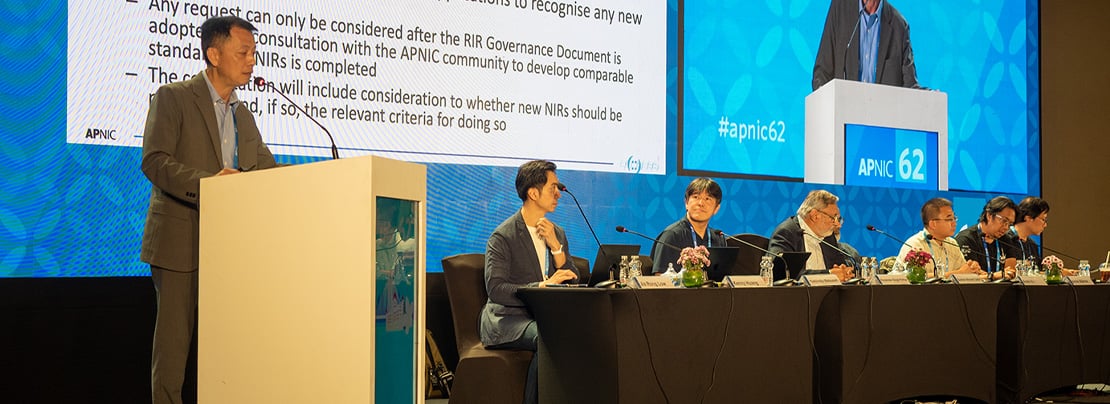
Concurrently, the APNIC Open Policy Meeting (OPM) hosted robust debates on seven distinct policy proposals—representing the highest volume of policy submissions seen at an APNIC meeting in recent years. Among these rigorous technical deliberations, two proposals successfully achieved formal consensus, demonstrating the ongoing efficacy of the community-driven policy development process.
Another critical thread of governance discussions centered on cultivating and empowering the next generation of community leaders. The Community Consultation on Increasing Diversity in Community Leadership highlighted both persistent structural challenges and exciting new opportunities for the region. Key talking points included strategies for strengthening Members’ sense of professional and cultural connection to the wider APNIC community, as well as designing structured, supportive development pathways for emerging technical and administrative leaders.
Participants repeatedly emphasized the invaluable role played by the APNIC Fellowship Program. Specifically, attendees noted how the fellowship acts as a crucial catalyst for supporting future leaders originating from developing economies, ensuring broad geographic and socio-economic representation in regional policy spaces. The APNIC Secretariat is currently in the process of consolidating all findings, survey inputs, and meeting notes from this consultation to present them to the Executive Council for formal consideration and the subsequent formulation of actionable next steps.
APNIC’s Future Strategic Direction
APNIC 62 also served as the official launchpad for the release of the 2026 APNIC Survey findings. Commissioned by the Executive Council and independently administered by a professional research organization, the extensive survey gathered empirical feedback from more than 1,300 individual Members and active community participants. By leveraging independent research methodologies, the survey provides a statistically robust, unbiased view of how the community perceives APNIC’s day-to-day performance, its future operational needs, and its overarching strategic priorities.
The analytical findings revealed consistently high levels of satisfaction across nearly all measured dimensions, including organizational trust, technical service quality, the tangible value derived from membership, and overall institutional performance. These positive indicators reflect steady operational execution by the Secretariat and sustained engagement from the technical community.
A particularly noteworthy insight derived from the survey data was the remarkable breadth of priorities identified by respondents. Rather than concentrating their demands on a single operational domain or niche service, survey participants emphasized the fundamental importance of maintaining a balanced portfolio of activities. These include everything from robust registry operations and robust database management to capacity building and security initiatives that collectively contribute to an open, stable, and secure Internet environment throughout the entire Asia-Pacific region.
In response to the survey release, the Executive Council announced plans to publish a formal, structured response later this year. This upcoming document will outline precisely how the empirical findings and qualitative feedback gathered from the 1,300-plus respondents will directly inform and shape the architecture of APNIC’s upcoming Strategic Plan.
Stay Involved
As the conference drew to a close, organizers reiterated their gratitude to all delegates, remote participants, volunteers, and sponsors who contributed their time and expertise to the success of APNIC 62 and the associated Member Meeting.
The organization continues to encourage all Members to maintain an active voice by participating in ongoing consultations, engaging in policy discussions, contributing to regional governance activities, and submitting direct inquiries or feedback through the official APNIC EC Contact Form. Ongoing, proactive community input remains the single most effective way to ensure that the Executive Council accurately understands evolving Member priorities, thereby safeguarding informed, resilient decision-making for APNIC’s shared digital future.


Leave a Reply