
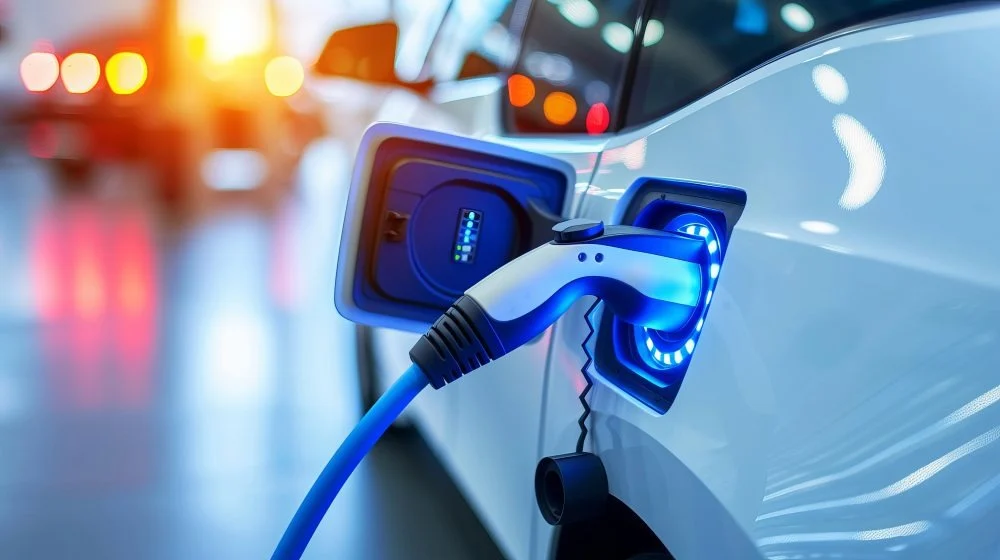
Declining electric vehicle sales across the United States are currently triggering widespread anxiety within the electric car community and outright panic across mainstream media outlets. Earlier this year, The New York Times declared that "the American EV has been crushed," while ABC News suggested that the electric vehicle market is rapidly shrinking into a "niche" product category with a dwindling chance of achieving broad, mainstream consumer appeal.
Much of the public debate and political finger-pointing has focused on external factors. Critics and industry analysts frequently place the blame on the recent expiration or loss of lucrative electric car tax credits and the federal policy shifts involving the repeal of ambitious government EV adoption targets. Traditional U.S. automakers have also shouldered a significant share of the blame from frustrated advocates, having noticeably backed away from their earlier, highly publicized commitments to rapidly transition their fleets entirely to electric power.
Yet, amid the constant cycle of news reports about shifting government policies and fluctuating corporate roadmaps, the true and unspoken solution to this ongoing sales dilemma remains largely ignored: sheer technological innovation.
This oversight should seem glaringly obvious to market observers. In the United States today, fewer than 10 percent of all new vehicle sales are electric. A massive, untapped swath of the automotive market still flatly refuses to consider purchasing an electric car, primarily due to lingering concerns regarding initial purchase costs, charging logistics, and day-to-day practicality. Despite this clear barrier to entry, industry pundits and financial analysts seldom cite innovation as the primary mechanism required to attract the remaining 90 percent of the driving public.
This omission is particularly strange given that innovation is precisely what brought the modern electric vehicle movement to this historical juncture in the first place. Forty years ago, the electric car was widely viewed as a punchline. Detroit automotive engineers famously joked that no one ever quoted the zero-to-sixty acceleration times of electric prototypes because the vehicles literally lacked the capability to reach a speed of sixty miles per hour. Even Martin Eberhard, who would go on to co-found Tesla Motors, famously referred to the experimental electric cars of the 1980s as "punishment cars." In his view, they were vehicles built for people "who needed to be punished because they weren’t riding bicycles."

The turning point for the industry arrived with two Caltech-educated engineers, Wally Rippel and Alan Cocconi, who established a company called AC Propulsion in 1992. Utilizing advanced power electronics, Rippel and Cocconi successfully engineered a compact mobile inverter. This crucial technological breakthrough allowed them to harness a brushless AC motor, which completely transformed the performance profile of their electric test vehicle, endowing it with staggering amounts of speed.
Instead of struggling laboriously to reach highway speeds, their prototype electric car, known as the tZero, could reach a top speed of 160 miles per hour. Furthermore, it could rocket from zero to sixty miles per hour in less than four seconds, making it visibly and measurably faster than a Ferrari, a Chevrolet Corvette, or virtually any other high-performance gasoline-burning vehicle on the market at the time.
When Martin Eberhard had the opportunity to drive the tZero, he was so profoundly impressed by its capabilities that he immediately decided to launch Tesla Motors. Just three years later, leveraging the foundational principles of AC Propulsion’s groundbreaking powertrain technology, Eberhard and his new co-founder, Elon Musk, debuted their first Roadster at a star-studded gala event held at the Santa Monica Airport in California.
The Roadster buzzed dynamically around the airport runways to the immense delight of a crowd of prominent celebrities, including California Governor Arnold Schwarzenegger and Disney executive Michael Eisner. Within a span of just two weeks, Tesla successfully collected 127 checks, each valued at $100,000, from eager buyers placing deposits in anticipation of the Roadster’s eventual production. Prior to that moment, mainstream observers would have never believed an electric car could command such intense consumer desire, yet the reality was undeniable. Wealthy celebrities could not wait to reserve a vehicle and park it in their personal driveways.
This milestone represented the automotive story of innovation in its purest and most potent form. At that specific moment in time, there were no government tax credits, consumer rebates, or aggressive regulatory mandates for zero-emission vehicles. There was simply a completely non-existent commercial electric car market and a nation filled with skeptical consumers. Yet, through a flash of brilliant engineering, Rippel and Cocconi managed to appeal directly to a demographic of car enthusiasts who had never previously dreamed they would ever want to own an electric car.

As Tesla co-founder Marc Tarpenning later noted when reflecting on those early days, some of those affluent and performance-driven consumers cared very little about what kind of fuel burned under the hood. "If it burned baby harp seals, they would have been totally fine with that, as long as it accelerated like crazy," Tarpenning remarked.
The broader market situation facing the automotive industry today is not fundamentally different from those early developmental years. While it is true that more than one million electric vehicles are now sold annually in the United States, reaching the vast 90 percent majority of consumers who currently bypass showrooms will require automakers to maintain a relentless focus on innovation.
Automotive companies will need their own modern flashes of engineering genius to overcome existing hurdles. There are plenty of prime targets for such technological breakthroughs: significantly faster charging speeds, a more reliable and expansive public charging infrastructure, and considerably cheaper, higher-density battery packs. Reaching those critical performance and pricing milestones may take years, or potentially even decades. However, short of an out-and-out legislative ban on traditional gasoline-burning vehicles, continuous innovation remains the single most effective pathway to securing broad, organic consumer appeal for the electric car.
Recent industrial history clearly teaches that everyday consumers readily embrace new technological products if those innovations solve practical problems and are priced reasonably. Such was definitively the case with both the internet and the mobile phone, two massive technological revolutions that actually emerged and matured commercially after the modern electric car project had already begun.
Both technologies now serve billions of people worldwide, while the electric car continues to struggle to firmly establish its footing in the mainstream transportation sector. The rapid global adoption of the internet and the smartphone demonstrated conclusively that modern consumers will not reject a complex new technology if it directly and seamlessly meets a deeply felt personal need in their daily lives.

This reality outlines the core challenge currently facing the entire electric car community. The industry can no longer afford to continuously preach to the converted choir of early adopters. It can no longer afford to rely exclusively on lobbying efforts and public complaints regarding the loss of government tax credits and financial subsidies. Instead, the sector must refocus its energy on appealing directly to the everyday consumers who do not yet realize that they actually want an electric car. There are millions of potential buyers out there, waiting patiently to be wowed by superior engineering and design.
To achieve long-term commercial success and move past the current wave of market stagnation, the electric car community will ultimately need to innovate, just as Wally Rippel and Alan Cocconi did decades ago.
Charles J. Murray is the author of "The EV Guys: How Caltech Engineers Reinvented the Electric Car," published by Purdue University Press.


Leave a Reply