
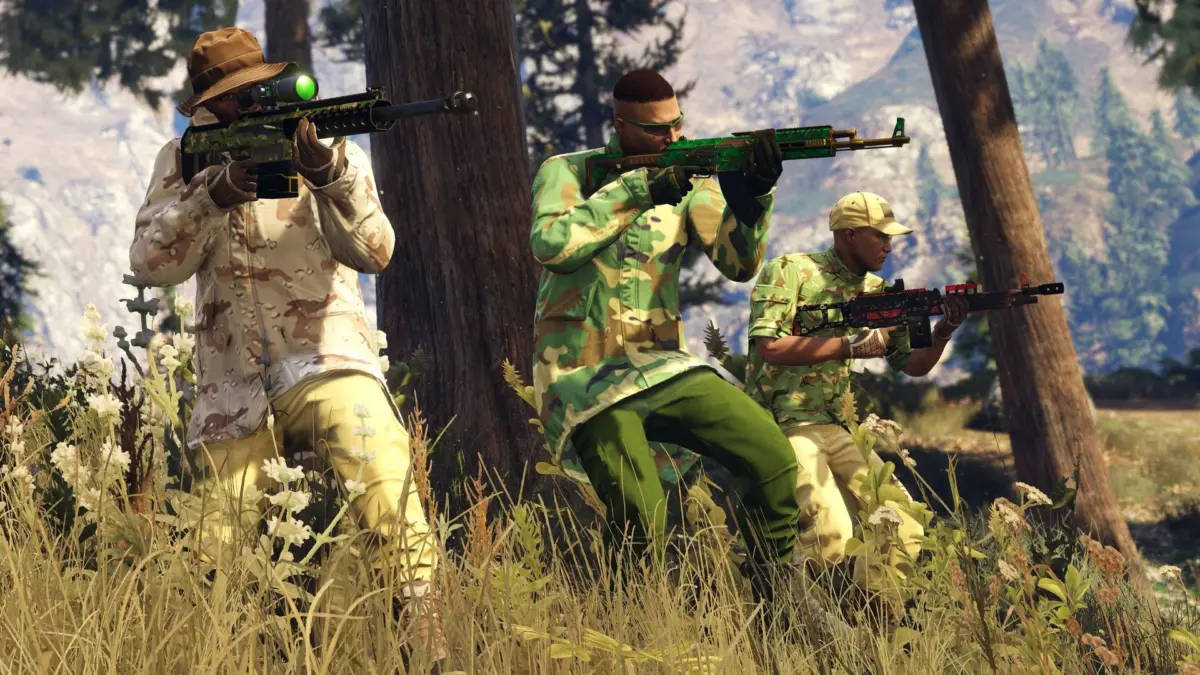
The brief existence of the browser-based project came to light when Alex St. Louis, the founder of Wonder Interactive, shared a short video clip on the social media platform X demonstrating what appeared to be functional Grand Theft Auto V gameplay running smoothly within a browser window. According to St. Louis, the complex title was ported to WebAssembly—a low-level assembly-like language with a compact binary format that runs with near-native performance on the web—with the assistance of artificial intelligence tools.
While the exact mechanics of how an artificial intelligence model assisted in translating such a massive, hardware-intensive open-world game into WebAssembly remain shrouded in technical obscurity, the demonstration instantly captured the attention of the gaming community. For a brief window, enthusiasts realized that one of the best-selling entertainment products of all time, typically requiring dedicated gaming hardware, powerful graphics cards, and substantial storage space, was apparently accessible through nothing more than a URL.
However, the experiment was exceptionally short-lived. It remains officially unclear what specific catalyst caused the website hosting the project to become inaccessible in such a short amount of time. Users who attempted to visit the domain while the story was unfolding initially encountered a Cloudflare Error 1014, a status code typically indicating a CNAME cross-domain restriction or a DNS configuration issue. Shortly after displaying the error page, the domain PlayGTA5.com underwent another transformation, entirely replacing the project with a vintage food advertisement originating from the 1970s.
Despite the abrupt disappearance of the live site, the project had already left a mark on the internet, and digital historians noted that the game can still be accessed via various online archiving services that captured snapshots of the site during its fleeting moment in the spotlight.
The swift vanishing act of the browser port comes as little surprise to industry observers familiar with the notoriously protective legal stance of Take-Two Interactive, the parent company of Rockstar Games. While Take-Two did not issue a public statement regarding the specific domain before it was taken offline, the publisher has a long-standing history of aggressively defending its intellectual property rights. Copyright concerns and swift legal interventions are standard responses from major publishers whenever unauthorized versions, source code leaks, or unofficial ports of flagship franchises like Grand Theft Auto surface on the public internet.
Grand Theft Auto V, originally released by Rockstar Games over a decade ago, continues to be a commercial juggernaut, maintaining a massive active player base across multiple generations of gaming hardware and personal computers. Because the game’s code, assets, and engine architecture are heavily protected proprietary assets, any attempt to run the title on unauthorized platforms—especially via an accessible web browser link distributed to the general public—inevitably triggers severe legal scrutiny.
The involvement of artificial intelligence in porting the game adds a modern twist to an old narrative. In recent years, developers and tech enthusiasts have increasingly experimented with AI-driven tools to translate, decompile, or optimize legacy software for modern architectures. WebAssembly, designed to enable high-performance applications on the web pages of modern browsers, has frequently been a target for experimental ports of classic games, ranging from early ID Software titles to 3D classics of the late 1990s and 2000s. However, successfully bringing a title as massive and technologically sophisticated as Grand Theft Auto V into the browser environment represents a monumental technical hurdle, making the Wonder Interactive demonstration a significant talking point among software engineers and gamers alike.
Whether the project was voluntarily pulled offline by its creators out of an anticipation of impending legal action, or whether hosting providers and domain registrars intervened behind the scenes, the episode underscores the delicate balance between technical experimentation and copyright law in the digital age. As AI tools continue to evolve and lower the barrier for complex software compilation and cross-platform porting, developers and publishers are likely to face an increasing number of novel challenges regarding intellectual property rights on the open web. For now, the fleeting appearance of PlayGTA5.com serves as a momentary glimpse into a potential future of browser-based gaming, while reminding the tech community of the formidable legal boundaries that govern multi-billion-dollar entertainment franchises.



Leave a Reply