
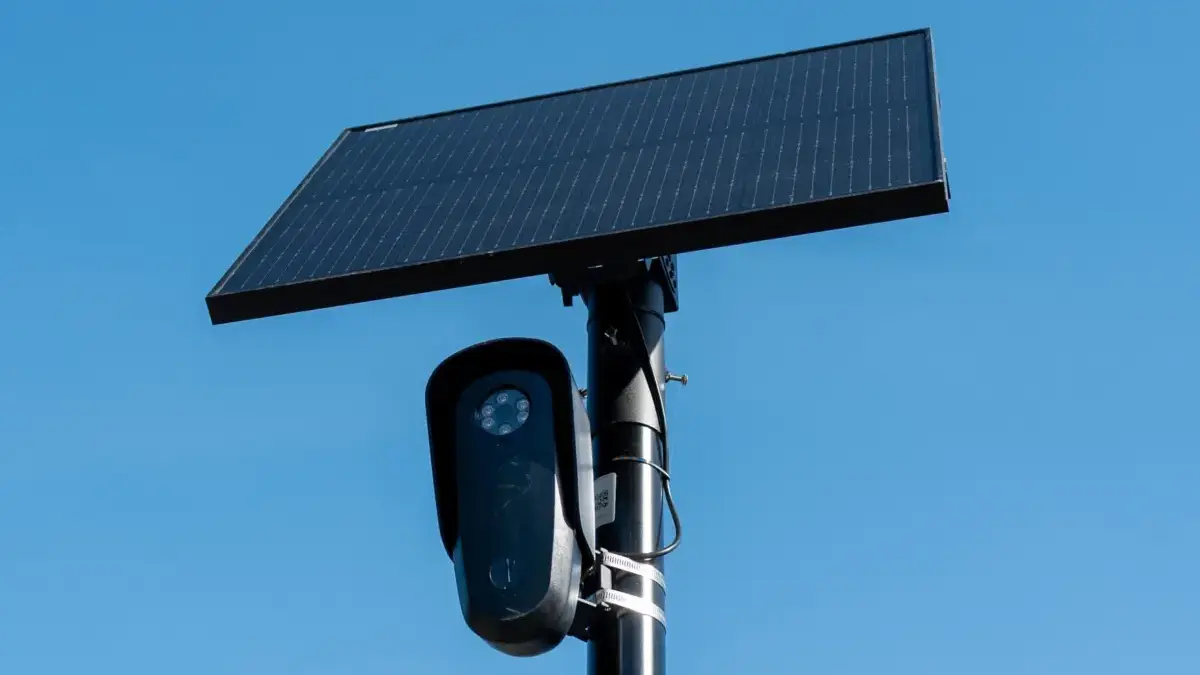
A federal judge in Oklahoma has ruled that a Tulsa County Sheriff’s deputy violated a woman’s Fourth Amendment rights when he used an automated license plate reader system to search for her vehicle without a warrant. The decision marks a significant legal milestone, representing one of the first times a federal court has declared a search conducted through the Flock Safety database to be unconstitutional.
While the ruling by U.S. District Judge Sara Hill does not establish a binding nationwide precedent, legal experts note it provides a powerful framework for future challenges against the widespread, passive tracking of motorists by law enforcement agencies.
The case centered on a Tulsa-area traffic stop involving a female motorist. According to court records, a sheriff’s deputy queried the Flock Safety database for the woman’s license plate. Judge Hill noted in her ruling that the deputy had "no apparent reason" for running the search "other than the fact that [the woman’s vehicle] had a California license plate."
After pulling her vehicle’s travel history from the automated network, the deputy used that longitudinal data as part of the justification to search the interior of the car. During the subsequent search, law enforcement officers allegedly discovered 91 pounds of methamphetamine.
However, Judge Hill sharply rejected the legality of how the evidence was initially uncovered. She ruled that all evidence obtained following the initial database query must be suppressed under the legal doctrine known as the "fruit of the poisonous tree." Because the deputy lacked a warrant and had no individualized suspicion to query the database in the first place, the subsequent discovery of the drugs stemmed directly from an unconstitutional search.
In her strongly worded opinion, Judge Hill took broader aim at the mechanics of automated license plate reader (ALPR) technology, arguing that tracking citizens’ movements—even when those travels occur in public spaces—crosses a constitutional threshold when executed on a mass scale.
She wrote that tracking individuals becomes "constitutionally problematic when law enforcement can indiscriminately and passively catalog your whereabouts over an extended period of time and then use that information for any purpose whenever convenient."
"This is a type of indiscriminate mass surveillance," Judge Hill wrote, contrasting the technology with targeted police investigations. "It is not targeted on a single individual, as in [Carpenter v. United States, a landmark Supreme Court case focused on how government agencies access location data from cell phones]. It is a tool that collects information about all vehicles that pass by any network-connected camera at all times, and it serves up the information to law enforcement on demand."
The ruling arrives amid a rapidly growing wave of skepticism and legislative pushback against automated surveillance technologies from across the political spectrum. Privacy advocates, civil liberties organizations, and local governments have increasingly questioned the unchecked expansion of companies like Flock Safety, which installs network-connected cameras capable of capturing and logging vehicle details, timestamps, and locations in real-time databases accessible to police departments nationwide.
The political backlash has translated into concrete policy shifts at both state and federal levels. Numerous local and state governments, including Florida and Texas, have taken official steps to block or restrict the deployment of Flock cameras over mounting privacy concerns.
The legislative resistance reached Capitol Hill when Senator Bernie Sanders, an independent from Vermont, introduced the Block Flock Act. The proposed legislation aims to erect a firm statutory barrier preventing federal agencies from utilizing automated license plate reader networks like Flock to track the public.
As regulatory scrutiny intensifies, Flock Safety leadership has faced mounting pressure to address the public relations and legal fallout. Flock CEO Garretty Langley has publicly called for a "compromise" between privacy rights and public safety objectives. In an effort to address civil liberties concerns head-on, Langley also issued an apology to women who have experienced stalking or harassment by law enforcement officers who allegedly abused their access to the Flock system.
Amid canceled municipal contracts and a shifting regulatory landscape, reports have emerged that Flock Safety has taken steps to reduce its operating overhead by offering voluntary employee buyouts to shrink its workforce.



Leave a Reply