
Welcome to Local AI Weekly, our ongoing review of the rapidly shifting landscape surrounding local artificial intelligence, open-weights models, and self-hosted environments. As the terminology surrounding "local AI" continues to evolve, the industry faces a growing challenge regarding definitions. Increasingly, applications claim to be local while relying heavily on remote infrastructure for inference, user authentication, or data storage.
For developers, hobbyists, and privacy-conscious users navigating this space, finding tools that genuinely operate offline requires careful evaluation. Before selecting any local AI tool, users are advised to ask three fundamental questions: Where does inference actually take place? What account or network service is still required to run the software? And what permissions and usage rights does the license grant? Ultimately, the best local AI tool is the one that operates autonomously without requiring proprietary cloud endpoints, compulsory subscriptions, or external network dependencies.
On My Bench
The ongoing evaluation of practical, self-hosted, and localized tools recently brought several interesting projects and platform shifts into focus. Team It’s FOSS recently transitioned its internal communication infrastructure from Discord to Buzz, a decentralized communication tool designed for both humans and autonomous agents. Created by Twitter co-founder Jack Dorsey, Buzz allows agents to operate either on remote servers or locally via an Agent Control Protocol (ACP) harness. While the platform offers a promising decentralized alternative to traditional chat applications, early adoption reveals minor operational quirks. For instance, clipboard screenshots cannot currently be pasted directly into the chat interface, and desktop notifications are restricted to direct messages. However, these limitations remain manageable for day-to-day collaboration.

Meanwhile, Kubuntu developer Rick Timmis is actively developing Klara, a local desktop AI assistant built specifically for the KDE Plasma environment. The primary objective behind Klara is to enable native desktop control via voice input, offering users a localized alternative to cloud-integrated operating system assistants. Distributed via Timmisun Limited with lifetime licensing options starting from £24, the project remains an active work in progress within the KDE ecosystem.
Another project under evaluation is OpenMuse, an MIT-licensed personal agent application featuring a browser worker, durable execution tasks, and an optional Docker-based Linux environment. While users can self-host the application, the initial setup process still requires a CopilotKit Intelligence key, and open-ended execution tasks default to external cloud providers by design. Although users can redirect these tasks to an OpenAI-compatible endpoint, the platform currently lacks a documented, native path for Ollama integration. Consequently, OpenMuse functions primarily as self-hosted software rather than a strictly offline personal agent.
Get MCP Certified
The professional credentials landscape for artificial intelligence is also expanding, with institutions such as the Linux Foundation introducing formal certification programs. Among the newly available options is the Model Context Protocol Associate certification. This credential targets developers building integrations for the Model Context Protocol or professionals seeking to validate their AI competencies. Industry observers note that such certifications provide structured learning paths for engineers working with modern context architectures and agent communication layers.

Open Model News
When deploying local models, organizations frequently discover that massive language parameters are unnecessary for routine, bounded tasks. OpenDecider offers a more specialized approach, focusing on classification and routing challenges—such as determining which queue a support ticket should enter—rather than generating long-form conversational replies. The project consists of two variants: a nano model scaled at approximately 400 million parameters and a small model operating at four billion parameters built as a Qwen-based adapter. According to the author, both models were distilled from larger teacher models, resulting in disk footprints of approximately 2.0 GiB for the nano version and 8.9 GiB for the small version under tested configurations.
This architecture highlights a broader trend in local deployments: routine triage tasks do not require oversized language models. Instead, deploying a small, efficient student model locally can serve as an effective triage layer ahead of more resource-intensive agents.
Big Tech Watch
Hardware and platform vendors continue to refine their local AI deployment pipelines. During its September announcements, NVIDIA outlined upcoming integration updates for Hermes and OpenClaw designed to simplify local model configuration. A one-click setup path for Hermes was launched for Windows environments, with Linux support designated as "coming soon." Users have been advised to distinguish this upcoming integration from the Linux PAIR beta versions already available for testing.

Additionally, NVIDIA highlighted performance metrics citing up to a 1.9x increase in throughput achieved through specific llama.cpp optimizations running on an RTX 5090 GPU. Industry analysts note that these figures reflect vendor-benchmarked performance on specialized hardware rather than universal speedups across all consumer configurations.
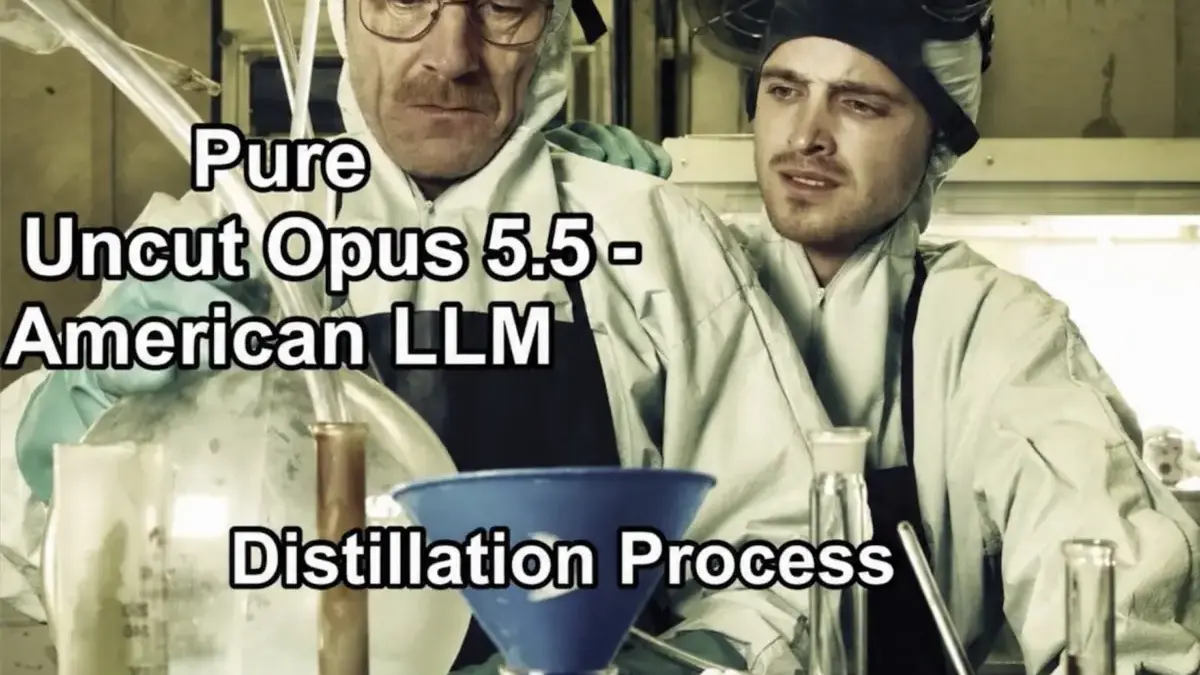
AI Jargon: Distillation
Understanding how smaller models achieve high performance requires looking at a foundational training methodology known as distillation. In machine learning, distillation functions much like an educational mentorship between an advanced expert and a student. A massive, highly capable model—often referred to as the teacher—possesses extensive general knowledge but requires substantial computational resources to operate.
Instead of training a smaller model from scratch on millions of raw textbooks, the larger teacher model guides the smaller student model by demonstrating its reasoning pathways, problem-solving strategies, and output distributions. By observing how the teacher processes complex puzzles and arrives at conclusions, the student model absorbs these optimization shortcuts. This process allows the resulting smaller model to retain a high degree of accuracy and capability while requiring significantly less memory and computational power for local inference.

Quick Tip: Back up your Hermes agent before you need to rebuild the harness
As local agent deployments become more integrated into daily workflows, data persistence and disaster recovery are increasingly critical. Following previous guidance on verifying GPU offloading via commands like ollama ps, administrators running Hermes are encouraged to implement routine backup procedures to safeguard their agent environments.
Executing the hermes backup command generates a compressed archive containing the complete Hermes home directory, including configuration files, local memory, active sessions, and system state. These archives can later be restored using the hermes import command with the designated backup file path. Administrators can manage storage consumption by utilizing the --keep N flag to cap the number of retained backup archives, while automated cron jobs can be configured to execute scheduled backups without initializing an active agent instance.
Because these backup archives frequently contain sensitive credentials, active session tokens, and personal memory logs, security best practices dictate that encrypted copies should be securely stored off-machine and excluded from public or private version control repositories.
Leave a Reply