
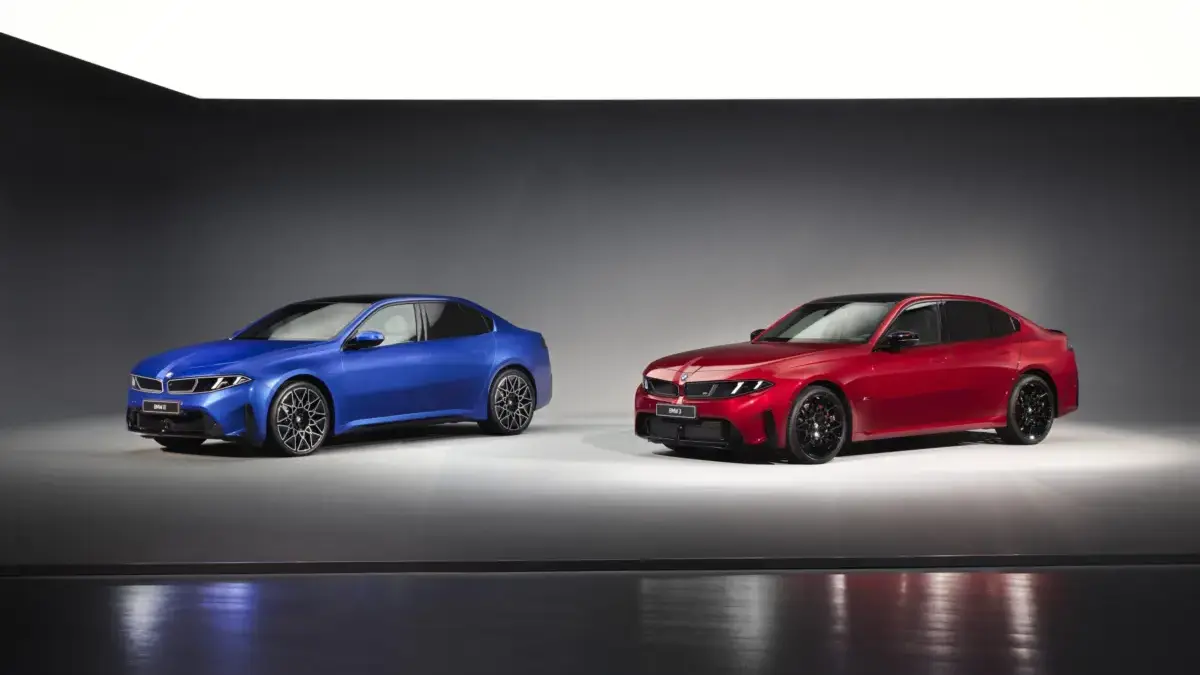
When BMW first announced it was completely reimagining its iconic i3 as an all-electric four-door sedan built from the ground up on its revolutionary Neue Klasse platform, the German automaker left automotive enthusiasts and prospective buyers guessing about a lot of the most critical details. At the time of that initial revelation, essential specifications like battery capacity, exact driving range figures, and official pricing were kept firmly under wraps, leaving the industry to speculate about how the vehicle would position itself in a rapidly evolving electric vehicle market. Today, however, BMW is finally starting to fill in those blanks, offering a comprehensive look at what the upcoming electric sedan will bring to dealerships when it officially arrives.
Let us start with the pricing structure, which will dictate how competitively the vehicle enters the luxury landscape. BMW has announced that the 2027 i3 50 xDrive will start at an MSRP of $61,500, to which buyers will need to add a $1,350 destination fee. This starting figure positions the electric sedan firmly in the heart of the highly competitive Mercedes-Benz C-Class segment, squaring off directly against some of the most established luxury players in the industry. Back in March, industry analysts and automotive journalists could only offer a ballpark guess around the $60,000 mark, meaning BMW’s actual pricing lands remarkably close to those initial expectations while still commanding a clear premium. Alongside the pricing confirmation, BMW also solidified the timeline for the vehicle’s market arrival, confirming an official U.S. launch in the first quarter of 2027.
Beyond the cost of entry, BMW also pulled back the curtain on the intricate details of the i3’s dual-motor powertrain setup. The vehicle relies on two distinct electric motors working in tandem to deliver power to all four wheels. In the rear axle, the vehicle utilizes an electrically excited synchronous motor, commonly referred to as an EESM, which churns out an impressive 322 horsepower and 321 pound-feet of torque. Up front, the vehicle incorporates an asynchronous motor that adds another 165 horsepower and 188 pound-feet of torque to the equation. Combined, this dual-motor configuration yields a total system output of 463 horsepower and 476 pound-feet of torque, promising robust acceleration and responsive handling characteristics tailored to the brand’s traditional driving dynamics.
The choice of an electrically excited synchronous motor for the primary drive axle is particularly noteworthy from an engineering standpoint. Unlike traditional electric motors that rely on permanent magnets—which require rare-earth materials—the EESM uses electricity instead of permanent magnets to power both its stator outer frame and its rotor inner spinning part. An advanced power inverter acts as the literal brain of the entire propulsion system. This inverter is responsible for converting direct current from the high-voltage battery into alternating current for the motor, precisely regulating the electromagnets, and continuously monitoring performance metrics to ensure that the motor operates at the highest possible level of energy efficiency under varying driving conditions.
When it comes to efficiency and battery performance, the range figures quoted in the official press release are nothing short of impressive. Back in March, early estimates pointed toward roughly 440 miles of total battery range on a single charge. However, BMW’s latest internal projections indicate that the actual estimated figure will land closer to an astonishing 468 miles, based on upcoming EPA testing protocols. This competitive positioning may not be entirely accidental. BMW likely caught wind of the 2027 Mercedes EQS’s eye-catching range estimate of 925 kilometers, which translates to roughly 575 miles on the more lenient WLTP testing cycle. Because WLTP cycles typically trend about 10 to 20 percent more generous than EPA estimates, BMW realized it could deliver comparable real-world longevity at a significantly lower price point, a business strategy that appears to be a calculated and potentially lucrative gamble.
Frustratingly, despite revealing these range targets, BMW is still keeping quiet regarding the exact battery capacity of the i3. Nevertheless, the company has confirmed that the vehicle features the automaker’s cutting-edge "Gen6" high-voltage battery architecture. This new battery pack is constructed using advanced cylindrical lithium-ion cells that measure 46 millimeters in diameter and 95 millimeters in height. According to BMW’s engineering data, these newly developed cylindrical cells provide a substantial 20 percent increase in overall energy density when compared directly to the prismatic cells that were utilized in the previous generation Gen5 batteries, allowing for greater energy storage without a corresponding penalty in physical weight or vehicle packaging space.
The BMW i3 also incorporates several advanced technological features designed to streamline the ownership experience. Among these is bidirectional charging support, which includes both vehicle-to-load and vehicle-to-home capabilities, enabling the car to act as a mobile power source or an emergency backup battery for domestic needs. The vehicle also features an intelligent charging flap that automatically opens when a driver approaches a recognized, known charging point, as well as Plug and Charge functionality for seamless, automatic payment and authentication at 10 different major charging providers without requiring physical cards or mobile applications.
Inside the cabin, the completely redesigned digital dashboard centered around the iDrive infotainment system represents a radical departure from traditional automotive interior design. The setup completely eliminates traditional physical gauge clusters, opting instead for a futuristic, heads-up style projection that spans the width of the lower windshield. This display remains clearly visible to the driver even when wearing polarized sunglasses, and passengers are granted the ability to view or customize specific segments of the projection to suit their preferences. The central dash is dominated by a sweeping 17.9-inch free-cut touchscreen interface. Through this screen, occupants can effortlessly drag and drop up to six customizable widgets—ranging from media controls and live weather updates to real-time navigation data—directly from the central display onto the windshield projection area.
Furthermore, the steering wheel integrates what BMW describes as "shy-tech" controls. In this layout, physical buttons remain hidden and only light up when they are actively available for use, providing tactile haptic feedback to ensure that drivers can operate essential functions without ever needing to look down away from the road ahead. Following the broader luxury automotive industry’s ongoing race to integrate sophisticated artificial intelligence into modern cabins, BMW is also embedding Amazon’s Alexa technology directly into the i3. This long-awaited, large-language model iteration of Alexa is capable of handling natural, conversational voice requests, searching the internet for live information, and managing complex climate control settings or window operations naturally. BMW has been attempting to introduce this advanced AI-powered assistant into its production vehicles since 2022, though the rollout was delayed due to the lengthy development cycle required by Amazon.
When the vehicle is safely parked, occupants can pass the time by watching full-length movies or live television broadcasts through a built-in Video application powered by TiVo, with Amazon Prime Video integration scheduled to follow in subsequent software deployments. While the vehicle’s core navigation software runs on BMW’s proprietary mapping infrastructure, it also incorporates Google Places integration, bringing rich points of interest and search-driven data directly into the routing experience. The underlying software infrastructure runs on an Android-based platform designed to receive continuous, seamless over-the-air software updates over the lifespan of the vehicle.
For buyers searching for an even higher tier of performance and aggressive styling, BMW has confirmed that it will also offer the i3 M60 xDrive. This high-performance variant will feature motorsport-inspired M-specific lighting elements, unique exterior graphics, and large 21-inch Style 1067M aerodynamic alloy wheels designed to optimize both high-speed stability and electrical efficiency. BMW has announced that this performance-oriented version will make its official market debut sometime later in 2027, though pricing details for the M60 variant remain unannounced at this time.



Leave a Reply