
As the current decade marches steadily past its midpoint, film enthusiasts and critics alike have begun reflecting on what has undeniably transformed into a remarkable era for science fiction cinema. While the 2010s belonged largely to the superhero sub-genre and the unstoppable box office momentum of Marvel Studios, the 2020s have forged a different path. This decade has offered a rich landscape of expansive world-building, high-concept psychological thrillers, thoughtful space explorations, and massive franchise blockbusters that continue to push cinematic boundaries.
At the forefront of this movement are visionary directors like Denis Villeneuve, whose definitive adaptation of Frank Herbert’s seminal 1960s novels finally brought the true, staggering scale of Dune to the silver screen. Meanwhile, the superhero genre has still managed to deliver massive, record-breaking cultural touchstones—from the multiverse-hopping antics of Deadpool & Wolverine to James Gunn’s fresh vision for the DC Universe in Superman, alongside historic milestones at the box office. Even outside the realm of heavily established intellectual properties, major non-franchise science fiction efforts like Project Hail Mary have achieved critical and commercial greatness.
Naturally, the beating heart of these cinematic triumphs lies in their writing. The scripts powering these high-stakes narratives have given audiences some of the most memorable dialogue in recent memory. Assessing the cultural and artistic impact of the 2020s thus far reveals a handful of standout quotes that capture the thematic depth, dark humor, and emotional resonance of the decade’s finest science fiction offerings. While the remainder of the decade will undoubtedly introduce new contenders to the cultural lexicon, these five lines currently stand as the defining vocal highlights of modern sci-fi.
Mickey 17
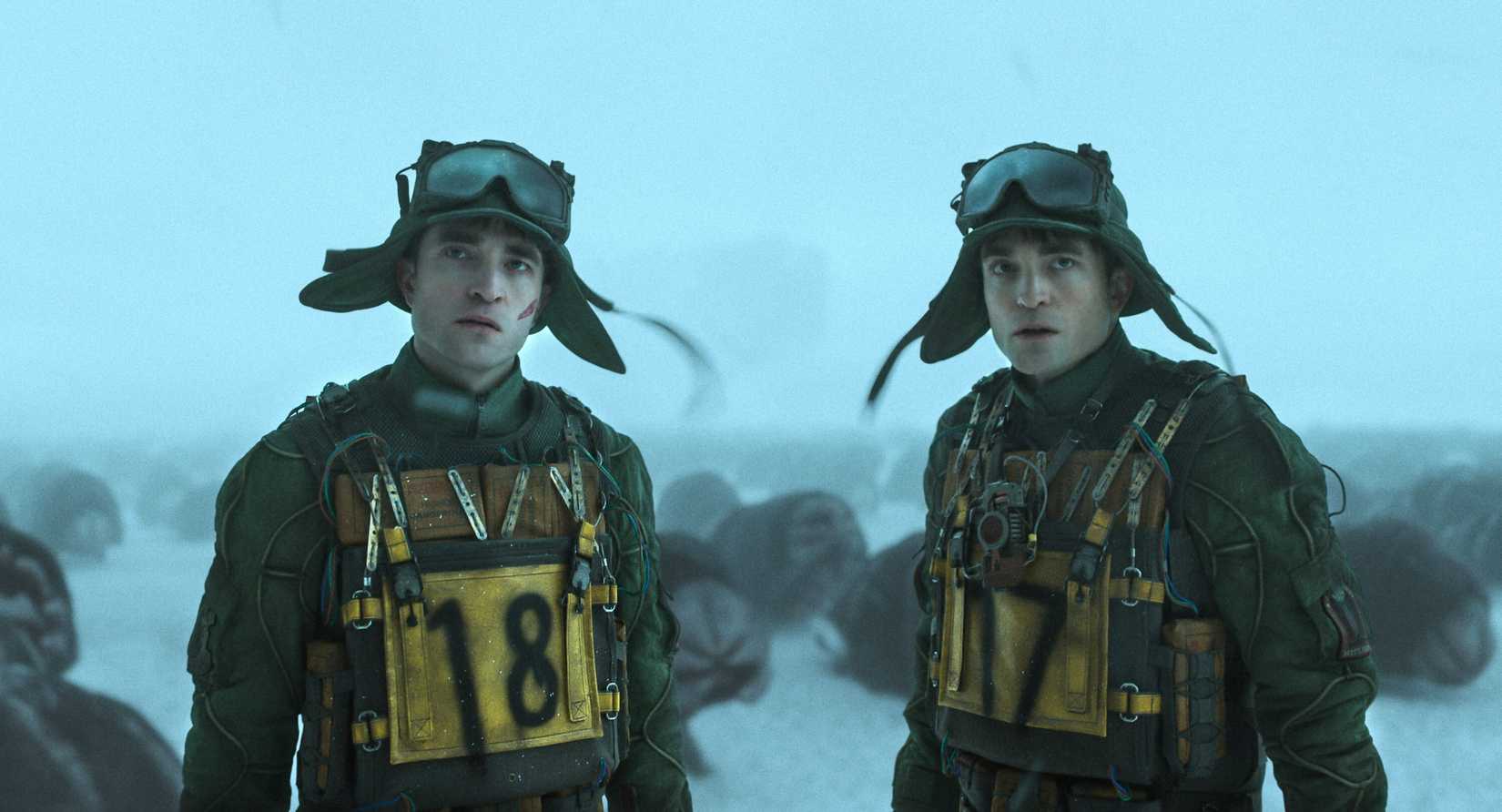
Bong Joon Ho’s 2025 dark comedy Mickey 17, which he both wrote and directed, introduced audiences to a delightfully twisted and darkly funny sci-fi concept. Set in a bleak, satirical vision of the year 2050, human colonization efforts rely heavily on "expendables"—individuals who sign up for perilous tasks with the understanding that their bodies will be repeatedly cloned upon death. Whenever an expendable perishes on the job, a fresh body is printed at the exact same age, loaded with the most recent memory backup uploaded from their predecessor. Robert Pattinson stars in the film as Mickey Barnes, navigating the psychological toll of his precarious existence across various iterations, with the narrative centering specifically on his seventeenth clone.
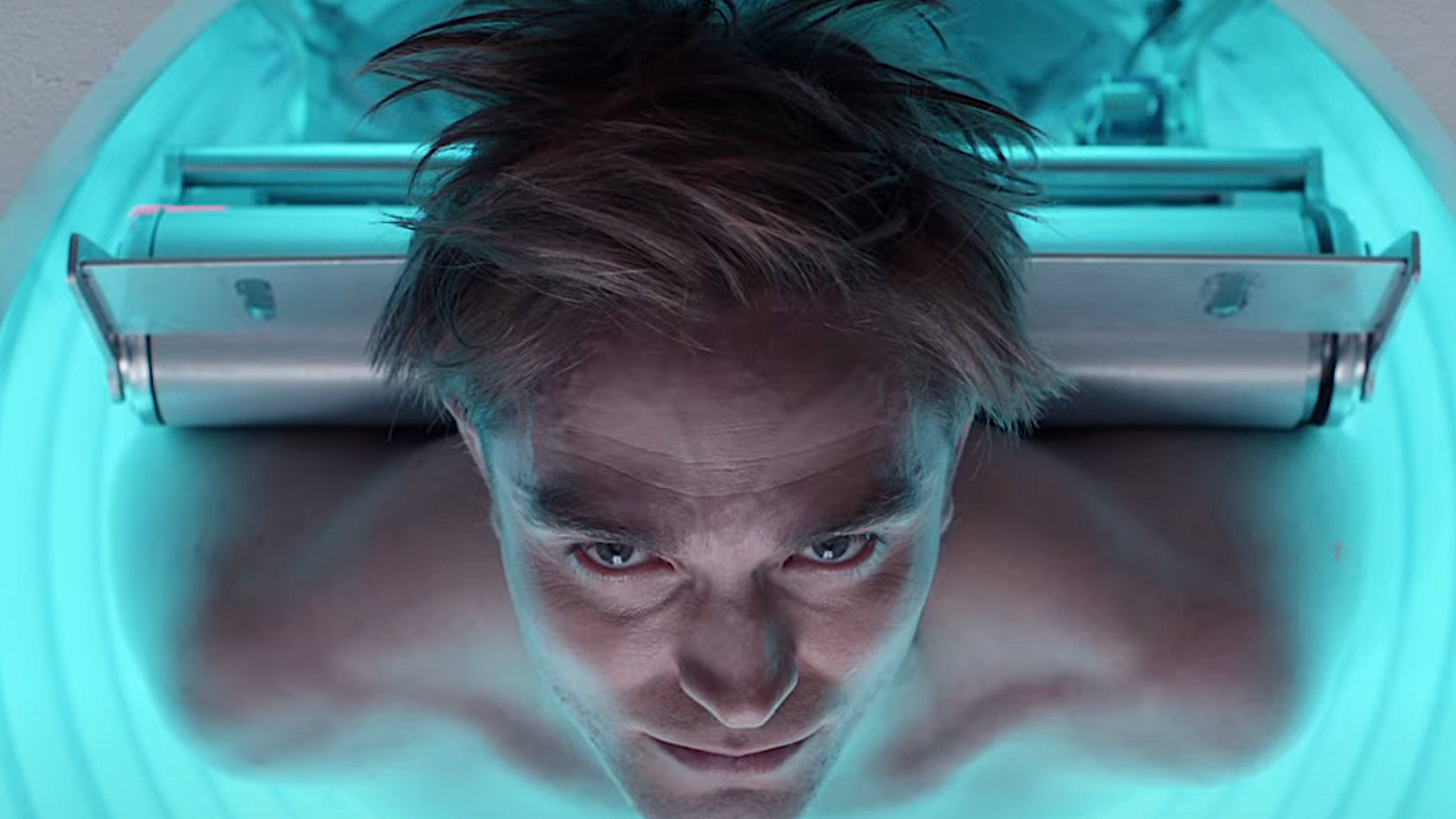
Despite the existential horror of industrial cloning and perpetual mortality, the film extracts a surprising amount of mordant wit from its premise. The sharpest and darkest humor of the picture emerges directly from Mickey’s deadpan internal narration, perfectly encapsulated when he remarks:
Even on my 17th go-around, I hate dying.
The line is absurd on its surface, highlighting the sheer fatigue of repetitive resurrection, but Pattinson delivers the dialogue with a brilliant, casual understatement. It sounds less like a man lamenting a fundamental disruption of the laws of nature and more like someone complaining about an inconvenient commute or bad weather. It is this unique blend of existential dread and casual resignation that elevates Mickey 17, anchoring its satirical bite in sharp, memorable writing.
28 Years Later
More than two decades after Danny Boyle and screenwriter Alex Garland redefined the zombie horror sub-genre with 2002’s 28 Days Later, the creative duo reunited for the anticipated follow-up, 28 Years Later. Finding fresh narrative terrain within a cinematic landscape saturated with the undead is no small feat, yet Boyle and Garland managed precisely that by introducing an entirely original and compelling character in Dr. Ian Kelson, portrayed with gravitas by Ralph Fiennes.
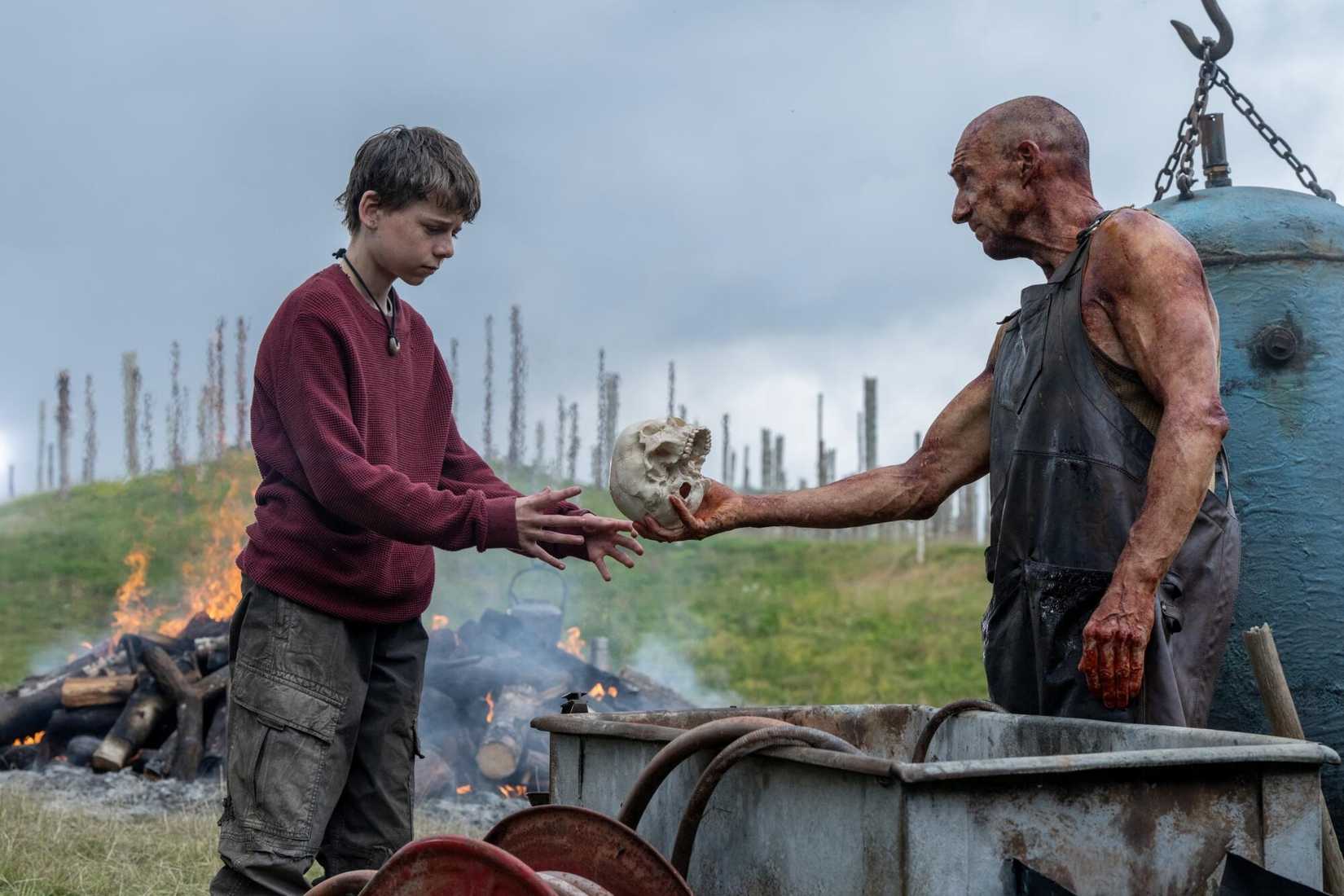
Before the collapse of modern civilization, Dr. Kelson worked as a general practitioner. Nearly thirty years after the initial outbreak of the rage virus, he lives in stark isolation, dedicating his time to scientific observation of the infected. In his solitude, he has also constructed a chilling yet hauntingly poetic monument to the fallen world: the Bone Temple, an architectural marvel composed of thousands of human skulls. During a pivotal sequence, Kelson elucidates the grim meaning behind his monument to Spike, the young boy at the heart of the story played by Alfie Williams, delivering an explanation with an almost Shakespearean weight:
There were so many dead, infected and non-infected alike. Because they are alike. Every skull is a set of thoughts. These sockets saw and these jaws spoke and swallowed. This is a monument to them, a temple.
The quote transforms what could have been a simple, macabre set piece into a profound meditation on humanity, memory, and the shared tragedy of the apocalypse, cementing its place among the decade’s finest dramatic prose.
Superman
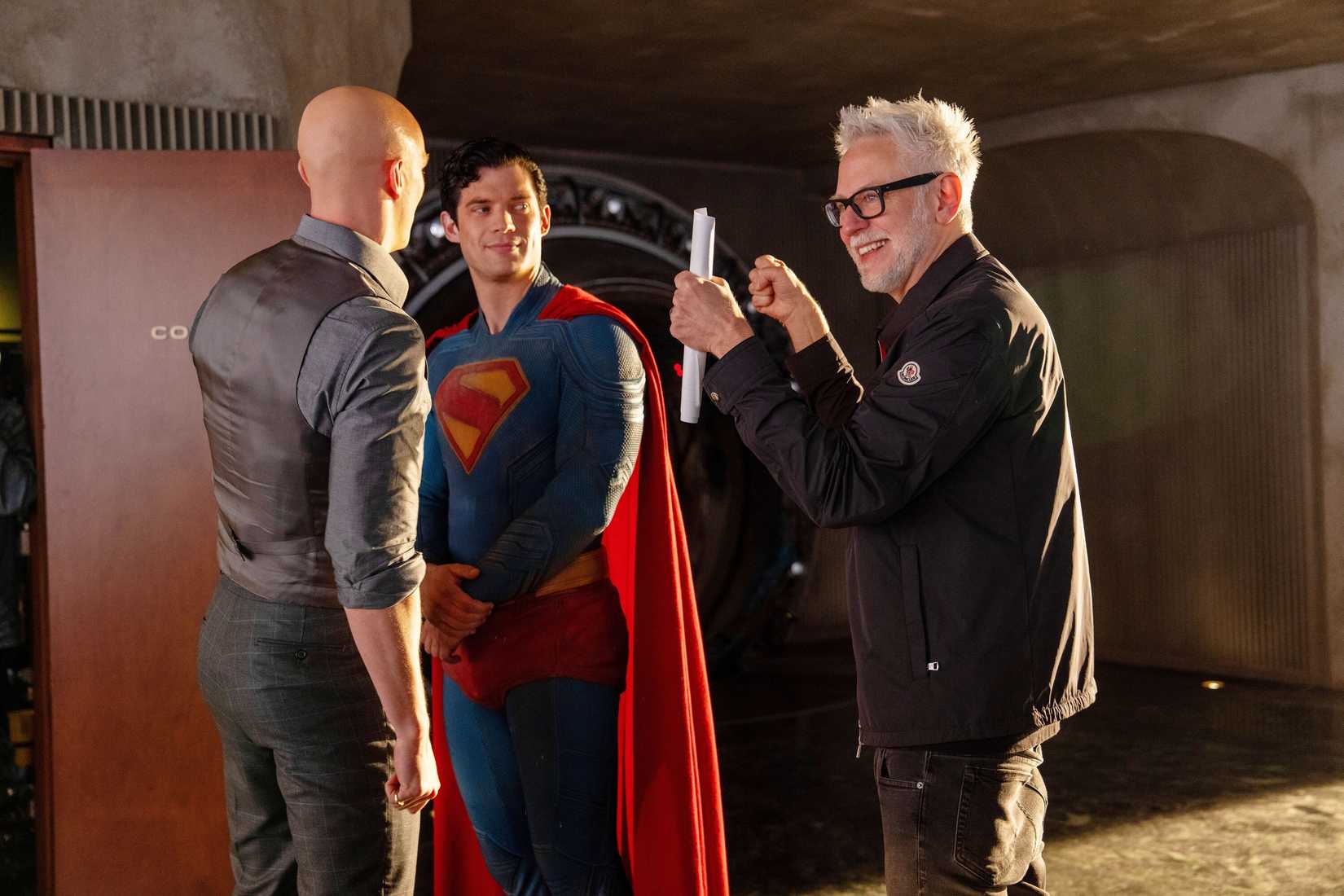
While technically functioning as a sustained monologue rather than a single brief catchphrase, the emotional anchor of James Gunn’s 2025 film Superman resonates far beyond its immediate cinematic context. Gunn’s film successfully restored a sense of unadulterated optimism to the iconic Man of Steel, reminding audiences why the character remains an enduring cultural symbol. Bringing Superman to life requires a delicate balance of mythic grandeur and sincere relatability, a feat accomplished by director and writer James Gunn alongside lead actor David Corenswet.
Given his near-limitless power, Superman can occasionally prove difficult for contemporary audiences to connect with on a deeply personal level. However, the 2025 reboot purposefully imbues the hero with a profound sense of vulnerability and humility, capturing the spirit of Christopher Reeve’s definitive portrayal while forging its own path. The zenith of this thematic exploration occurs during a climactic confrontation with Lex Luthor, played by Nicholas Hoult. When Luthor dismissively insults Superman, reducing him to nothing more than an alien interloper, the hero responds not with anger, but with an uplifting declaration of solidarity and innate goodness:
“That is where you’ve always been wrong about me, Lex,” says Superman. “I am as human as anyone. I love, I get scared. I wake up every morning, and despite not knowing what to do, I put one foot in front of the other, and I try to make the best choices I can. I screw up all the time, but that is being human, and that’s my greatest strength. And someday, I hope, for the sake of the world, you understand that it’s yours too.”
The speech redefines the character’s strength not as an accident of extraterrestrial biology, but as an intentional, daily choice to embrace empathy, vulnerability, and perseverance.
Dune
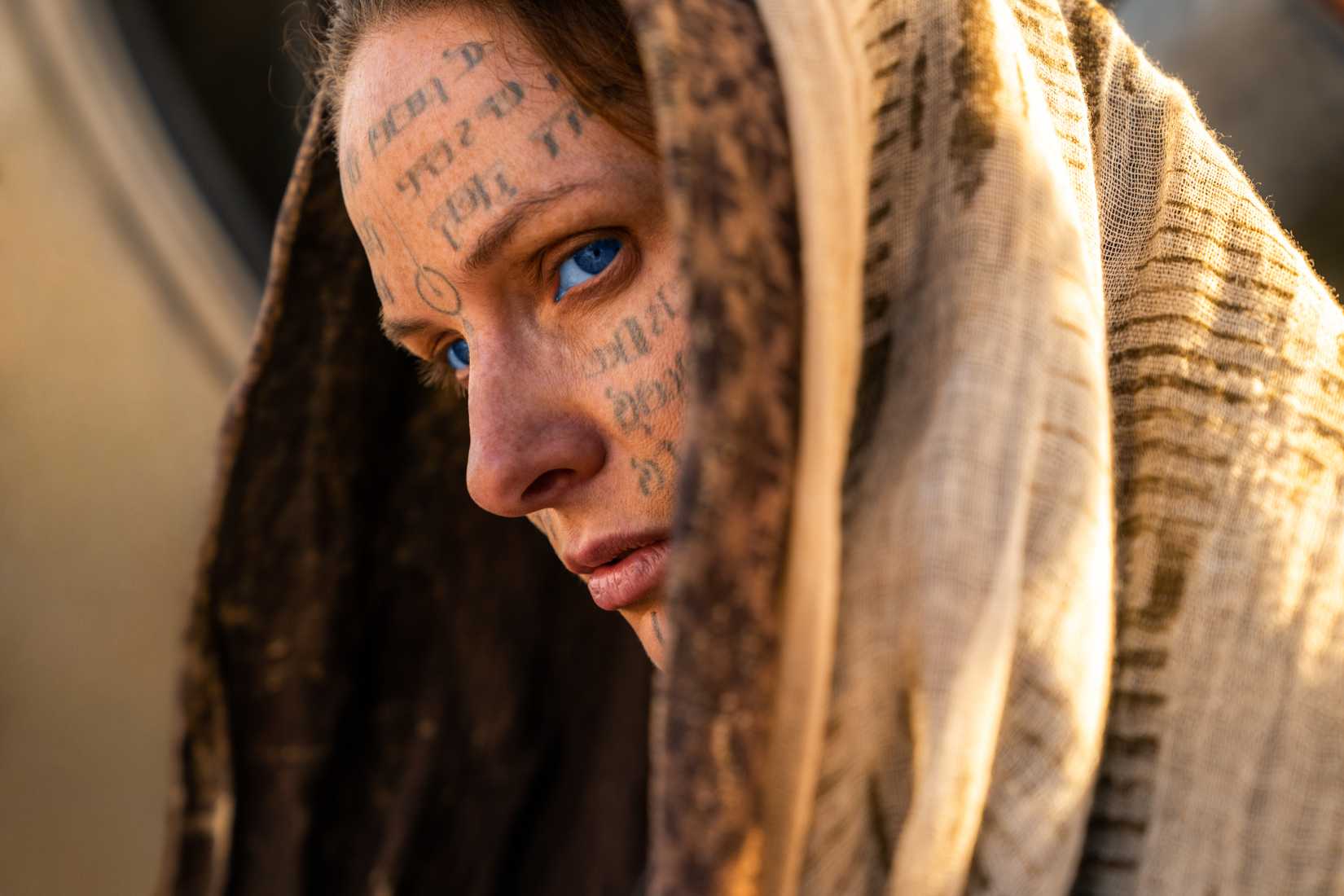
Though its roots stretch back to Frank Herbert’s foundational 1965 science fiction masterwork—appearing multiple times within the original novel—the mantra found renewed cultural prominence through Denis Villeneuve’s cinematic adaptations. Alongside co-screenwriters Jon Spaihts and Eric Roth, Villeneuve integrated the passage into the 2021 film Dune and its subsequent chapters, using it to establish the psychological conditioning of the universe’s elite:
I must not fear. Fear is the mind-killer. Fear is the little-death that brings total obliteration.
This opening passage of the "Litany Against Fear" serves as a crucial mental anchor for members of the House of Atreides, the noble family thrust into a violent geopolitical struggle for control over Arrakis, the harsh desert planet that produces spice, the cosmos’ most valuable commodity. Uttered by various characters across both the literary text and the modern films to steel their resolve against impossible odds, the mantra proves that Herbert’s psychological insights are just as resonant and powerful in the 2020s as they were during the height of the space race.
Project Hail Mary
The cinematic adaptation of Project Hail Mary stands out for its deeply uplifting tone, centering on a desperate interstellar mission to save humanity from a catastrophic solar anomaly. The story follows Ryland Grace, played by Ryan Gosling, a scientist who awakens aboard a distant spacecraft with amnesia, slowly piecing together his monumental responsibility. In the film’s early stages, before he fully embraces his purpose, Grace is crippled by self-doubt, openly questioning his qualifications for space exploration and the survival of the species.
During an early conversation with mission commander Yao Li-Jie, portrayed by Ken Leung, Grace confesses his insecurities, stating simply, “I don’t have the bravery gene that you all have.” Commander Yao responds with a quiet, moral certainty that underpins the entire thematic journey of the narrative:
It’s not a gene. You just need someone to be brave for.
While Grace initially brushes the remark aside as a simple platitude, the sincere, heartfelt sentiment ultimately serves as the emotional core of the film. As the narrative unfolds, Grace learns to harness that precise philosophy, discovering the capacity for extraordinary courage not through innate biology, but through connection and sacrifice for the sake of all mankind.

Leave a Reply