
In a significant escalation of U.S. legislative efforts to combat online piracy, Representative Darrell Issa has formally introduced a new site-blocking bill that explicitly brings virtual private network (VPN) providers into the crosshairs of federal enforcement. The legislation, known as the American Copyright Protection Act (H.R. 10364), empowers copyright holders to secure court orders requiring major intermediaries to block domestic access to designated foreign piracy sites.
While initial discussions surrounding the framework focused primarily on traditional Internet Service Providers (ISPs) and Domain Name System (DNS) resolvers, the final text of the bill filed last week reflects a broader scope. Under the proposed legislation, any VPN provider maintaining a user base exceeding 100,000 monthly subscribers in the United States could find itself legally mandated to block access to specific infringing platforms.
The introduction of the bill marks another chapter in the ongoing debate over online copyright enforcement in the United States, drawing sharp battle lines between content creators, technology advocates, and civil liberties groups. As lawmakers navigate the complex technical realities of the modern internet, the inclusion of VPNs signals an alignment with international enforcement trends seen in Europe, while simultaneously reviving long-dormant policy debates reminiscent of past legislative clashes over digital piracy.
VPNs Join the Blocking Parties
Under the mechanics of the American Copyright Protection Act, copyright holders seeking to curb unauthorized distribution must first petition a federal court to designate a target platform as a "foreign piracy site." Once a court issues this declaration, rights holders can request supplementary blocking orders directed at specific intermediaries.
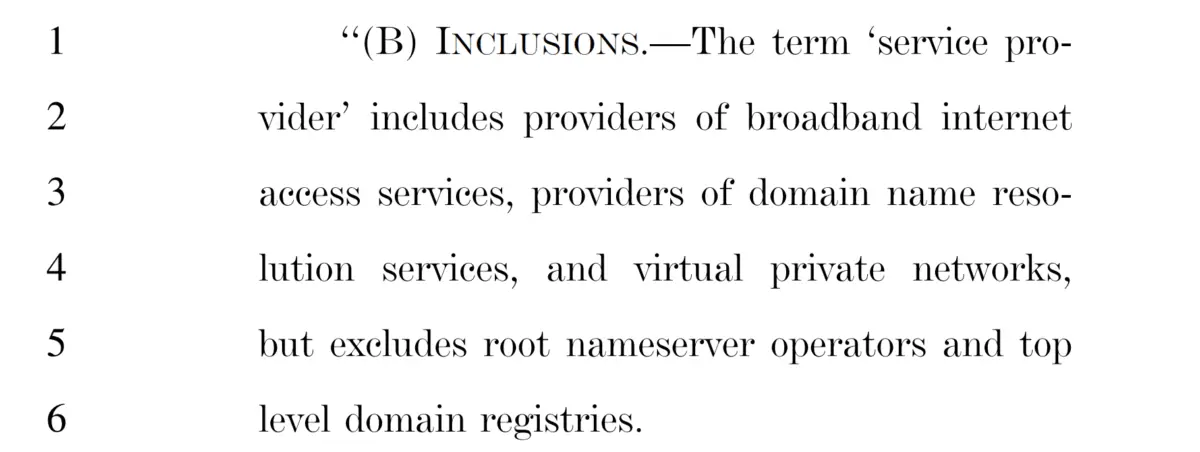
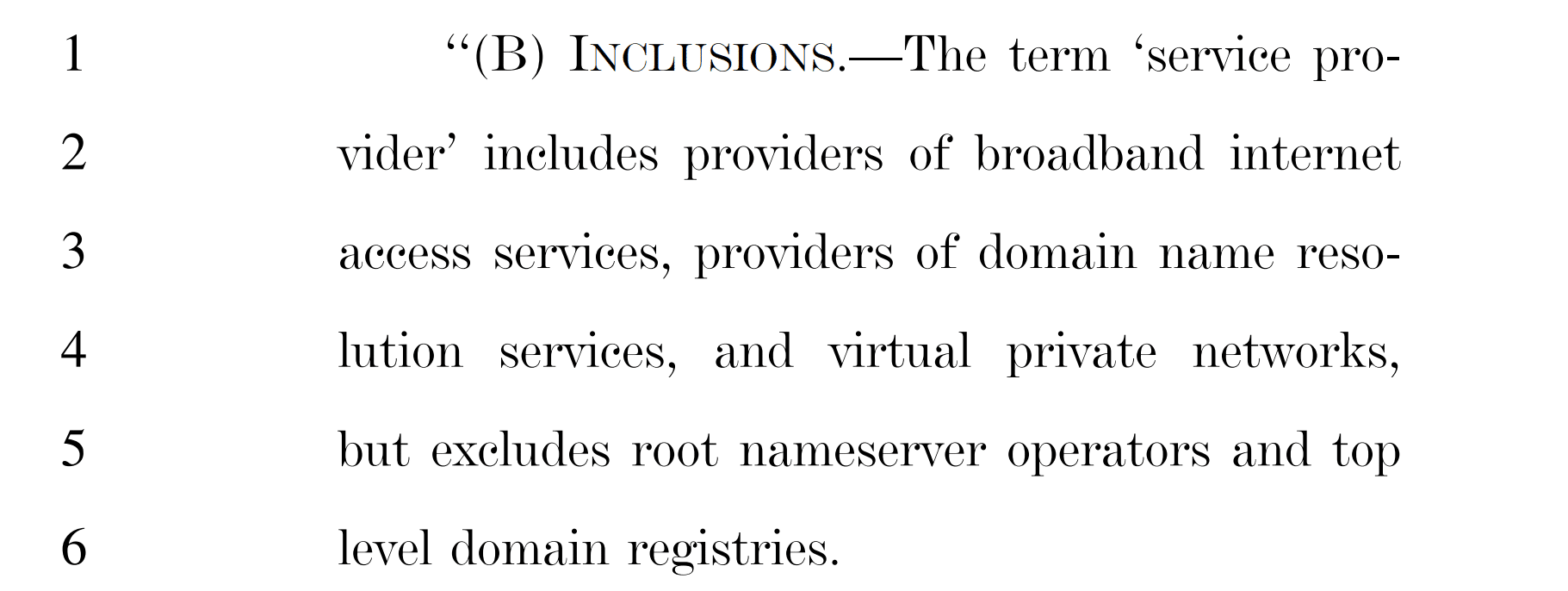
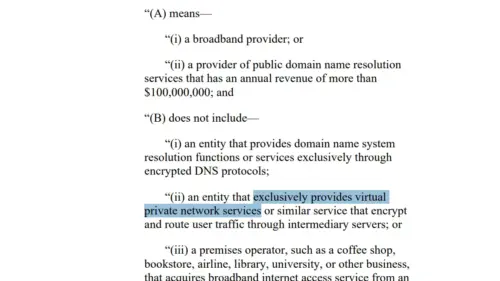
The statutory definition of a service provider within the bill is comprehensive. It explicitly encompasses broadband internet access providers, domain name resolution services, and virtual private networks. However, the legislation deliberately excludes foundational internet infrastructure operators, specifically exempting root nameserver operators and top-level domain registries from compliance mandates.
This explicit inclusion of VPNs represents a notable departure from earlier policy iterations. A discussion draft circulated by lawmakers earlier in the legislative process explicitly limited coverage to ISPs and DNS resolvers, omitting anonymizing and privacy-enhancing networks entirely. The sudden addition of VPNs aligns U.S. legislative proposals more closely with recent judicial and regulatory maneuvers in Europe. Courts in countries like France and Spain have increasingly ordered commercial VPN services to block access to pirate websites and illicit sports streaming platforms, rejecting arguments that anonymizing technologies or strict privacy architectures should exempt providers from intermediary liability.
Significantly, the U.S. bill introduces a clear threshold to shield smaller operations from undue financial and administrative burdens. The mandates apply exclusively to entities servicing 100,000 or more monthly users or subscribers within the United States. Consequently, the regulation focuses squarely on major commercial VPN operators rather than niche or smaller-scale services.
Blocking “From the United States”
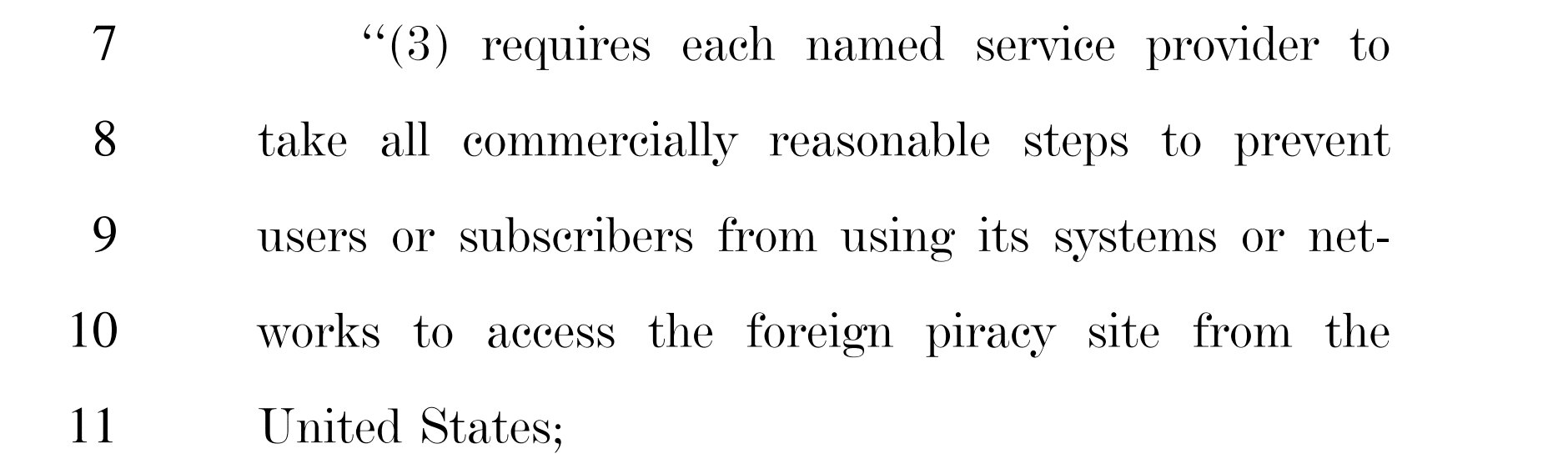
Once a federal court issues a blocking order, covered providers face a compliance window ranging from 14 to 30 days. Within this timeframe, providers must take all "commercially reasonable steps to prevent users or subscribers from using its systems or networks to access the foreign piracy site from the United States."
For traditional ISPs, executing such a directive is a relatively straightforward technical endeavor, typically involving DNS poisoning or IP-based routing blocks implemented at the carrier level. For VPN providers, however, the mandate introduces complex operational and architectural challenges. Operating vast networks of servers spanning dozens of countries, VPN providers face multiple interpretations regarding how a restriction should be applied to traffic originating from American users.
One potential implementation strategy involves restricting access solely on servers physically located within the United States. Under this approach, an American subscriber connecting through a domestic server would be blocked from reaching the designated pirate site, while the same user could potentially bypass the restriction by routing their traffic through an international server located in a jurisdiction like Canada or the Netherlands. Conversely, a foreign national connecting to a VPN server physically situated inside New York would face local blocking measures.
Alternatively, VPN providers could implement traffic filtering based on the geographical origin of the user’s underlying connection, blocking access for anyone establishing a connection from a U.S. IP address regardless of the exit node selected. Industry analysts note that such technical filtering is theoretically achievable without necessitating deep packet inspection or violating standard no-logging privacy commitments.
Crucially, the text of the bill does not prescribe specific technical methodologies, nor does it grant federal judges the authority to dictate how providers must execute the blocks. The responsibility of determining the operational mechanism is left entirely to the discretion of the service providers. Furthermore, providers retain the legal avenue to contest their inclusion in a blocking order before a court issues a final directive. During this judicial review, courts are required to weigh several statutory factors, including the technical feasibility and efficacy of the proposed blocking measures.
Despite these protections, legal challenges raised by VPN providers in foreign jurisdictions have yielded limited success. For instance, courts in Paris previously dismissed arguments that zero-log policies preclude technical compliance, ruling that major providers possess the capability to enact site restrictions without compromising user privacy frameworks.
Live Sports Fast Track
In addition to standard copyright enforcement timelines, the American Copyright Protection Act incorporates expedited procedures designed to address time-sensitive content. The legislation grants federal courts the authority to shorten the standard 14-to-30-day compliance deadlines upon a showing of good cause, creating a fast-track mechanism tailored specifically to live events.
During congressional hearings earlier in the legislative cycle, Representative Issa emphasized the necessity of rapid enforcement to protect live sports broadcasts, which lose substantial commercial value if unauthorized streams remain accessible while an event is actively occurring. Pointing to the fleeting nature of live sports, lawmakers have argued that traditional judicial timelines are too slow to neutralize illicit streams that materialize rapidly and disappear just as quickly.
Beyond sports broadcasts, this accelerated carveout extends to motion pictures and television programs that experience unauthorized leaks shortly after their official release. The framework covers content leaked within a 24-hour window following its initial authorized distribution in the United States.
To Be Continued
The formal introduction of the American Copyright Protection Act has already ignited debate among digital rights organizations, advocacy groups, and industry stakeholders. Prominent public interest groups, including Public Knowledge and the Re:Create Coalition, have voiced strong opposition to the legislative framework, echoing longstanding concerns regarding internet freedom, over-blocking, and potential impacts on secure communications.
Meanwhile, major entertainment industry associations and rightsholders have maintained a measured public stance as the legislative process moves forward. Representatives for the Motion Picture Association indicated that detailed organizational positions would be shared following formal legislative announcements from the sponsor’s office.
Whether the American Copyright Protection Act ultimately secures enactment remains a central question in Washington. Representative Issa is set to retire at the conclusion of the current congressional term, meaning the bill must navigate the legislative gauntlet during the present session or face the prospect of failing to advance without a legislative champion to reintroduce it in the future.
Adding further complexity to the legislative landscape, this measure is not the only site-blocking initiative currently developing on Capitol Hill. Separate bicameral efforts led by lawmakers including Senator Thom Tillis and Representative Zoe Lofgren aim to formulate unified site-blocking strategies to counter online infringement. Following the historic defeat of the Stop Online Piracy Act years ago, these competing proposals signal a renewed appetite among U.S. lawmakers to address digital piracy through comprehensive intermediary liability legislation.
Leave a Reply