
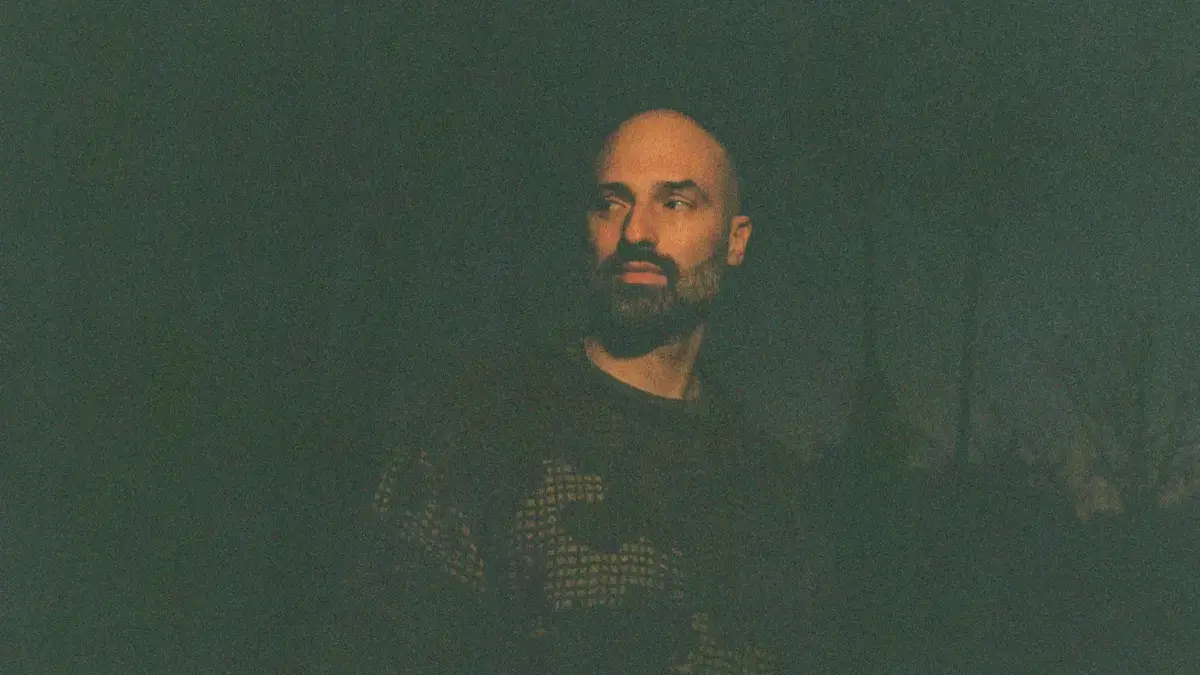
While Nicholas Piantedosi—better known to the music world as Decap—may not carry the immediate household name recognition of global superstars like Kendrick Lamar, Olivia Rodrigo, or Charli XCX, his sonic fingerprints are undeniably woven into the fabric of contemporary popular music. Across genres and industries, Decap’s work has quietly powered tracks for an impressive roster of heavyweights, extending far beyond mainstream pop and hip-hop to include Freddie Gibbs, Bad Bunny, Mac Miller, BTS, and even Ludwig Göransson’s Academy Award-winning score for Christopher Nolan’s cinematic epic Oppenheimer.
Though he operates primarily behind the scenes as a multi-platinum record producer, Decap’s most profound impact on the modern music landscape may lie in his role as the mastermind behind Drums That Knock. Debuting in 2016, the specialized series of drum sample packs has become an industry-standard secret weapon, finding its way onto countless records across a wide spectrum of musical styles. The line’s massive underground and commercial success has sustained a remarkable run, with the series recently reaching its eleventh installment.
The widespread influence of these sample packs has earned high praise from peers across the production community. Kenneth Blume, the acclaimed producer formerly known as Kenny Beats—recognized for his work with prominent acts like Denzel Curry, Vince Staples, Rico Nasty, Idles, and FKA Twigs—once remarked that Decap "changed a million lives with a single snare."
Yet, for a creator whose professional identity is inextricably linked to the precise crafting of low-end frequencies and heavy percussion, modern consumer technology presents a persistent frustration. Chief among his grievances is the humble smartphone speaker. Even with all the advanced digital tools at his disposal within his digital audio workstation of choice, Ableton Live, the limitations of mobile phone audio hardware remain a formidable hurdle. A raw, unprocessed 808 sub-bass frequency is virtually inaudible on a standard phone speaker, a reality that troubles a producer so deeply obsessed with the physical impact of low-end sound. With a vast audience consuming music all day long through mobile devices without ever truly feeling the resonance of deep bass, Decap views mobile playback as the ultimate test of his mixing prowess. If he can manage to make his drums knock even when played through a tinny phone speaker, he considers the mission accomplished.
Despite his reliance on cutting-edge software, Decap remains deeply attached to the hardware of his formative years. He still frequently turns to his trusty Boss SP-202 Dr. Sample, a vintage sampler released in 1998 that he first acquired back in junior high school when he was just starting out on his beat-making journey. Chopping his first samples on that machine marked the true genesis of his career in music production.
Reflecting on his workflow, creative philosophy, and the tools of his trade, Decap points to Ableton Live as his most indispensable asset, serving as the primary vehicle for translating his raw ideas into reality. Conversely, he cites the audio clipper as his most underappreciated tool. According to the producer, a subtle soft clipper can introduce a warm, analog saturation to drum tracks or push them to hit with immense force, calling it the single instrument that fundamentally changed his musical output.
Beyond the studio hardware and software, Decap is sharply critical of entrenched industry culture, specifically targeting the pervasive tech trend of gear gatekeeping. He rejects the notion that an individual cannot be considered a legitimate producer unless they utilize expensive hardware or align themselves with a specific digital audio workstation. In his view, these gatekeeping mentalities are entirely unfounded. Armed with a standard computer, aspiring creators already possess all the fundamental tools necessary to make compelling art. He suggests that the most innovative producer in the world today might simply be a young creator sitting in North Africa listening through basic consumer headphones, emphasizing that musical talent and originality are the only metrics that truly matter.
When considering his own catalog and legacy, Decap maintains a grounded perspective. Asked what historical creation he wishes he had brought into existence, his honest answer is nothing. He expresses profound satisfaction in crafting the specific music he makes, viewing it as a deeply meaningful form of personal expression rather than something designed to fulfill external expectations. What he takes the most pride in is establishing a distinct, hard-hitting sonic identity that has resonated widely and crossed traditional genre boundaries.
Navigating the pressures of a creative career has required sound advice and personal discipline. The best piece of guidance he ever received came from his father, who advised him to always make a firm decision and plant a stake in the ground, while keeping in mind the true nature of a stake: that it can always be pulled up and relocated if circumstances demand. To maintain mental clarity and focus in the studio, Decap turns to meditation, noting that aligning his mind and body allows him to concentrate more effectively, whereas a misaligned mental state inevitably throws off the entire creative process.
When creative block strikes, the producer relies on a disciplined routine known as the 3M technique: make it, mix it down, and move on. Rather than getting bogged down by the pursuit of perfectionism, the strategy is designed to keep creators actively engaged in the process of making, which he believes is where true creative magic happens. Outside of the studio, Decap enjoys indulging in Los Angeles’s vibrant culinary scene, considering exceptional food to be one of the few luxuries truly worth splurging on. Looking back at the trajectory of his career, he distills his journey into a succinct tagline for a hypothetical biopic: "This all started with not wanting a real job."


Leave a Reply