

For over a decade, Chris Perkins and Jeremy Crawford defined the modern landscape of Dungeons & Dragons. As two of the lead designers for the landmark fifth edition of the world’s most famous tabletop roleplaying game, they worked alongside Mike Mearls and a dedicated team to shape the core rulebooks for both 5e and its successor, 5.5e. Their influence extended far beyond rules architecture; they also authored some of the most enduring, critically acclaimed adventures of the past ten years, including Curse of Strahd, which stands as the best-selling D&D adventure of all time.
Given their deeply rooted history with Wizards of the Coast, it marked a seismic shift in the tabletop RPG industry when both designers announced they were leaving D&D to join Critical Role’s publishing arm, Darrington Press. Stepping into uncharted territory, Perkins and Crawford took on the challenge of developing content for Daggerheart, a system whose foundational mechanics they did not originally create. However, as the designers explain, the transition has been less of a culture shock and more of an exhilarating evolution in how tabletop roleplaying games are built and played.
Chris Perkins and Jeremy Crawford Discuss Leaving D&D for Daggerheart
Stepping away from a legendary franchise to work on a fresh system might seem daunting to outsiders, but Perkins and Crawford view the move as a natural continuation of their design careers.
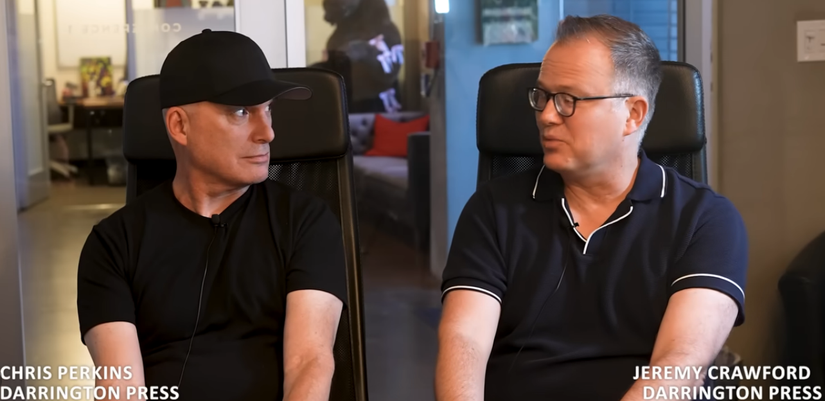
“For me, it was super easy,” Perkins says in a video interview. “Even working on D&D, we were building on the work of previous editions and the labors of the people who made those additions. It’s not like we were creating a game out of nothing.”

Crawford echoes this sentiment, describing the transition as a delightful experience that has opened up fresh creative vistas. “Daggerheart is such a fun system to not only play in, but to work on,” Crawford notes. “It has enough flexible parts to take and use to build new things, but it is also a new enough system that there’s actually a lot of design space that we’re exploring for future products.”
Just as every successive iteration of Dungeons & Dragons borrows from its predecessors, Daggerheart is heavily influenced by the broader history of tabletop roleplaying games, including D&D itself. Many of the mechanics found in Daggerheart organically mirror popular house rules that tables have used for years. For instance, the Syndicate Rogue class feature known as "Well-Connected" directly mirrors the beloved "I know a guy" house rule that has circulated through D&D communities for generations.
“There is continuity, but it is far larger than just those two games,” Crawford explains. “So many different RPGs inspired the Daggerheart design team. The broader RPG community is constantly exploring — no matter what they’re playing — different ways to play and to build worlds. One of the amazing things that the Daggerheart design team did is that they managed to capture the lightning in a bottle of the things that many different design teams and groups have been exploring, and they synthesized it into this game.”
Collaborative Storytelling Is in Daggerheart’s DNA
The concept of collaborative storytelling is frequently cited by players and Game Masters alike when describing the appeal of tabletop RPGs. It defines the dynamic where the Game Master or Dungeon Master presents a framework, but the players’ choices actively shape the narrative as it unfolds at the table. While experienced groups and talented DMs have always embraced this collaborative spirit, it is not explicitly baked into the core rules of traditional systems like D&D.

Daggerheart sets itself apart by weaving collaborative storytelling directly into the game’s core identity and mechanical DNA, a design philosophy that immediately attracted industry veterans like Perkins and Crawford.
“That goes back to the philosophy of Daggerheart, to take many of these things that groups have been doing for years, embracing them, and making them an official part of the game,” Crawford says.
This philosophy extends far beyond raw rule mechanics, profoundly influencing how structured products like campaign frames and pre-written adventures are constructed.
“In the Daggerheart campaign frames, there are points where the player is addressed directly, or the GM is told to basically go to the players and have them add something to the setting,” Perkins explains. “As we create more adventures for Daggerheart, we’re finding ways to bake that into the adventure design, so there are points in every adventure where the players are actually steering the ship. This is a fun shift for me as someone who has spent a literal lifetime working on adventure content. It’s a fundamental shift.”
Traditionally, published adventures serve as structured tools for the Dungeon Master to guide a passive or reactive group through a pre-determined sequence of events. While good DMs frequently adapt and incorporate player feedback, providing mechanical tools that empower players to actively author the world and direct the narrative marks a monumental design evolution. While independent publishers have experimented with similar concepts in various indie games, Daggerheart brings this level of player-driven narrative architecture to a mainstream audience, signaling a potential turning point for the entire industry.
Daggerheart Is Set to Revolutionize the TTRPG Industry
For Perkins, who is currently spearheading a massive anthology containing over 100 Daggerheart adventures, the creative freedom feels reminiscent of the late 1970s, when pioneers like Gary Gygax drafted the foundational modules that defined the hobby for decades.
“It’s exciting to think about just what a Daggerheart adventure is,” Perkins remarks. “We literally only have one or two adventures out there in the universe. It’s a delightful thought exercise, and one I’ve never been part of, because D&D adventures are kind of established and codified. Here, we’re starting right at the outset with carte blanche, and we are going to take some chances, experiment a little, and see what lands.”
Meanwhile, Crawford is deep into the development of a mysterious, atmospheric campaign setting that promises a distinct tonal shift for the system. While major details remain tightly under wraps, Crawford notes that the project will lean into dark fantasy and horror elements designed to appeal even to players who typically avoid traditional horror themes. He points out that elements of this spooky realm have already been teased through the introduction of the Blood Hunter and Summoner classes, as well as atmospheric breadcrumbs dropped during Matt Mercer’s recent Age of Umbra: Sallowlands actual-play series.
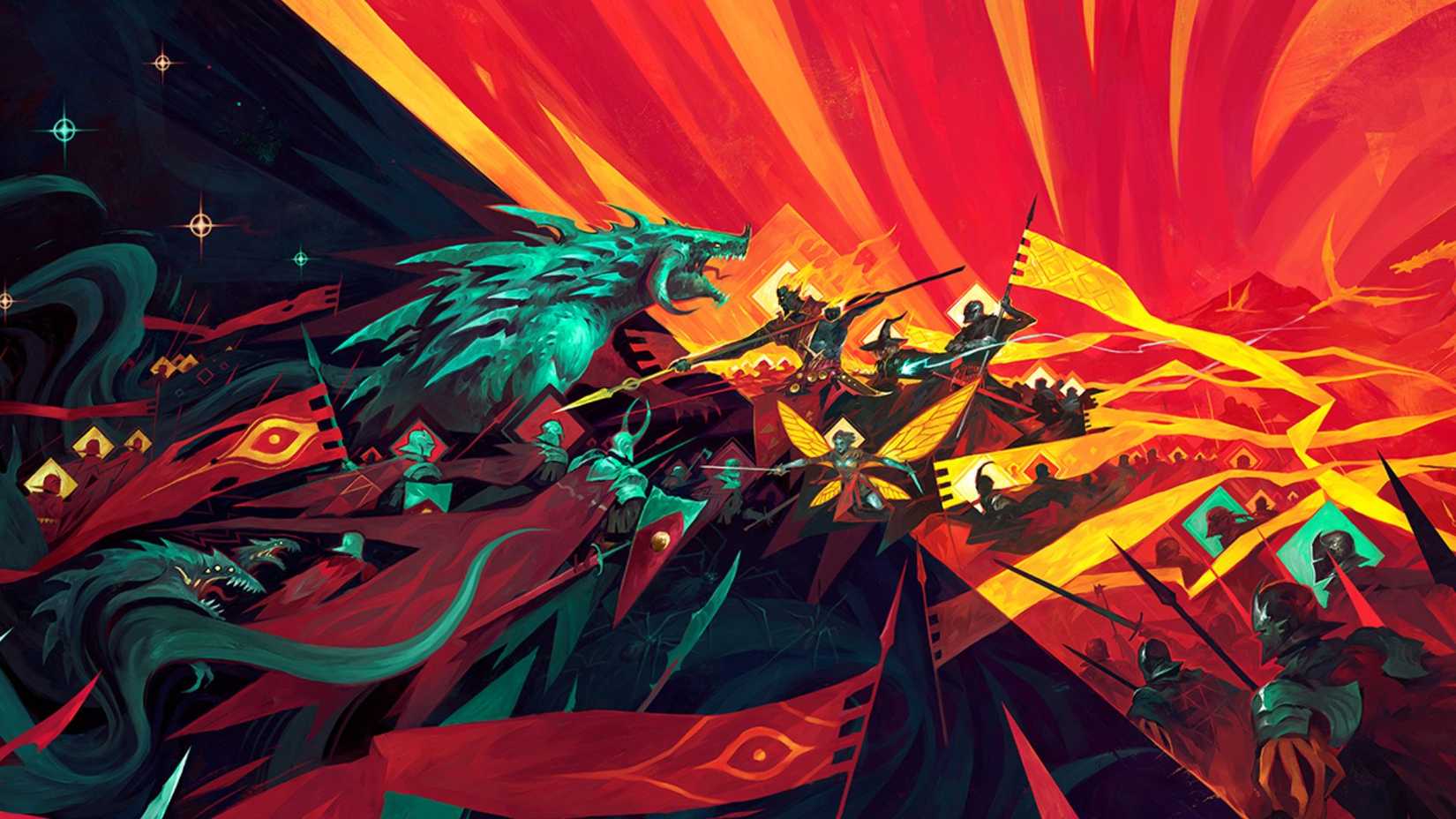
As Daggerheart moves past its initial rollout phase and ramps up production toward a steady cadence of tentpole releases each year, industry observers increasingly view it as the first legitimate commercial competitor to D&D in modern history. Yet, for the creators driving its evolution, the core motivation transcends corporate rivalry or fandom debates.
“In the vast community of RPG players, we’re all in this together, experimenting with how we can move this art form forward,” Crawford concludes. “Sure, there are individual systems, but the older I get, the more I get concerned about just the art form as a whole. The art form of role-playing games is so precious and such a unique way for people to connect with each other and entertain each other that I am excited when I see the art form moving forward in any way in any game.”

Leave a Reply