
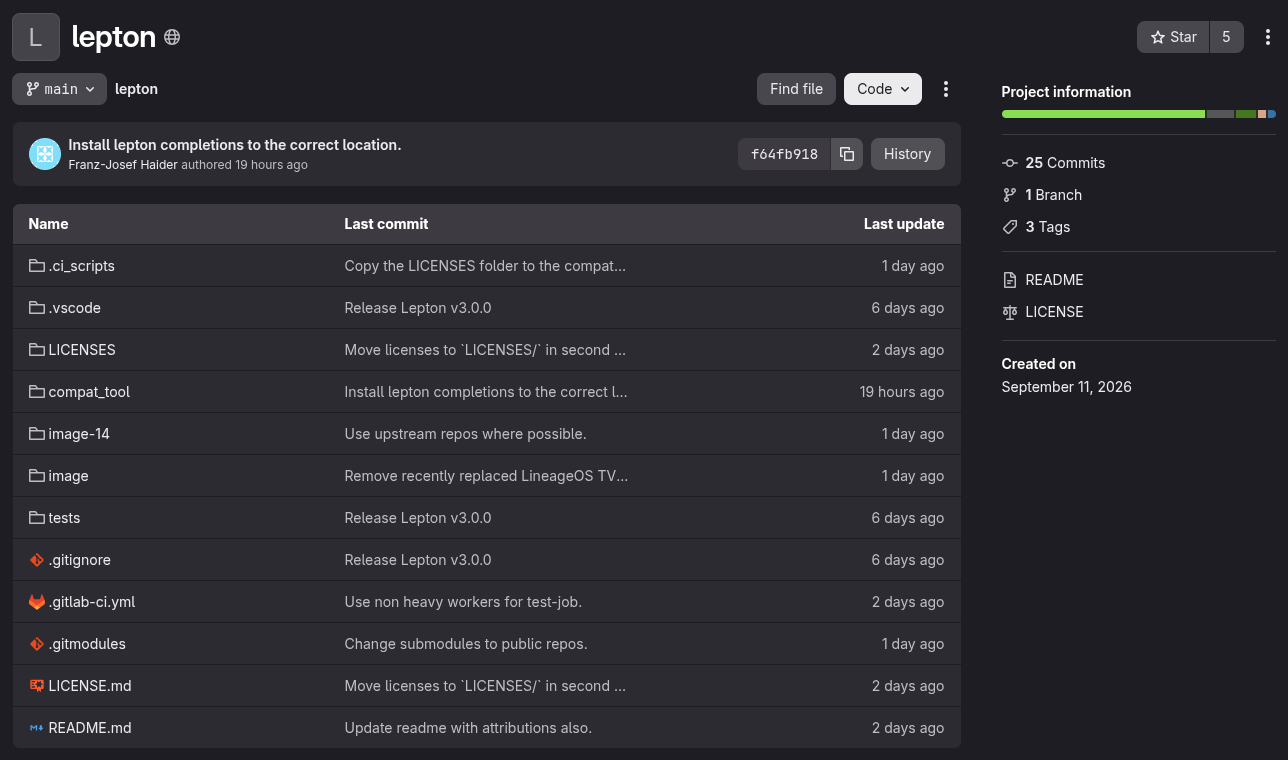
Valve has quietly open-sourced Lepton, the custom Android compatibility layer that the gaming giant engineered specifically for its recently unveiled Steam Frame hardware. While Valve did not issue a formal, traditional press release for the code release, the open-source community quickly caught wind of the repository going live. The project came to broader public attention following initial reporting by Liam Squires-Hand, shedding light on yet another foundational piece of Valve’s expanding software stack for Linux and portable gaming.
Designed primarily for game developers, Lepton enables Android-exclusive titles to run seamlessly on Linux. It achieves this by launching games inside isolated containers. For the average end user, the underlying plumbing of Lepton will remain entirely invisible. The Steam client itself handles the heavy lifting of invoking the tool, meaning players can launch and enjoy titles without having to configure containers or manage compatibility settings manually.
Valve’s primary target audience for the Lepton repository consists of developers looking to port virtual reality-focused Android titles over to the upcoming Steam Frame hardware. However, the repository’s documentation explicitly notes that the underlying architecture is flexible enough to accommodate other use cases, opening the door for broader experimentation within the open-source Linux and gaming communities.
Two Licenses, One Codebase
A closer examination of the project reveals that the compatibility layer is not distributed under a single, unified software license. Instead, the repository’s licensing structure is split into two distinct parts, with each component governed separately to accommodate the diverse mix of upstream projects that went into building the stack.
The core compatibility tool itself—the specific mechanism that Steam invokes to launch a game inside its dedicated container—is released under the permissive MIT license. This allows developers a high degree of flexibility in how they inspect, modify, and utilize the invocation tooling.
The Android root filesystem that is built and executed inside that container, however, follows a different path. Because the filesystem incorporates code and patches from several external open-source projects, it is distributed under the GNU General Public License v3.0 (GPL-3.0). This dual-licensing approach reflects the complex nature of modern compatibility layers, which frequently bridge disparate operating system environments by relying on collaborative, community-driven software components.
What’s Included in the Stack
Lepton is far from a ground-up reinvention of the wheel. Rather than building an entire Android execution stack from scratch, Valve leaned heavily on a carefully curated selection of established open-source projects, each handling a distinct piece of the architectural puzzle.

Waydroid performs the lion’s share of the heavy lifting within the Lepton stack. Waydroid is well-known in the Linux ecosystem for running a full Android system inside a standard Linux container by leveraging kernel namespaces. During the build process, Lepton directly incorporates patches and components from Waydroid to achieve reliable containerized execution.
Beneath Waydroid sits LineageOS, which supplies the foundational Android system image. Waydroid’s runtime relies on a minimal, streamlined image derived from LineageOS, which Lepton further customizes to suit its performance and hardware requirements.
At the very base of the architecture rests the Android Open Source Project (AOSP). AOSP serves as the primary source tree upon which LineageOS, Waydroid, and ultimately Lepton are built. Because AOSP forms the ultimate foundation of the entire software stack, its licensing terms and structural principles propagate upward through the project.
Additionally, the licensing documentation credits Boringdroid for minor contributions to the project, though Valve has not published detailed breakdowns of its specific implementation. Developers interested in the exact architectural nuances can inspect the repository to trace how these various open-source contributions intersect.
Tailored for Gaming, Not General Desktop Use
Despite its roots in broader containerized Android projects, Lepton is not designed to serve as a general-purpose desktop solution for running Android apps on a standard Linux distribution. Valve has deliberately streamlined and trimmed the software to focus exclusively on its intended gaming hardware goals.
In a standard desktop Android container setup, multiple applications might share resources or run concurrently under isolated user spaces. Lepton takes a more focused approach: every application running inside Lepton operates as the exact same user, intentionally omitting complex multi-user permission walls between apps.
Instead of isolating apps from one another on a single system, Lepton isolates entire games. Each game is assigned its own separate container. Furthermore, when a game is launched, Lepton actively shuts down any background Android services and daemons that are unnecessary for that specific title, optimizing system resources and reducing overhead for the hardware.
The release of Lepton continues a broader trend of transparency from Valve regarding its hardware software stacks. Even before the Steam Frame has officially shipped to consumers, major portions of its underlying software architecture are being made accessible for public inspection and contribution. Lepton joins FEX—the x86-to-ARM translation layer that Valve also utilizes for the headset—as part of an increasingly open ecosystem that developers can read, study, and build against as portable Linux gaming continues to evolve.

Leave a Reply