
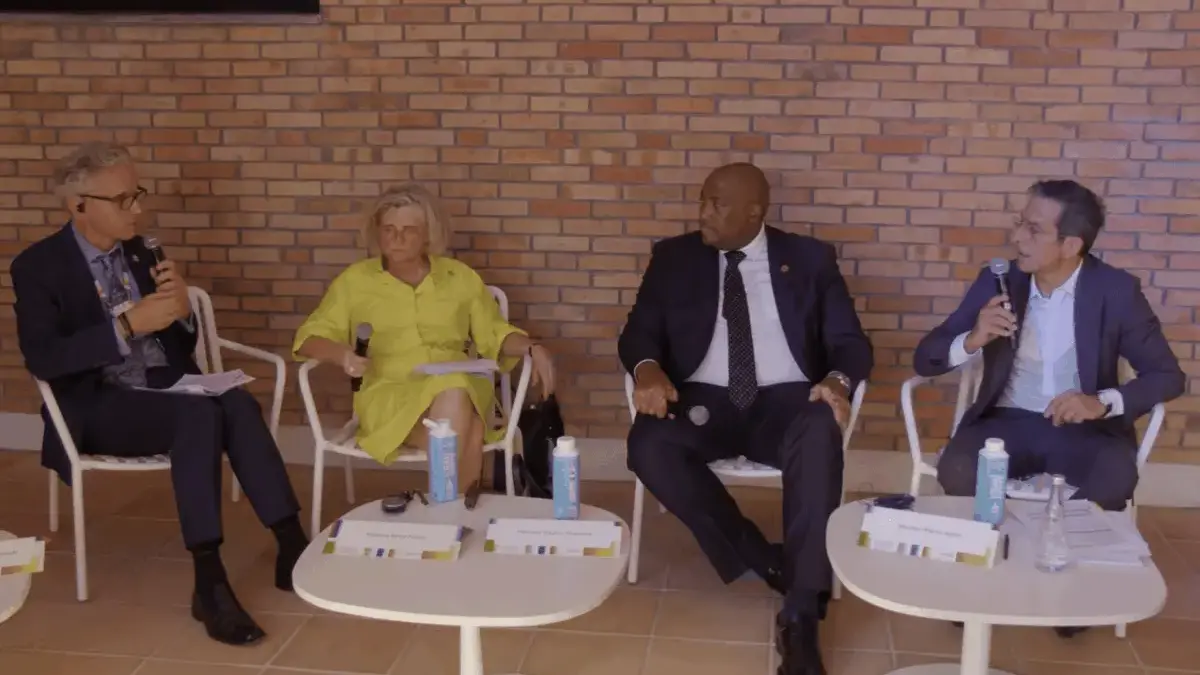
Earlier this month, French President Emmanuel Macron and South Korean President Lee Jae Myung hosted a high-profile, one-day gathering in the south of France, bringing together international studio bosses, government ministers, and prominent filmmakers. The Lumière Summit was designed to foster global cooperation within the entertainment industry and address some of the most pressing challenges facing modern cinema and television production.
The summit ultimately closed with the signing of several thematic declarations, including a prominent agreement focusing on international cooperation against digital piracy. Yet, behind closed doors and on the main stages, the event also exposed deep ideological fractures between Western entertainment heavyweights, global regulatory bodies, and developing nations over how copyright infringement is defined, prosecuted, and perceived.
Representing the interests of Hollywood, Motion Picture Association (MPA) CEO Charles Rivkin had been scheduled to deliver a keynote address ahead of a highly anticipated panel session titled “The race against piracy.” However, Rivkin was delayed due to a concurrent presidential meeting. While the MPA’s EMEA president, Emilie Anthonis, stepped in briefly to cover for him, the tone of the session had already been firmly established by a government minister who challenged the industry’s foundational narratives on intellectual property.
Gayton McKenzie, South Africa’s Minister of Sport, Arts and Culture, shared the stage with the chair of the French audiovisual regulator ARCOM and a deputy director-general of the World Intellectual Property Organization (WIPO). As these officials outlined their respective anti-piracy track records and regulatory triumphs, McKenzie took the floor. As a representative of the South African government, McKenzie acknowledged that piracy is broadly understood to be harmful to content creators, but he quickly made it clear that he disagreed with almost every other aspect of the industry’s approach.
“We need to define what is piracy,” McKenzie told the audience. “There’s a failure by the people tasked to fight piracy not to define it definitively,” the minister added, before diving deeper into what he characterized as a glaring, systemic double standard within the global entertainment sector.
To illustrate his point, McKenzie drew upon an example that had unfolded earlier that very morning at the same summit. A filmmaker had addressed the audience, proudly recounting how his film had been officially banned by government authorities in Egypt, yet remained widely accessible to Egyptian audiences thanks to unauthorized online distribution networks and peer-to-peer sharing.
According to McKenzie, the filmmaker expressed satisfaction that local viewers were still able to consume his work through illicit channels, a revelation that was immediately met with enthusiastic applause from the industry professionals in attendance.

McKenzie offered a second example involving a Canadian production centered on a gay hockey player—a series matching the description of Heated Rivalry—which he noted is currently being pirated in various countries where the content itself is officially banned or restricted. Once again, he observed, members of the creative and corporate establishment responded with public approval rather than condemnation.
Reflecting on his own personal history, the South African minister recalled that during the oppressive years of South Africa’s apartheid regime, numerous artistic and political films were strictly prohibited from being legally distributed within the country, making underground piracy the sole viable option for citizens seeking uncensored perspectives.
When dealing with banned content, censorship, and political repression, McKenzie argued, piracy is suddenly cast in a heroic, romanticized light, with filmmakers openly praising the distribution model. Yet, he pointed out, when impoverished individuals in developing regions engage in similar unauthorized sharing out of economic necessity, they are swiftly met with aggressive legal action, heavy-handed enforcement, and criminal penalties. He bluntly described the entertainment industry’s dual-track approach as “a bit schizophrenic” and riddled with “dual standards.”
‘Egyptians Love Piracy’
The filmmaker to whom Minister McKenzie was explicitly referring was Tarik Saleh, the acclaimed Swedish-Egyptian director known for cinematic works such as The Nile Hilton Incident and Cairo Conspiracy. Both films are deeply rooted in contemporary Middle Eastern society and set against the backdrop of Cairo, but both have faced official bans in Egypt due to their politically sensitive themes and critical social commentary.
During the opening session of the summit, Saleh recounted the professional and personal obstacles he faced when attempting to launch his career in Egypt, revealing that he was directly ordered to leave the country prior to the commencement of shooting for his very first major feature film.
“I was going to shoot my first film in Egypt and I was asked to leave. Uh, I’m putting it nicely. I mean, they said, ‘Get the f*ck out of here,’” Saleh told the assembled delegates, explaining how the hostility forced him to relocate his production operations to Morocco instead.
Saleh went on to explain that despite the official state bans and the hostility of local censors, ordinary Egyptian citizens are still able to view his cinematic projects thanks to rampant digital piracy—a reality that the director views with a sense of ironic detachment rather than outrage.
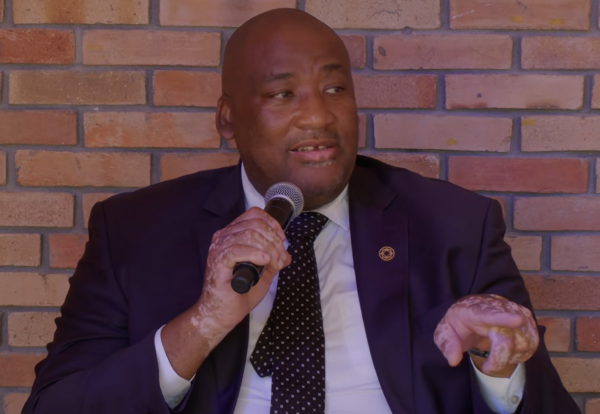
“[H]ere is where piracy come into the picture in a little reversed way. Egyptians love piracy, which is working very well for me,” Saleh remarked with a lighthearted laugh during his panel appearance.
Interestingly, Saleh’s comments did not draw the same celebratory applause that McKenzie later highlighted. Instead, the session’s moderator quickly intervened, noting that the regulatory officials scheduled for the afternoon’s specialized piracy panel could potentially be questioned about the director’s remarks. Ultimately, no audience members raised the issue during the formal Q&A, leaving Minister McKenzie to bring the contradiction to the forefront of the summit’s discussions.
‘We’re Not Children’
McKenzie’s second major critique was directed squarely at the regulatory officials seated beside him on the panel. Earlier in the proceedings, ARCOM chair Martin Ajdari had proudly reported that the French regulatory body had successfully issued more than 22,000 website blocking and delisting injunctions over a five-year period, including a staggering 10,000 injunctions in the year 2026 alone, contributing to a reported fifty percent reduction in the French piracy audience since 2018.
While McKenzie acknowledged that these enforcement metrics were undeniably impressive, he stressed that localized successes in wealthy Western nations mean very little if other parts of the world lack the capacity, resources, or political alignment to mount a coordinated defense. To drive his point home, the South African minister offered a vivid maritime analogy.
“We on the same boat. We both hate piracy,” McKenzie said, describing the global digital landscape. “The boat is leaking on our side and you are praising, like, where we are sitting we’ve done this.”
The minister also took direct aim at the paternalistic pressure often exerted on developing countries to force rapid compliance with Western-crafted intellectual property frameworks. This tension surfaced after WIPO representative Sylvie Forbin detailed some of the strict legal and economic conditions that were tied to World Trade Organization (WTO) membership agreements during the 1990s. The historical overview clearly struck a nerve with McKenzie, who pushed back against any implication that developing nations must simply accept external directives without question.
“Don’t try to punish us like we are children, because we are not children,” he stated firmly, emphasizing that his critique was systemic rather than personal to his fellow panelists.
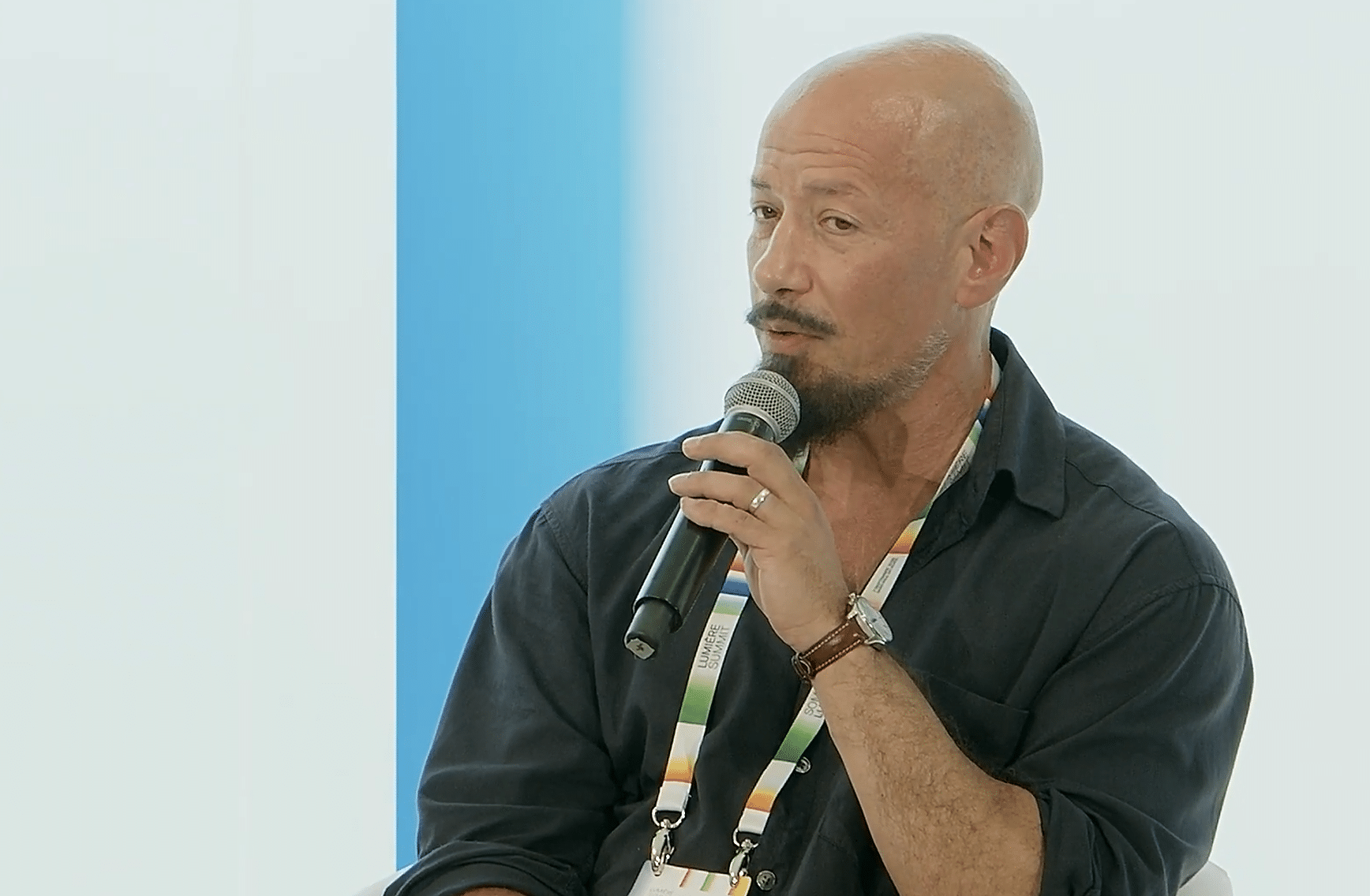
South Africa is no stranger to this specific brand of international trade pressure. In 2020, influential U.S. copyright lobbying groups formally petitioned the United States government to review and potentially strip South Africa of vital trade preferences under the Generalized System of Preferences program. The trade groups argued that broad “fair use” provisions integrated into South Africa’s pending copyright legislative reform bill were overly expansive and posed a direct threat to foreign intellectual property holders.
‘We Are Not Beggars’
As the panel discussion drew toward a close, Minister McKenzie made a concerted effort to clarify that his vocal resistance had nothing to do with financial shortfalls or an inability to fund regulatory infrastructure. South Africa, he emphasized, is fully capable of allocating national resources toward combating unauthorized distribution, noting that the country possesses the economic capacity to invest on par with nations like Sweden or the United Kingdom. The core issue, he argued, is one of mutual respect and diplomatic parity.
“We don’t lack the money. There are countries that lack the money,” McKenzie explained to the audience. “But we don’t want to be treated like, here’s money for you, do one, two, three. We want you also to listen to our ideas.”
“We are not beggars,” he added, driving home the central theme of his address. “We want a partnership of equals.”
Highlighting practical steps his administration is already taking, McKenzie noted that the South African government has established active channels of communication with pay-TV provider Canal+ to combat unauthorized broadcasts of live football matches. He pointed out that mandatory anti-piracy warning notices and educational campaigns are now broadcast prior to the commencement of every major sporting match in South Africa. The country, he reiterated, is fully prepared to assist in the global fight against intellectual property theft, provided it is treated as a valued and respected partner rather than a subordinate entity.
The Lumière Summit ultimately concluded with the formal signing of a declaration aimed at strengthening international cooperation in the ongoing fight against film and audiovisual piracy. However, the voluntary agreement does not contain any legally binding commitments or hard enforcement mandates, and notably, it has not yet been signed by any official representative of the South African government.
Full video recordings and photographic documentation of all panel discussions from the event remain publicly accessible through the official Lumière Summit website.



Leave a Reply