
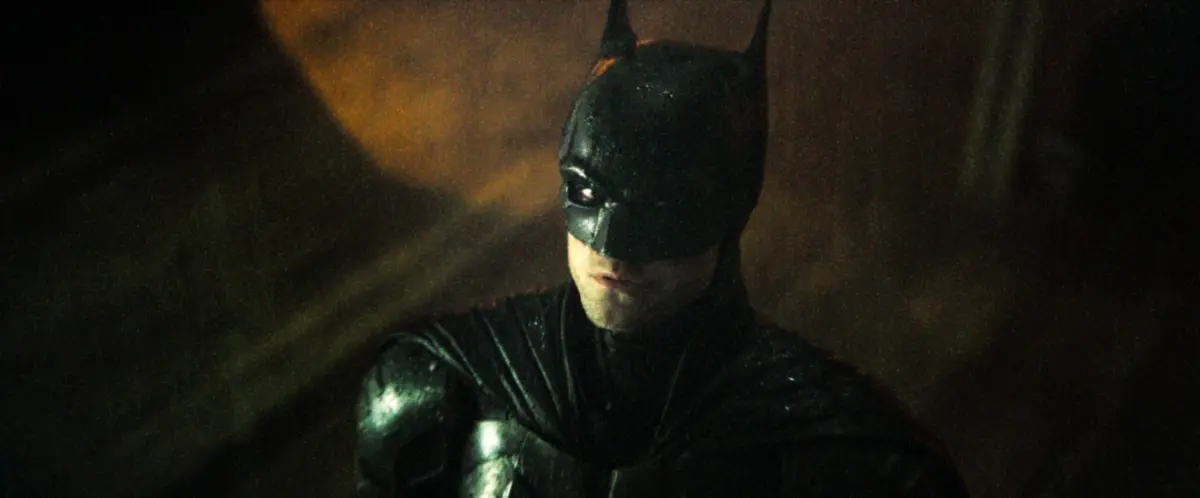
For comic book fans, the original Knightfall arc occupies a legendary space in pop culture history. It was during this sprawling 1993 crossover event that the brilliant, steroid-enhanced villain Bane made his explosive debut. He immediately cemented his status as an elite supervillain by executing a plot so grueling and precise that it culminated in him physically and metaphorically breaking the Caped Crusader’s back. While Christopher Nolan famously adapted elements of this core narrative for his 2012 live-action blockbuster The Dark Knight Rises, the creative team behind the new animated trilogy felt that a pure adaptation was long overdue.
"Everybody on this team really respects Nolan and really enjoys that trilogy, but we are still comic book nerds, and so when there are big derivations from the comic book source, we get a little bit frustrated," Knightfall producer Jim Krieg told Polygon. "This felt like an opportunity to tell the Bane story we’ve known for a long time from comic books for an audience that may not be familiar with it."
In crafting this new animated feature, Krieg and his team wanted to ensure that Bane was given far more psychological depth and strategic cunning than simple muscle-bound brutes are typically afforded in adaptations. The film explores the villain’s brutal upbringing inside a harsh prison in Santa Prisca, where he was subjected to dangerous experiments involving the super-steroid known as Venom. Upon escaping his confinement, Bane sets his sights on Gotham City with a meticulous, multi-layered campaign.

Rather than striking immediately, Bane orchestrates a massive explosion at Arkham Asylum, releasing Batman’s entire rogues’ gallery onto the streets of Gotham. The resulting chaos forces the Caped Crusader to forgo sleep for days as he desperately attempts to round up the escaped criminals, a relentless gauntlet that steadily drains him of both his physical stamina and mental sharpness.
"Bane’s not just a pile of steroided muscles, but actually a real calculating machine," Krieg explained. "He doesn’t beat Batman with his strength, but with his strategy of wearing him down bit by bit. It feels like Bane has earned this victory at the end of Part 1. I think that’s much more satisfying than, he’s just so strong he beats the crap out of Batman."
An agonizing process
Producing a faithful animated adaptation of a comic book publishing event that ran for well over a year inevitably required difficult editorial decisions. Condensing thousands of panels of narrative into a feature-length format meant cutting a substantial amount of material, a task that Krieg candidly described as an "agonizing process."
Among the primary hurdles for the creative team of Batman: Knightfall – Part 1 was introducing not only the central threat of Bane, but also the complex religious vigilante Azrael, also known as Jean-Paul Valley Jr. The character originally debuted in the 1992 comic book series Batman: Sword of Azrael before crossing over to team up with Batman and Robin just as the Knightfall saga kicked off in earnest.

"We needed to give some context to that, because you can’t just have this dude in the Batcave with Tim and Alfred, but obviously we weren’t going to be able to adapt the entire story of the Sword of Azrael," supervising producer Rick Morales told Polygon. "We wanted to show the world that Azrael operates in and set up the struggles that he’s going to have in the next few films. This movie is in a lot of ways Bane’s film, and going forward we’re going to focus a little bit more on Jean-Paul."
Azrael receives a striking and dramatic introduction during the opening moments of the film, where he unleashes a fiery and unforgiving form of justice upon a ring of human traffickers. Morales, who has previously produced several Mortal Kombat animated features for Warner Bros., admitted he was somewhat surprised by how far the studio allowed him to push the boundaries of violence and gore within a mainstream Batman production.
"We put together the first cut of the first act of the first film and sent that off to the executives to shoot us back notes, and one of the notes was, ‘Hey, I think we can burn this guy’s face off here and show it,’" Morales recalled. "I got the green light to go more intense and go a little bit more violent with this. I don’t want to say it’s not gratuitous. It is, but it’s purposeful. It’s story-driven. Batman’s not slicing people’s faces off. He’s not impaling people. He’s beating people up and getting a little bloody. It’s Azrael that’s killing, that’s being super violent, and that is showing the juxtaposition between their two philosophies."
While Knightfall – Part 1 only scratches the surface of Azrael’s intricate backstory—which is deeply tied to the historical legacy of the Knights Templar—the upcoming Part 2 is slated to dive much deeper into his troubled past and psychological conditioning.
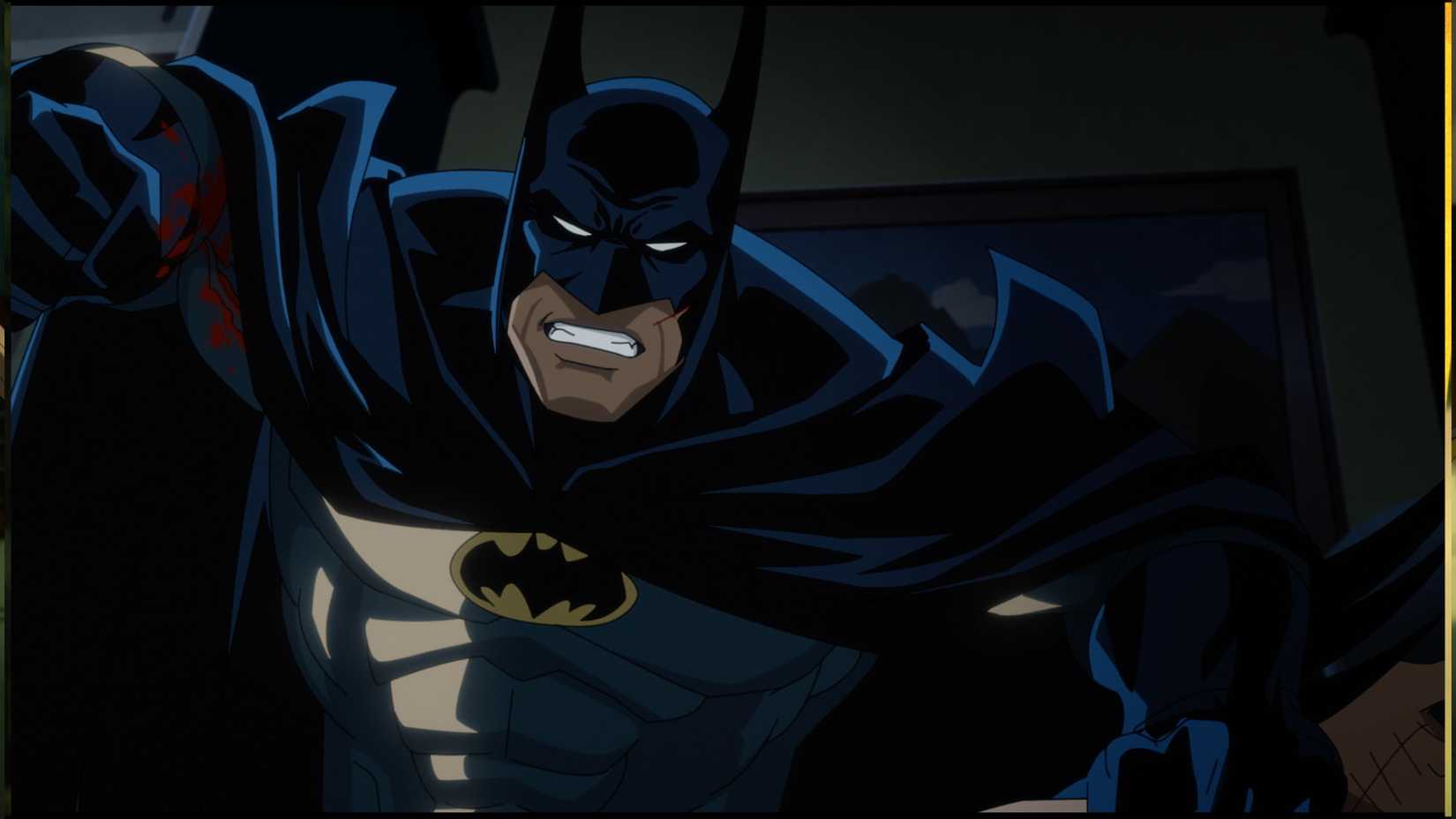
"Azrael is a little like the Boba Fett of the Batverse," Krieg noted. "He’s an image that people know, but they don’t know what his story is. Hopefully people will know him as well as they know the Joker at the end of this series and want to see more from him."
The aesthetic and tonal choices of the new trilogy are heavily informed by the era in which the original comics were published. The original Knightfall print run arrived during a period when DC Comics was aggressively seeking to capture reader attention through edgy, high-stakes storytelling and bombastic character designs, mirroring commercial trends established by monumental events like The Death of Superman. To authentically capture that specific historical flavor, Morales collaborated closely with Studio Mir, the animation powerhouse renowned for their work on The Legend of Korra and X-Men ’97.
"Everybody’s buff," Morales said, reflecting on the distinct visual language of early-1990s comic books. "Even Tim, the 15-year-old boy, has muscles on muscles. In the ’90s, everything was pushed to the extreme — big and bold and angry. All the superheroes were getting shoulder pads and pouches and big guns. Batman isn’t cool enough as he is. He needed to have spikes and metal gauntlets. I really wanted to lean into that."
Batman: Knightfall – Part 1 is currently available to rent on digital platforms including Apple TV and Prime Video.

Leave a Reply