
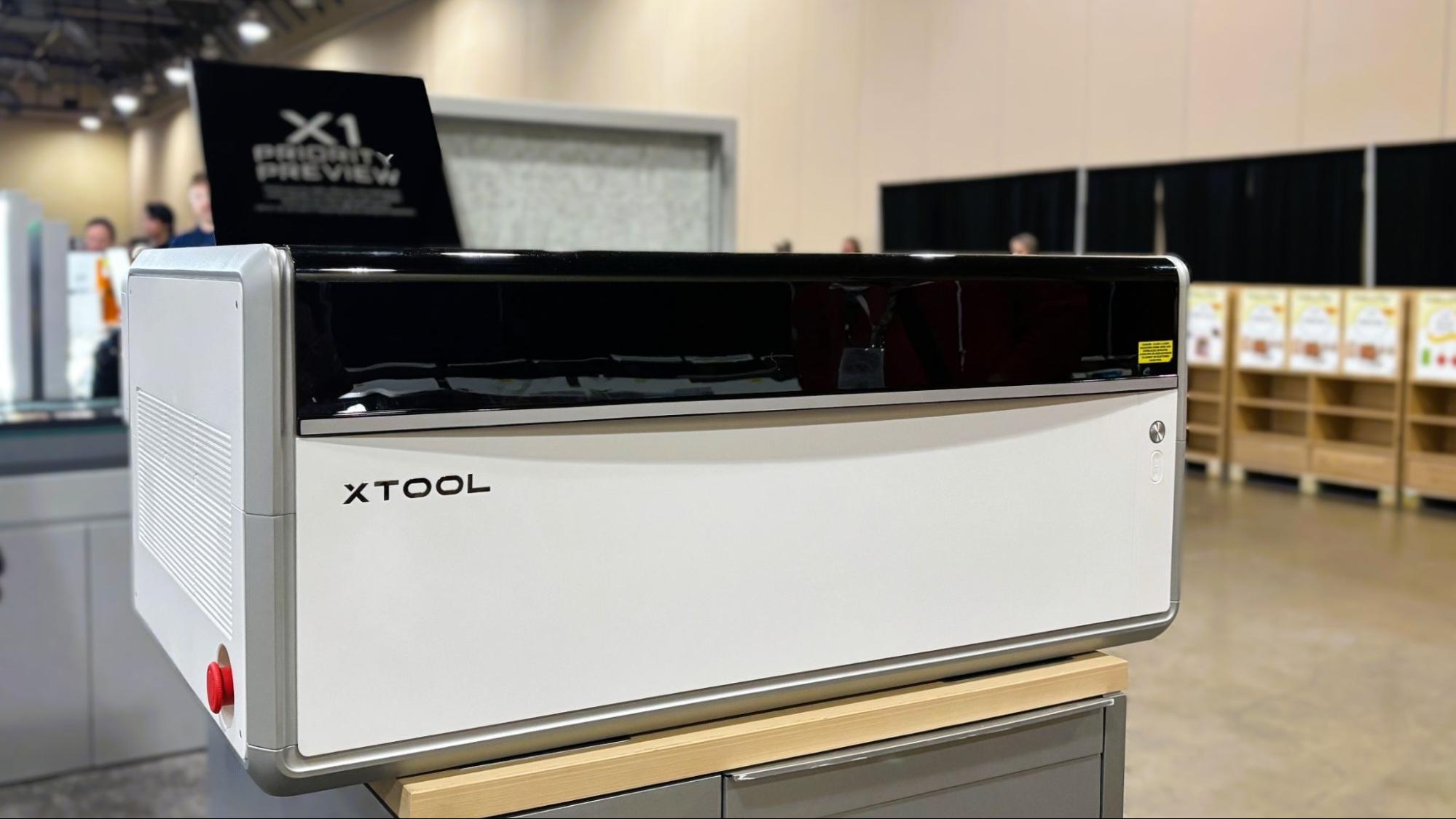
xTool has introduced its ambitious new X1 laser system, which the company claims could be the last laser cutting and engraving machine enthusiasts will ever need. Showcased at The Next Level Maker Conference in Grapevine, Texas, the modular machine is designed to integrate every major style of laser technology xTool manufactures into a single unified system, including CO2, Diode, UV, Fiber, and MOPA configurations.
Alongside the flagship laser announcement, the company revealed a broader strategic push to support small business owners and creators by branching out into new product categories, highlighting partnerships and supporting software ecosystems during the vendor expo.
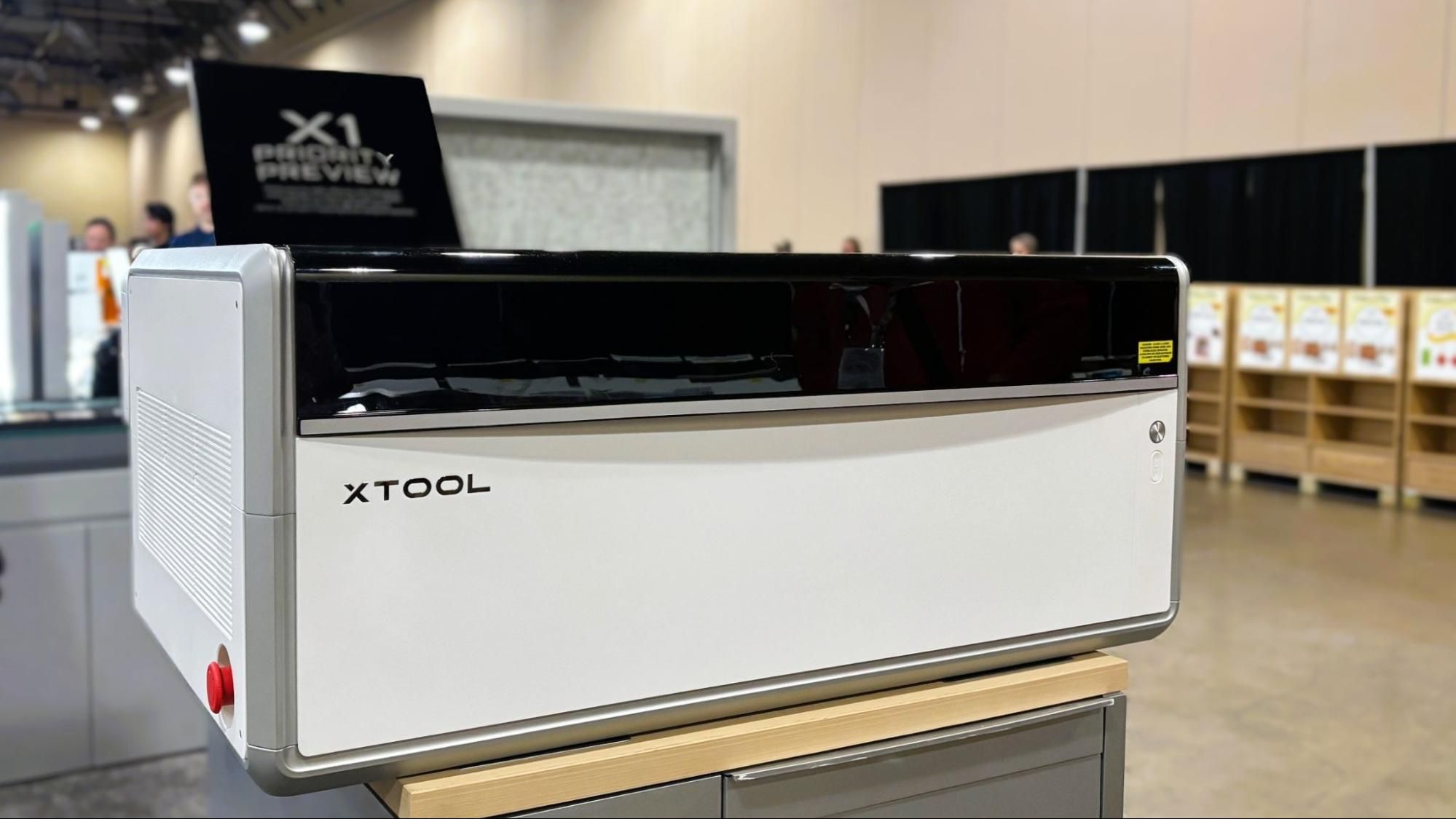
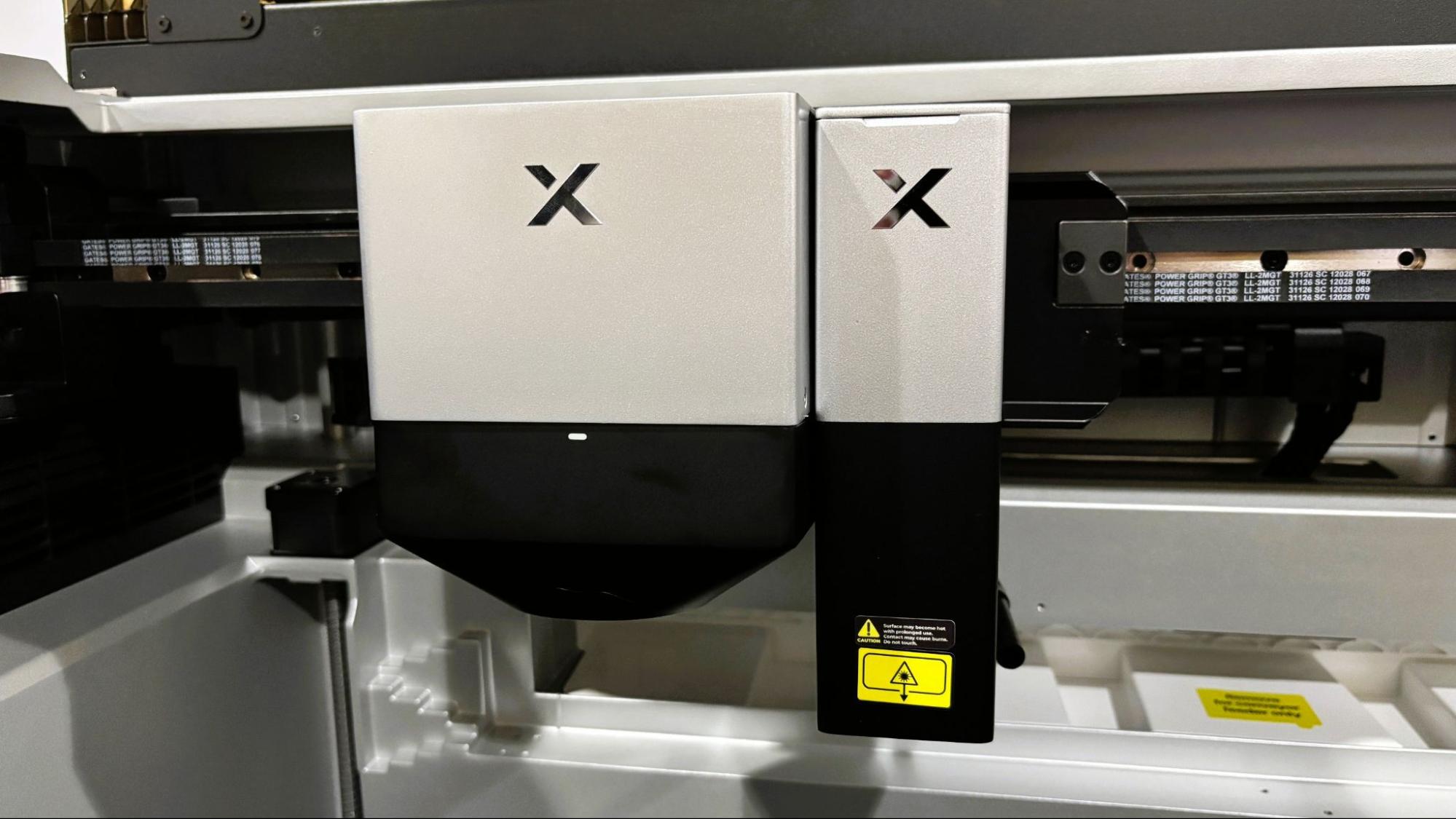
The X1 stands out as xTool’s first flying-galvo unit, a design choice engineered to combine the expansive working area typical of a gantry system with the rapid processing speeds associated with a galvo laser. Adding to its versatility, the machine features a dual-head system. The galvo head is positioned side-by-side with a CO2 laser, allowing the unit to dynamically select and deploy the optimal laser head—or both simultaneously—depending on the requirements of the specific job.
Previous multi-function machines on the market have typically relied on swappable toolheads, but those options have historically been restricted to varying power tiers of diode and infrared lasers. In contrast, the X1 utilizes an innovative swappable backpack system. This mechanism routes different laser frequencies directly to the galvo toolhead. As a result, the same galvo system can function as a wood-burning diode for organic materials, a crystal-engraving UV laser, or a metal-etching MOPA system.
The default configuration for the machine out of the box will pair a robust 55-watt CO2 laser with a 20-watt diode dedicated to the galvo head. While xTool demonstrated the capabilities of the system at the conference, pricing details were not disclosed during the reveal. Further specifications and pricing are expected to be announced closer to the system’s scheduled launch date in October.
The Next Level Maker Conference, where the announcement took place, serves as a hybrid maker retreat and expo. The event brings together hobbyists, hardware developers, and industry experts for educational classes and motivational discussions focused on transitioning from a maker hobby to a sustainable commercial business.
During the presentation, xTool representatives emphasized a corporate goal to embrace all forms of creative making, signaling an intention to expand far beyond its identity as a dedicated laser manufacturer. To support this vision, the company announced the upcoming SE1 embroidery machine. Positioned as an accessible entry point into embroidery for creators already operating within the xTool software ecosystem, the machine supports both standard stitching and single-color embroidery.
When used in tandem with the xTool O1 Omni printer, the SE1 can be utilized to print full-color designs directly onto threads using direct-to-garment (DTG) printing techniques. Industry observers note that while full-color embroidery is traditionally achieved using multi-needle industrial machines that cost thousands of dollars and require advanced technical skill to maintain, single-color machines offer a significantly lower barrier to entry for beginners.
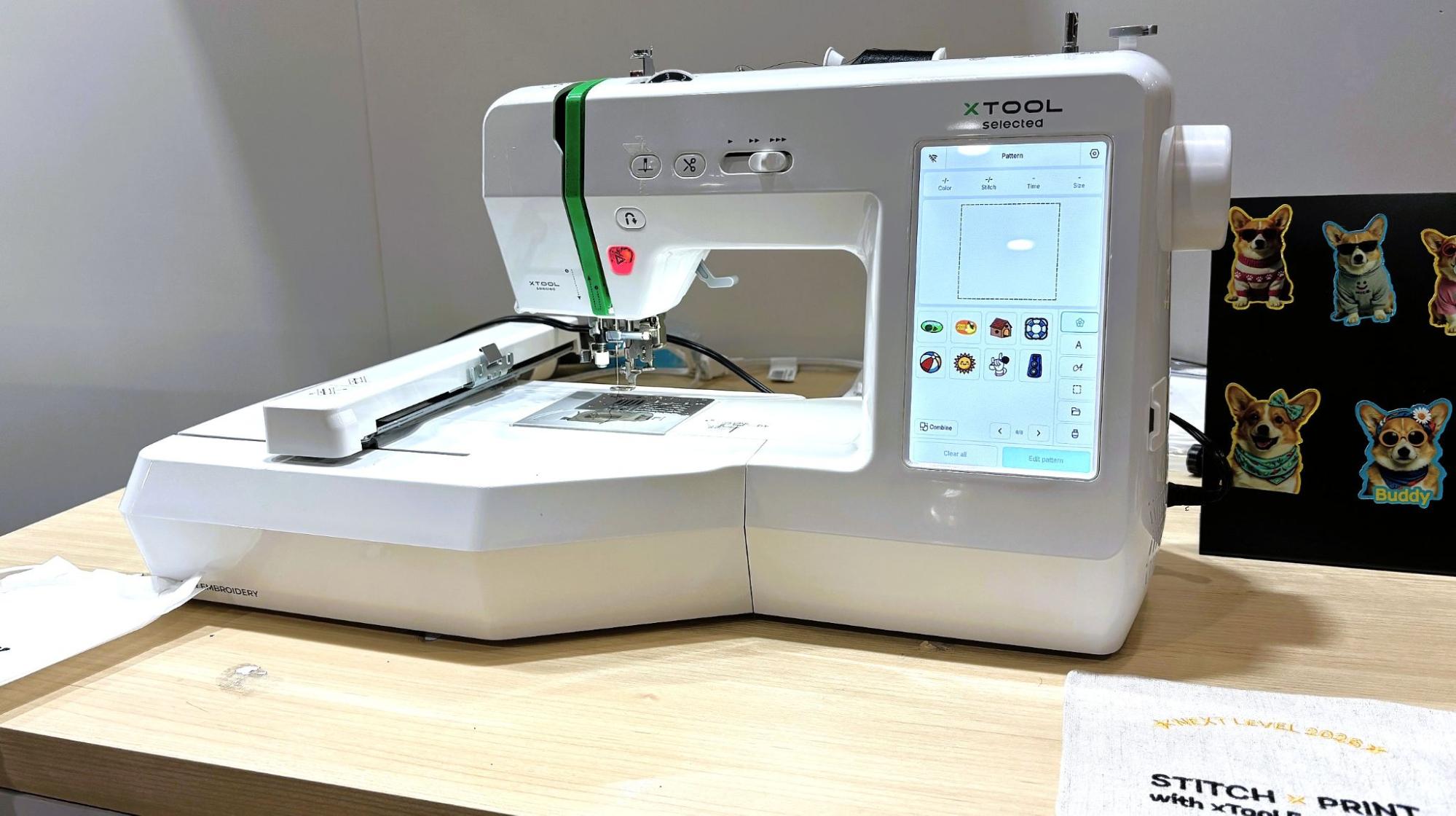
The SE1 integrates directly into the broader xTool design software suite, streamlining the workflow of transferring projects between equipment. During a live demonstration at the conference, a fabric piece was stitched on the SE1, removed from its hoop, and placed directly inside the UV printer to apply color before being finished with a heat press to set the DT ink.
xTool was far from the only organization showcasing hardware and software innovations tailored to the modern creator economy. The vendor hall at the conference was packed with independent creators who have successfully transitioned into small business owners, reflecting the commercial growth of the maker community.
Makerflo
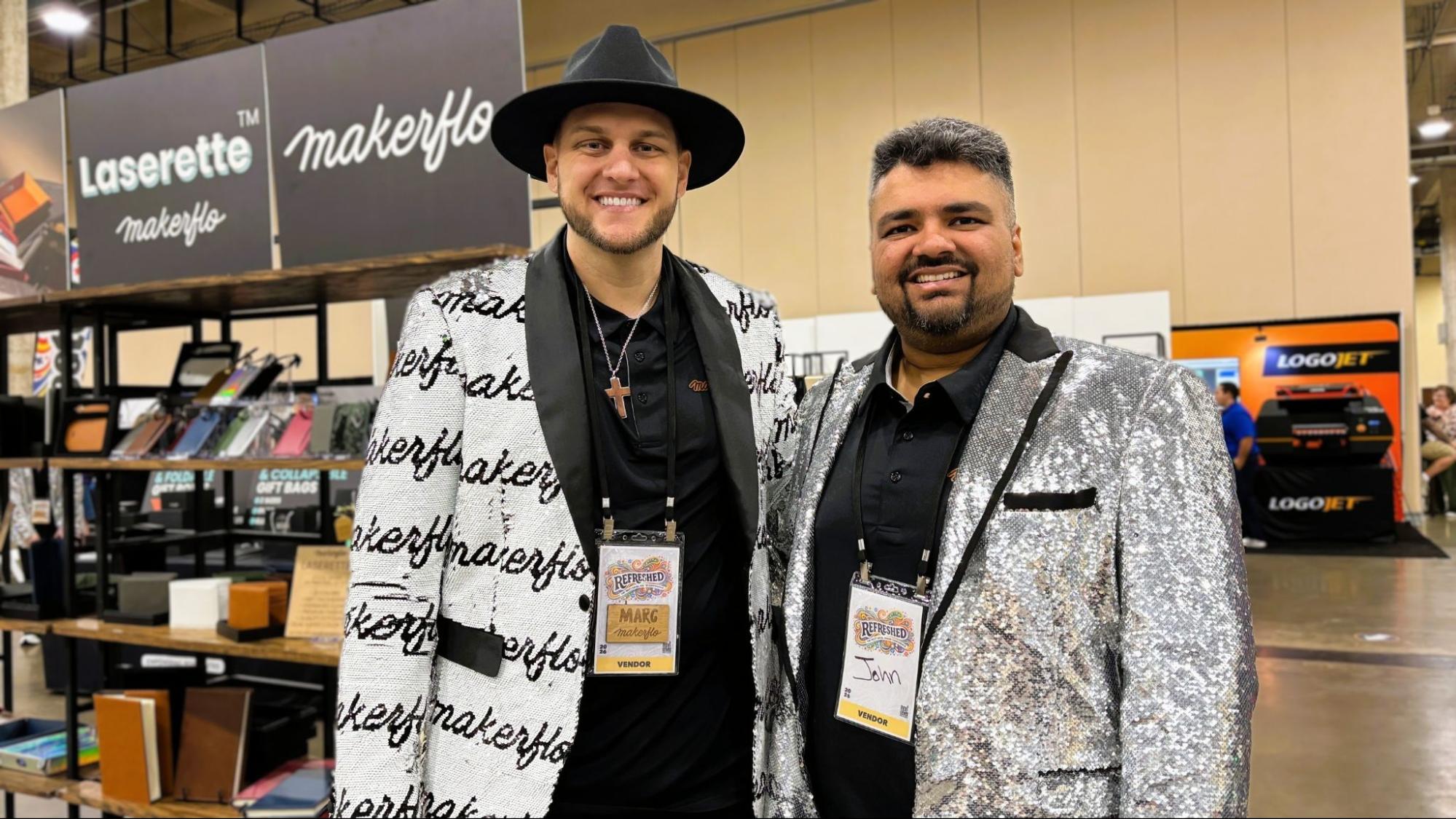
Among the prominent vendors in attendance was Makerflo, a wholesale supplier founded by Marc Pendergraft and John Modi. The duo began selling laser-cut products shortly after graduating from college and ultimately established Makerflo to supply the high-quality materials and upscale packaging they felt were missing when they started out.
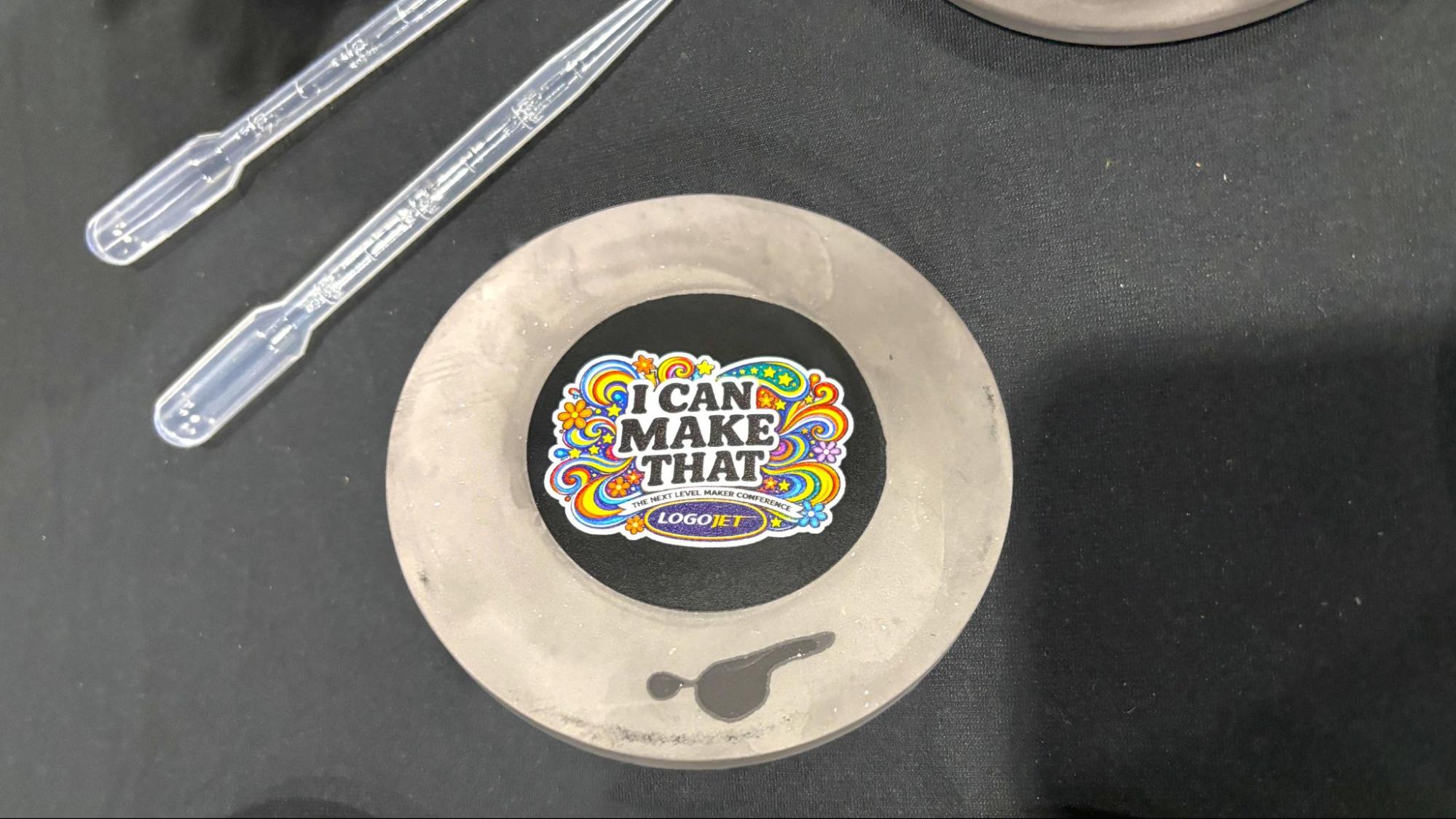
At their booth, Makerflo displayed several experimental items designed to gather direct feedback from working creators. Among the items drawing attention was a prototype coaster crafted from absorbent diatomite stone with a laser-ready metal disc embedded seamlessly in the center. In addition to showcasing products, Pendergraft and Modi hosted several well-attended breakout sessions focused on the practical aspects of running and scaling a successful laser-crafting business.
Smokey Hill Designs
Angela Cruise, owner of Smokey Hill Designs, brought a substantial inventory of laser-compatible substrates to the conference, including high-grade plywood, acrylic sheets, and textured leatherette. Many of the materials featured custom-printed designs created using diode-safe processes.
The company’s overarching philosophy centers on providing premium, pre-finished natural and synthetic materials that reduce the preparation time required for makers to produce retail-ready goods. Nearly all products offered by Smokey Hill Designs are manufactured in-house at the company’s North Carolina facility to ensure strict quality control standards for laser processing.
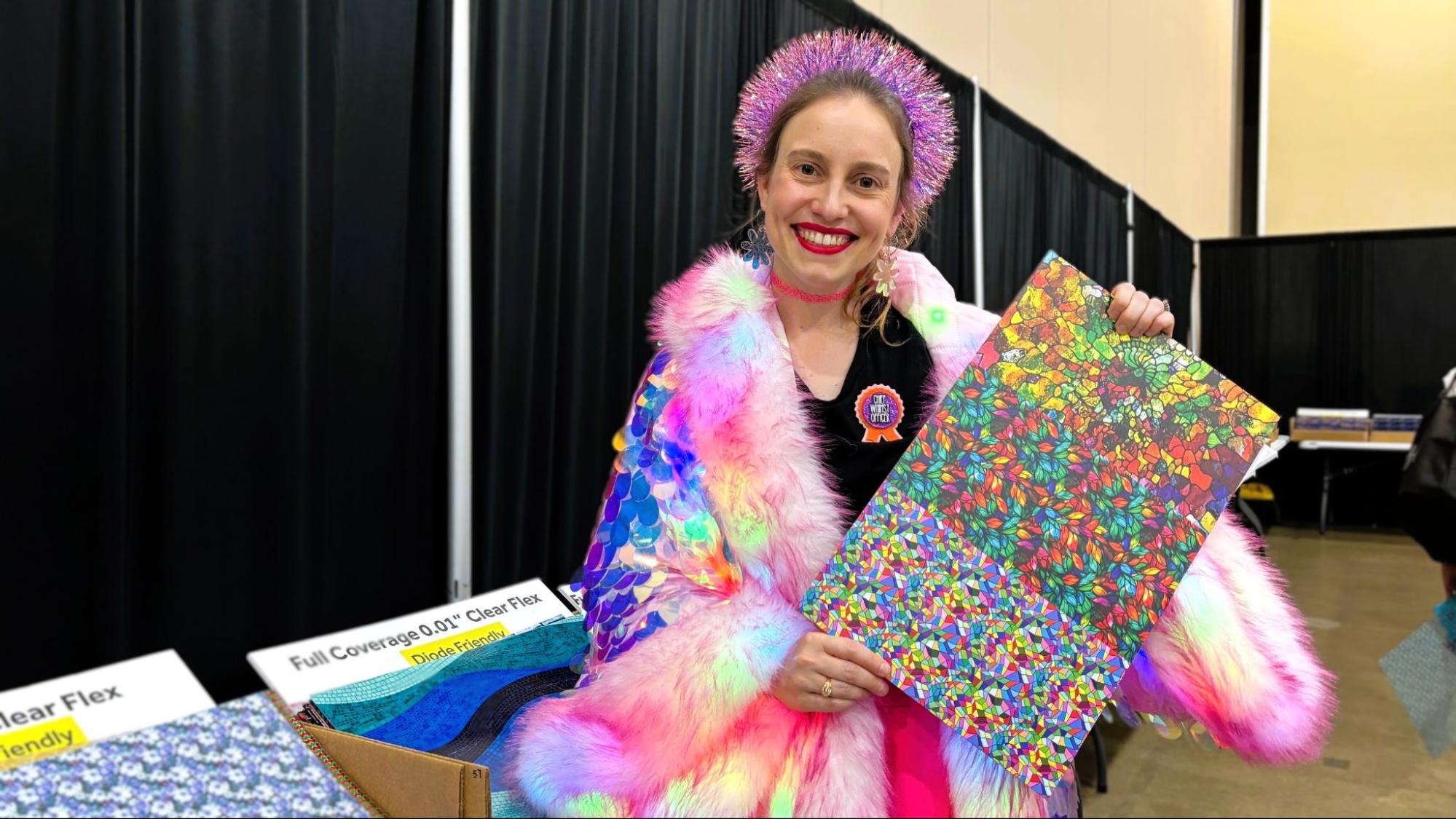
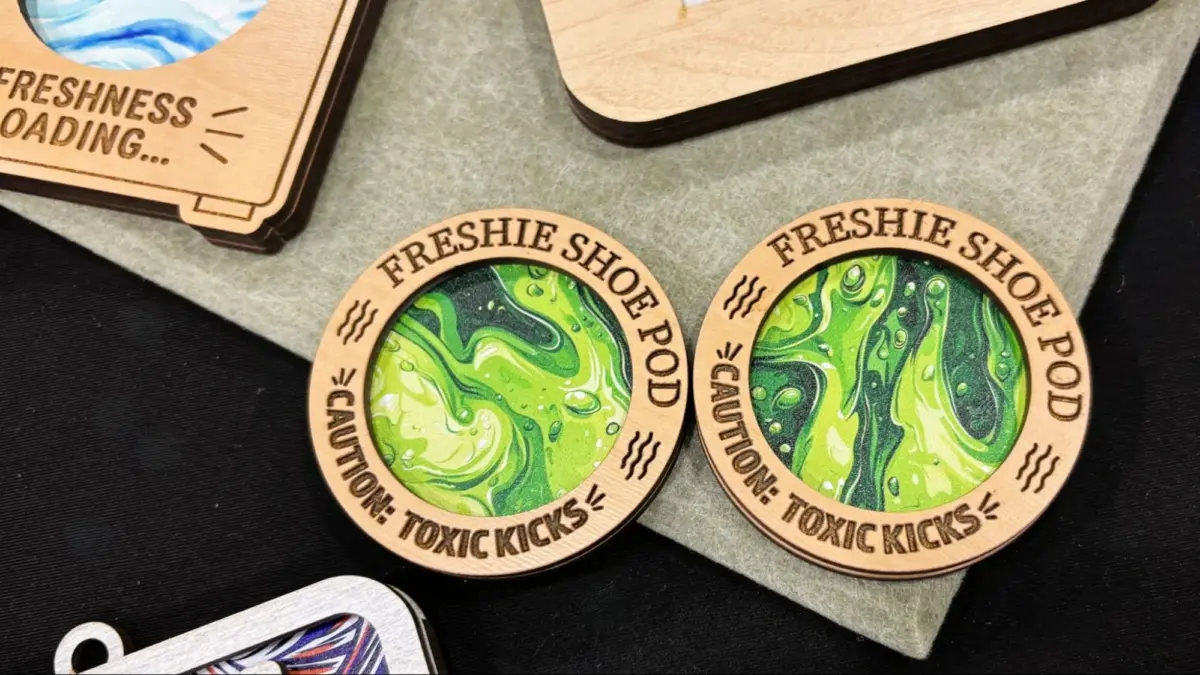
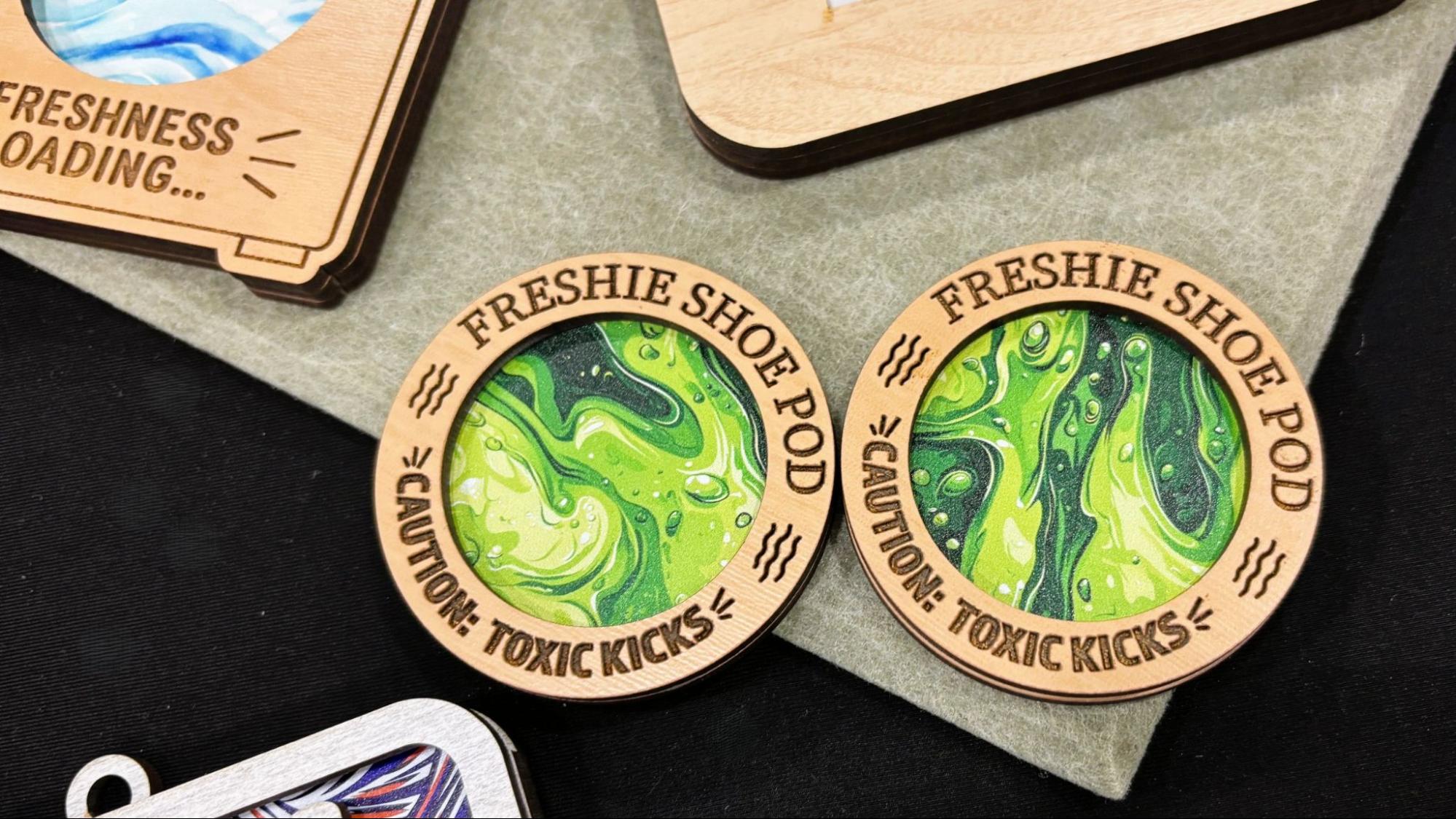
Among the more unique offerings displayed at their booth were "Freshy Sheets," which are thick, absorbent sheets featuring vibrant printed surfaces designed to hold essential oils and function as air fresheners. These materials are specifically engineered to be cut into custom shapes and housed within intricate laser-cut enclosures.
BurnForge Software
Software solutions tailored to small crafting businesses also maintained a strong presence on the exhibition floor. Aaron Pratt presented BurnForge, a subscription-based business management application designed specifically for makers and crafters.
The software allows creators to track customer orders through every stage of production, manage material inventories, and log precise machine settings to minimize costly errors and ruined material blanks. Pratt offered a limited-time 30-day free trial of the platform using a conference-specific promotional code for attendees.
Brothers Elias and Isaiah Grey similarly showcased Maker Studio, a specialized software suite designed to generate custom geographic maps that can be fabricated using laser cutters, CNC routers, or 3D printers. The platform enables users to convert real-world locations into layered vector files for laser stacking or 3D terrain relief maps for additive manufacturing and carving, eliminating the need for advanced computer-aided design experience. Maker Studio operates as a subscription service with an expanding feature set that includes dedicated tools for generating boxes, packaging fit sheets, and tumbler designs.

Leave a Reply