
PieceMakers, an innovative DRAM designer backed by memory giant Nanya, officially commenced trading on Taiwan’s Emerging Stock Board on September 16, entering the public market at a reference price of NT$740 per share, according to reports from Cnyes ahead of the debut. With approximately 60.4 million shares currently outstanding, this initial reference price values the specialized semiconductor design company at roughly NT$44.7 billion, which translates to approximately $1.4 billion USD. Taiwan’s Emerging Board serves as the Taipei Exchange’s formal pre-listing market rather than a main-board initial public offering, allowing shares to trade securely through designated market makers as companies prepare and position themselves ahead of any formal listing application.
The market response to the company’s debut was notably energetic. During its inaugural trading session, PieceMakers stock opened significantly higher at NT$1,035, surged to an intraday peak of NT$1,205, and ultimately closed its first day on the board at NT$915. This closing figure represented a solid 23.6% increase over the initial NT$740 reference price, signaling strong early investor interest in the firm’s distinct technological positioning within the rapidly evolving artificial intelligence hardware landscape.
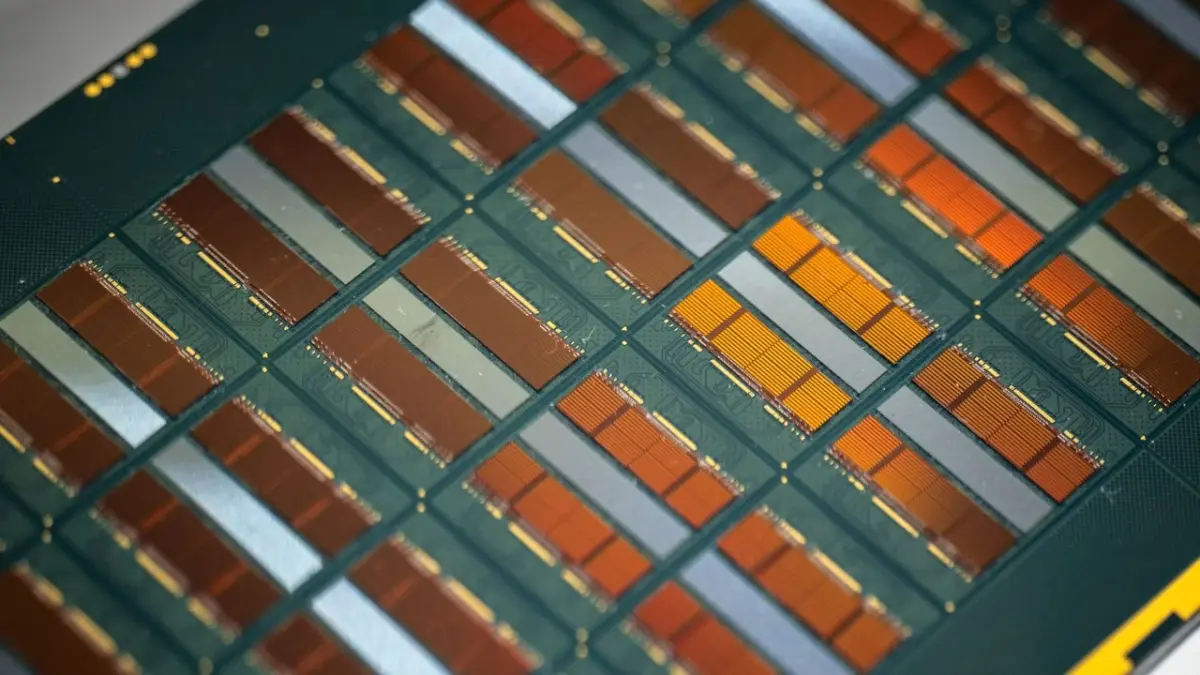
Unlike many prominent memory and semiconductor firms currently dominating headlines in the AI sector, PieceMakers is intentionally steering clear of the High Bandwidth Memory market that has become ubiquitous for heavy-duty AI model training. Instead, the company is placing a strategic bet on a fundamental divergence between the memory requirements of AI training and AI inference. According to President Lee Hsiao-wen, who detailed the company’s vision to Cnyes, inference memory demands a different architectural approach than training infrastructure. PieceMakers is focusing its efforts on developing DRAM that can be stacked directly onto the processor utilizing advanced hybrid bonding techniques. This specialized configuration is engineered to occupy the performance and architectural space sitting neatly between Nvidia’s SRAM-only Groq LPU and traditional High Bandwidth Memory solutions.
Despite the high-tech nature of its silicon ambitions, the company’s immediate financial reality is presently anchored in engineering services rather than direct component sales. At this stage in its corporate lifecycle, design fees rather than mass-produced chips are driving the company’s profitability. Custom artificial intelligence design work accounted for approximately 40% of PieceMakers’ total revenue during the first half of 2026. Elaborating on the commercial timeline, Chairman Joseph Ting explained to TechNews that the company’s first major volume customer program is still in development and will not begin contributing meaningfully to the company’s financial results until 2027 at the earliest, underscoring the long-term horizons typical of advanced semiconductor design ventures.


Leave a Reply