
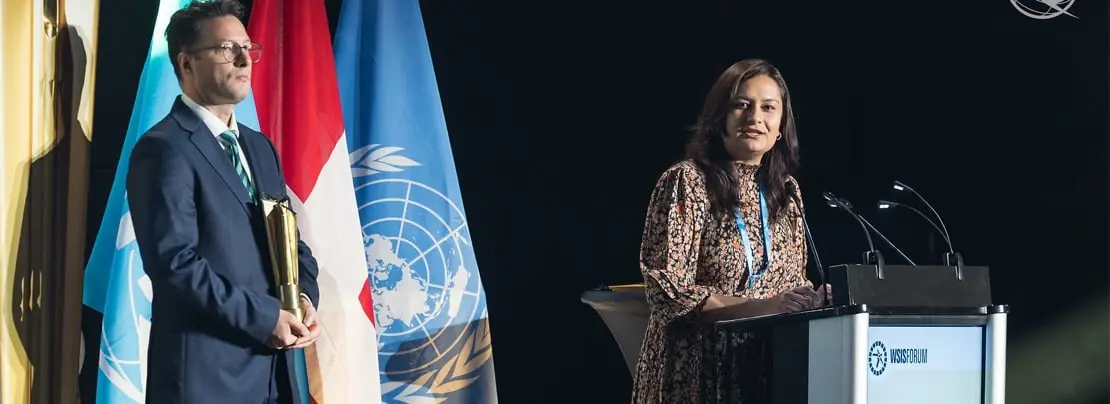
GENEVA — The World Summit on the Information Society (WSIS) Forum 2026 concluded its high-level meetings in Geneva, marking a pivotal transition from documenting global digital commitments to demonstrating concrete, real-world outcomes. Co-hosted by the International Telecommunication Union (ITU) and the government of Switzerland, the annual gathering ran from July 6 to July 10, operating alongside the AI for Good Summit and the inaugural Global Dialogue on AI Governance.
As the first major summit following the formal completion of the WSIS+20 Review in late 2025, the 2026 forum served as a launchpad for a renewed international agenda. With the global community having officially reaffirmed its dedication to the WSIS framework through 2035, discussions across numerous sessions consistently pivoted toward accountability, performance metrics, and the practical execution of digital development goals.
For the past two decades, the international digital policy landscape has heavily prioritized the establishment of frameworks, high-level partnerships, and broad consensus across diverse regions. However, the mood in Geneva reflected a collective realization that the next decade must be defined by verifiable progress. Throughout the week-long series of panels and workshops, delegates from governments, the technical community, civil society, academia, and private industry emphasized that the enduring strength of the multistakeholder model now lies in its capacity to deliver measurable impact.
The foundational roadmap for this new phase is anchored in the WSIS+20 outcome document adopted in December 2025. This document explicitly tasks all WSIS Action Line facilitators with developing results-oriented implementation roadmaps. These roadmaps are designed to align closely with relevant Sustainable Development Goals (SDGs) and the commitments outlined in the Global Digital Compact (GDC), ensuring that every initiative contributes to broader, universally recognized developmental targets.
Building Implementation Roadmaps
A dominant challenge highlighted throughout the 2026 Forum was the historical difficulty of tracking, monitoring, and evaluating WSIS-related activities across the vast ecosystem of the United Nations system and its wider stakeholder network. To address these transparency and coordination hurdles, UN agencies are currently spearheading the development of a consolidated resource platform. This upcoming hub will centralize critical information regarding WSIS Action Lines, explicitly detailing responsible agencies, ongoing activities, tangible outputs, and specific stakeholder contributions.
The UN Commission on Science and Technology for Development (CSTD), the body responsible for overseeing annual WSIS implementation reviews, has strongly advocated for a reporting evolution. Future evaluations are expected to shift decisively away from cataloging routine activities and toward rigorous, evidence-based metrics that capture true socio-economic impact.
Translating these high-level ambitions into operational reality, however, presents distinct structural challenges. Certain Action Lines—most notably Action Line C1, which addresses the role of governments and all stakeholders in the promotion of information and communication technologies (ICTs) for development—are exceptionally broad. Speakers at the forum noted that these sweeping mandates are often difficult to operationalize without substantial refinement. Consequently, several policy experts recommended breaking down large, overarching commitments into more focused, manageable workstreams supported by tailored implementation plans and specific performance indicators.
Action Line facilitators face a strict timeline to complete these granular roadmaps by 2027. Consequently, the coming year is widely regarded as a critical window that will determine how effectively the global community can bridge the gap between aspirational policy declarations and enforceable operational actions.
From Representation to Participation
Multistakeholderism remained a cornerstone of the dialogue in Geneva, yet the conversation noticeably matured. Rather than focusing merely on securing a seat at the table for diverse demographic and institutional groups, delegates turned their attention to the qualitative depth of that participation.
Speakers repeatedly stressed that genuine digital cooperation cannot succeed through top-down global governance alone. Instead, it requires active, meaningful engagement at local and regional levels. Communities that bear the direct consequences of digital policies must be granted authentic opportunities to contribute to the formulation, design, and execution of those frameworks.
This principle heavily influenced discussions concerning the institutional future of the Internet Governance Forum (IGF). Participants maintained a unified stance that any emerging mechanisms designed to enhance formal government engagement must remain fully embedded within the broader, inclusive multistakeholder architecture, rather than fragmenting into a separate, purely intergovernmental process.
In this context, the São Paulo Multistakeholder Guidelines—forged through the NetMundial+10 process—frequently surfaced as a practical benchmark. Their formal recognition within the WSIS+20 outcome document was widely celebrated by delegates as a vital step toward preserving open, collaborative digital governance models.
What’s Next for the IGF?
The recent securing of a permanent mandate for the Internet Governance Forum provided another major focal point for debate in Geneva. Despite ongoing conversations surrounding the long-term evolution of the platform, there was virtually no appetite among participants for radical structural overhauls. Instead, stakeholders favored reinforcing existing mechanisms and ensuring the success of the upcoming global IGF meeting scheduled to take place in Nairobi later this year.
Many attendees underscored that national, regional, subregional, and youth IGF chapters represent some of the most vibrant and successful elements of the entire model. Nevertheless, observers noted that stronger, more formalized conduits must still be established between these National and Regional Initiatives and the global IGF stage. Building these bridges is considered essential to ensuring that ground-level realities and localized experiences genuinely shape international policy debates.
The prominent positioning of the IGF throughout the WSIS Forum 2026 underscored the increasingly tight institutional and operational synergy binding the two major platforms together.
From Regional Success to Global Recognition
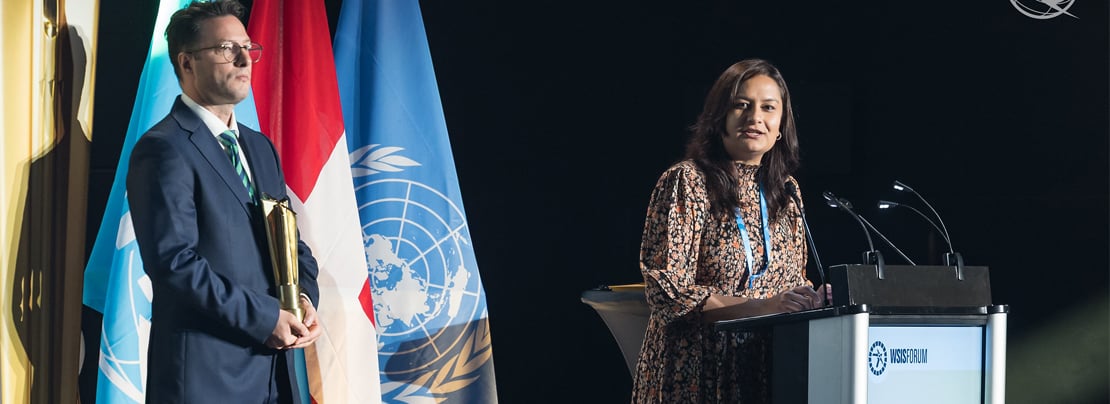
Amidst the high-level policy negotiations, the week also celebrated practical, on-the-ground achievements in digital capacity building. A notable highlight was the international recognition awarded to the APNIC Foundation’s Building Capabilities in the Asia Pacific (BCAP) project, which officially claimed the 2026 WSIS Prize in the Capacity Building category.
The recognition of the BCAP initiative served as a practical testament to the value of community-driven, hands-on programs that successfully bridge digital divides, enhance technical expertise, and foster sustainable infrastructure development across dynamic regional landscapes.
Looking Ahead
As the WSIS Forum 2026 draws to a close, it leaves behind a clear mandate: the primary challenge for the digital policy community is no longer articulating shared ideals, but rigorously demonstrating tangible results.
Over the course of the next year, as Action Line facilitators finalize their implementation roadmaps, the international spotlight will increasingly focus on evidence-based reporting, transparent accountability, and measurable outcomes. Ultimately, the success of this next chapter in the WSIS timeline will depend entirely on the collective ability of governments, technical experts, civil society, and industry leaders to translate broad policy consensus into meaningful, lasting impacts for communities worldwide.
Leave a Reply