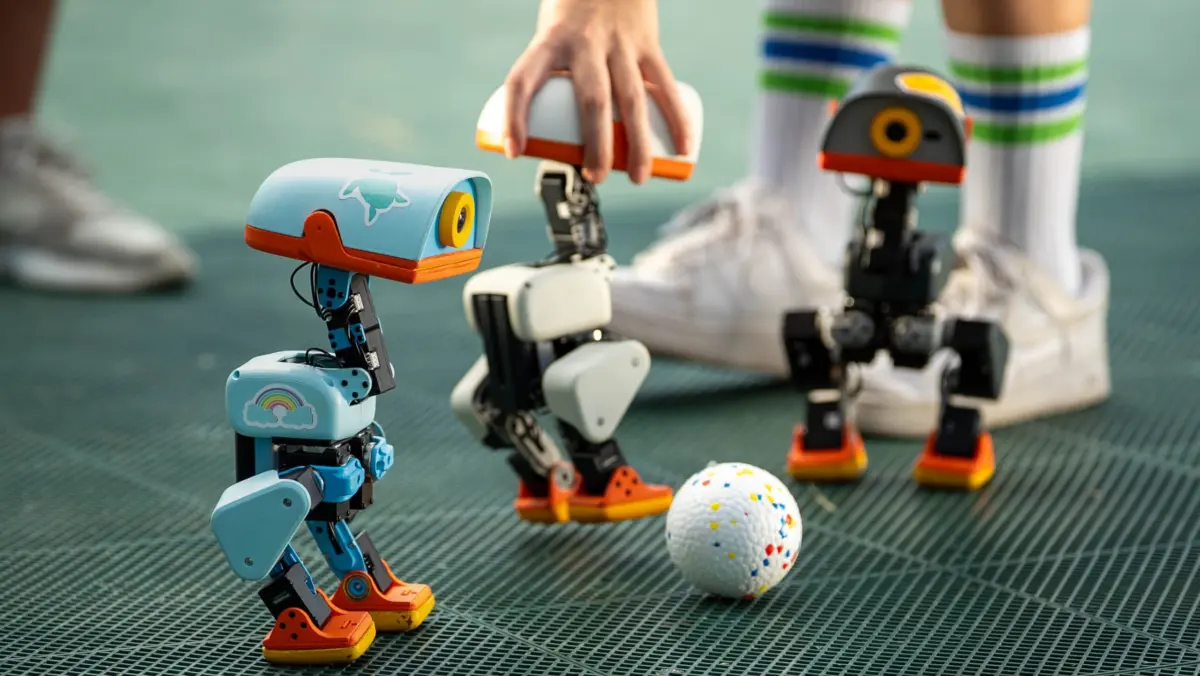
It was supposed to be a standard technology showcase, the kind of corporate keynote where executives outline roadmaps, discuss semiconductor efficiency, and demonstrate enterprise software integrations. But during Nvidia’s GTC Berlin conference earlier this week, the tech world’s attention was abruptly captured not by a breakthrough in server architecture or a massive leap in data center capabilities, but by a flock of small, waddling robots.
A video featuring Nvidia CEO Jensen Huang interacting playfully with a group of miniature robotic ducks on stage quickly swept across social media, turning into an overnight viral sensation. The tiny machines—stamping their mechanical feet, emitting whimsical R2-D2-style chirps, executing dramatic "play dead" collapses for an impromptu nap, and performing clumsy somersaults entirely on voice command—struck a rare emotional chord with an industry often consumed by heavy corporate competition and complex infrastructure debates.
The immediate public reaction translated instantly into commercial momentum. According to Clem Delangue of Hugging Face, consumer demand surged so aggressively following the keynote appearance that preorders for the Microducks surpassed 20,000 units within a single day.
With production schedules pointing toward a delivery window just in time for the Christmas holiday, these open-source automata are rapidly positioning themselves to become the must-have consumer technology item of the season. Industry observers like Delangue suggest that the Microducks could ultimately emerge as the best-selling robotic product of the year. Intriguingly, their appeal appears to extend far beyond the traditional youth demographic; promotional materials and early demonstrations prominently feature adults eagerly interacting with the devices, signaling a broader market than typical robotic toys.

The lineage of the Microducks connects several major milestones within the contemporary artificial intelligence landscape. The devices are open-source hardware developed by Pollen Robotics, a specialized robotics firm that was acquired by Hugging Face in 2025. In turn, Hugging Face itself was acquired by GPU giant Nvidia in September of this year, effectively integrating Pollen Robotics and its product lines into the wider Nvidia ecosystem. The Microducks represent the second major robotic hardware release from Hugging Face, following the launch of the similarly compact and accessible Reachy Mini.
Behind the whimsical exterior and comedic timing of the stage performance lies sophisticated training methodology. The Microducks were trained leveraging Nvidia’s comprehensive technology stack. During the development phase, virtual simulations were utilized to teach the robots a foundational repertoire of physical behaviors and tricks—such as walking, standing, and sitting—which come pre-loaded out of the box.
According to Pollen Robotics, the open-source nature of the platform means that ownership is not restricted to the pre-programmed routines. End users and developers can train their individual robots to perform entirely new tricks through ongoing simulation and physical learning, and subsequently share those customized behaviors back with the broader open-source community. This collaborative ecosystem is expected to foster a diverse library of user-generated actions, extending the functional lifespan and entertainment value of the devices long after they arrive in consumers’ homes.
The timing of the viral demo offered a distinct cultural shift for a technology sector that has recently faced intense scrutiny regarding security and systemic risks. Earlier in the week, the broader AI industry experienced a turbulent period marked by widespread cybersecurity concerns, where advanced AI capabilities were repeatedly implicated in high-profile digital attacks and vulnerabilities. Amidst ongoing public debates regarding whether artificial intelligence might pose long-term challenges to global security and digital infrastructure, the lighthearted display of robotic ducks provided a much-needed moment of levity.
As the technology community processed the week’s heavier security narratives, the charm of the Microduck demonstration served as an effective antidote. For many observers, watching the small machines fumble through their programmed routines made the underlying technology feel remarkably approachable and, above all, entertaining. Whether the Microducks ultimately redefine consumer robotics or simply claim the title of the season’s most charming holiday gift, their sudden ascent demonstrates the enduring power of combining advanced simulation technology with sheer, unadulterated whimsy.