With temperatures climbing into the 90s in Los Angeles last August, avoiding the sweltering heat was not an option during an outdoor family gathering. Seeking refuge, I chose a spot beneath a large patio umbrella equipped with a powerful fan nearby, reasonably confident that I was shielded from the punishing rays of the sun and the oppressive heat. Yet, only half an hour later, a wave of exhaustion, dizziness, nausea, and general malaise set in—classic symptoms strongly consistent with heat exhaustion.
Around the exact same time I began feeling unwell, my smartphone chimed with a notification from the companion app for the Gem, a $249 UV-tracking necklace created by the company The90, which was retailing for $149 at the time of publication. The alert delivered a stark warning: my ultraviolet exposure had climbed considerably. It quickly became clear that UV radiation was not effectively repelled by the patio umbrella. In truth, achieving complete protection from UV is exceptionally difficult because radiation can easily be reflected or scattered by surrounding environmental objects like pavement, walls, and furniture. While ultraviolet exposure and physical overheating are fundamentally distinct physiological phenomena, I had mistakenly assumed that simple shade and moving air would adequately protect me from both hazards.
This jarring afternoon led to a broader medical discovery: one of my regular prescription medications noticeably increases my body’s sensitivity to heat. This revelation helped explain a series of similar, baffling episodes I had experienced over the years during warm weather. While the Gem is not a medical diagnostic tool and did not diagnose any condition, it served as a vital catalyst, prompting me to investigate a health factor I might otherwise have casually dismissed. Since that day, I have grown far more mindful about strictly limiting my time outdoors during peak heat and UV hours, maintaining consistent hydration, and paying much closer attention to subtle cues regarding how my body feels while outside.

My initial attraction to a wearable UV tracker was admittedly rooted in vanity. As much as I strive to critically challenge harmful societal beauty standards, I am hardly immune to their subtle influences. Having started going gray in my early twenties, I am naturally keen on slowing down other visible signs of aging where I reasonably can. However, living as an Indian person with skin possessing a higher natural melanin content—meaning I rarely experience painful sunburns, though that biological protection certainly does not eliminate the underlying risks of cumulative sun damage or skin cancer—and residing within comfortable walking distance of the beach in perpetually sunny Los Angeles, I had never given much serious thought to how much UV exposure I was actually accumulating on a day-to-day basis. The Gem has helped demystify that exposure by providing a wide range of analytical estimates, some proving vastly more useful than others.
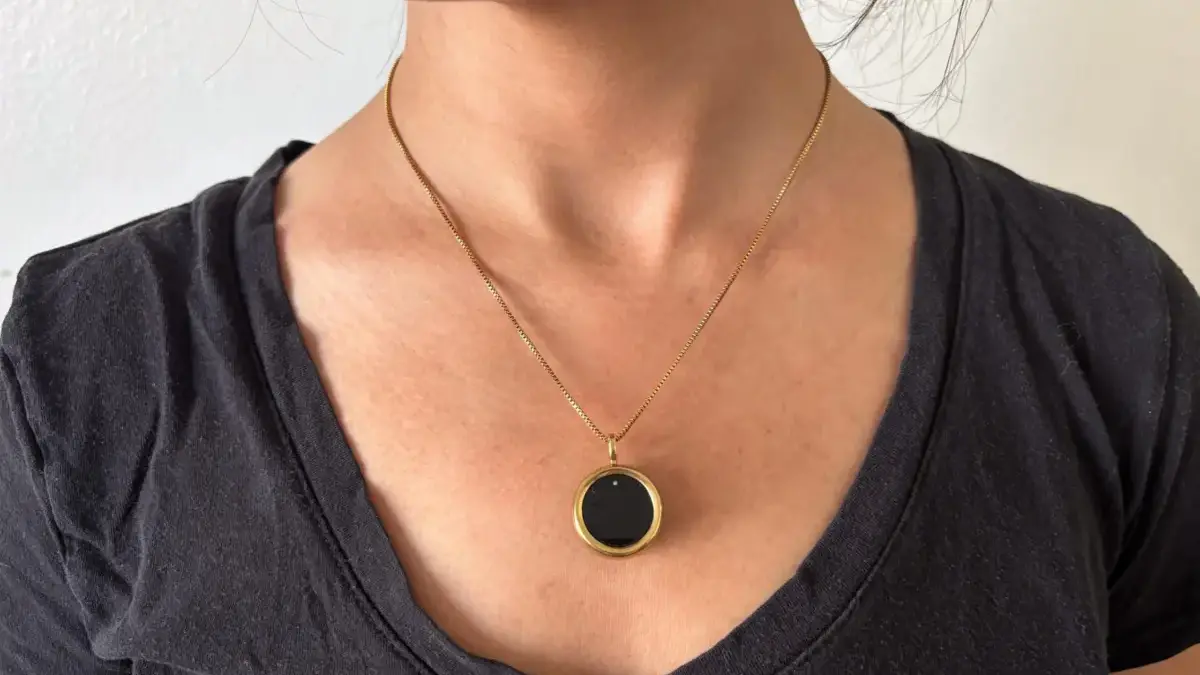
The hardware itself features an included UV-detecting sensor capable of measuring UVA and UVB radiation separately, rather than simply pulling a generic local UV forecast from a weather app. UVB rays are primarily responsible for triggering painful sunburns while helping the skin synthesize vital vitamin D, whereas UVA rays quietly contribute to deep skin damage and premature aging, even during days when visible burning does not occur. Fortunately, gathering these advanced metrics does not require wearing a bulky, industrial-looking gadget. The circular pendant comes attached to a delicate, attractive necklace that I would happily wear even if it lacked any tracking technology whatsoever. Its titanium chain, available in gold- or silver-colored finishes, pairs effortlessly with a wide variety of daily outfits. During testing, the battery life lasted almost exactly one week, matching the manufacturer’s advertised lifespan, and the device conveniently recharges using an included proprietary charging dock. The90 has also announced plans to release a hat clip and a bag tag, which should appeal to consumers who prefer not to wear jewelry around their neck.
The mobile application serves as the central hub for the entire experience, featuring clean, easy-to-read graphs and jargon-light explanations that made checking my metrics an enjoyable routine. While optional, users can construct a detailed skin profile that allows the software to estimate various personalized metrics based on the sensor’s raw UVA and UVB readings. This profile accounts for specific variables such as skin type, individual sensitivities, clothing coverage, and sunscreen usage. Consequently, the app’s estimates are not derived from raw UV exposure alone, though they remain predictive calculations rather than direct biological measurements of how an individual’s specific body is reacting to sunlight in real time.

The app packs an immense amount of data into its interface, including estimated vitamin D production, potential circadian light benefits, estimated nitric oxide-related benefits, cumulative UVA exposure, and recent accumulated UVA exposure metrics. Alongside weekly trends, a specialized Skin Aging Zone assesses potential aging-related risks and offers tailored skincare advice. The system also delivers a personalized sunburn countdown, timely sunscreen reminders, and a comprehensive daily Sun Score. This Sun Score is a composite rating designed to balance the potential health benefits of sunlight against the documented risks of overexposure. The manufacturer encourages users to target a daily Sun Score of 90, though more sunlight is not inherently better; insufficient exposure means missing out on potential physiological benefits, while excessive UV radiation causes cellular skin damage. While I appreciated the contextual information, individual estimated measurements proved far more revealing than the overarching Sun Score itself.
During daily use, the UV readings within the app responded rapidly as I transitioned between direct sunlight, dense shade, and indoor environments, even registering noticeable fluctuations when standing near windows. While I lacked the specialized laboratory equipment necessary to independently verify the absolute accuracy of the sensor’s calibration, the data behaved logically as my physical environment shifted. However, there were occasional instances where I noticed the Gem failed to register that I had spent time outdoors. I eventually discovered that the mobile application needs to remain actively running in the background—at least on Apple’s iOS platform, as I did not test the device on Android—because measurements are not stored locally on the sensor itself, meaning fully closing the app completely interrupts the tracking pipeline.
That afternoon at the outdoor party profoundly challenged my preconceived assumptions regarding the level of protection afforded by simple shade. Just as surprising was discovering how little UVB radiation I accumulated during a typical week, despite living in an environment as famously sunny as Southern California. My cumulative totals fell short of the app’s estimated sunlight-derived vitamin D target almost on a daily basis. This discrepancy prompted me to research how natural skin melanin, while offering valuable protection against UV damage, simultaneously impacts the body’s ability to synthesize vitamin D from sunlight. Up until that point, I had exclusively thought about sun exposure through the singular lens of protecting my skin from harm. Seeing how little UVB I was actually absorbing forced me to consider what nutritional and biological benefits I might be missing out on.

At the same time, the app’s vitamin D countdown feature proved less reliable than I had hoped. During one testing session, its estimate of how much additional sunlight I needed dropped abruptly from several hours down to under an hour, only to climb past six hours just minutes later. These erratic fluctuations appeared tied to shifting outdoor UVB intensity, though I could not independently verify that hunch. I observed similar instability in the app’s estimated time-to-sunburn countdowns. With both predictive timers shifting so wildly throughout the day, I eventually stopped paying close attention to the exact countdown hours and instead focused on the broader picture: assessing whether my body felt like it was receiving an appropriate amount of sun.
Perhaps the single biggest surprise of testing the Gem was how it altered my perspective on daily habits. After my alarming experience beneath the patio umbrella in August, I initially expected the device would simply encourage me to spend less time outside each day. In reality, my actual exposure patterns frequently fell into two distinct extremes: either spending too little time outside to meet the app’s estimated targets, or inadvertently accumulating enough exposure to raise valid concerns about overexposure, even on days when I believed I was completely safe under shade structures.
I now approach my outdoor time with heightened mindfulness, even on days when I am not wearing the Gem. I deliberately limit my time outside during peak UV hours and make a conscious effort to seek out some natural sunlight on days spent largely working indoors. I credit the wearable with helping me understand how my daily routines impact my overall well-being in ways I had never previously considered, though the practical utility of its insights will naturally vary depending on individual lifestyles.

With a standard retail price of $249, the device is undeniably expensive, though it is a welcome relief that the hardware does not require an ongoing monthly subscription fee. Personally, I cannot easily justify the steep price point given how many hours I spend working indoors, but I can readily see the clear appeal for individuals who spend considerable portions of their day outdoors or for those who want to build more rigorous sun protection habits. For the cost, I wish the application’s guidance was clearer at times and that it could log UV exposure without requiring the app to remain open in the background. Nevertheless, wearing the Gem ultimately succeeded in shifting my internal dialogue away from superficial concerns about physical appearance and toward a healthier focus on how I treat my physical well-being.