
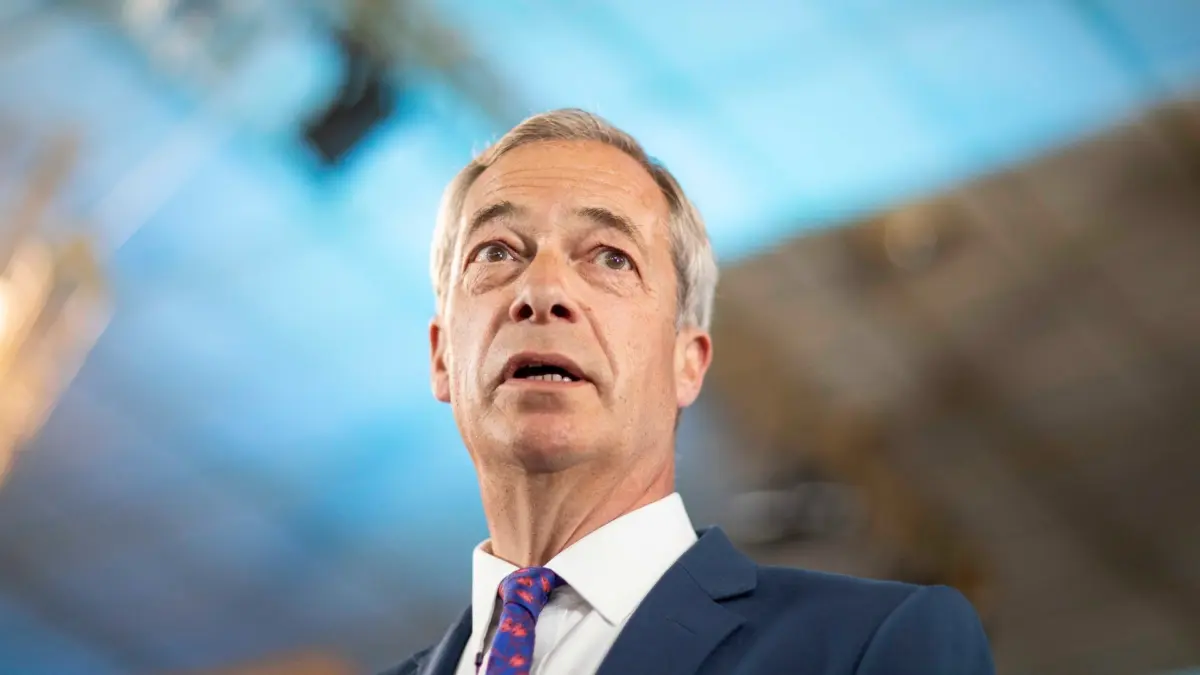
UK Chancellor of the Exchequer John Healey has delivered a sharp critique of Reform Party leader Nigel Farage, targeting the prominent politician’s outspoken support for cryptocurrency and drawing a direct comparison to the tumultuous tenure of former Prime Minister Liz Truss.
Speaking during a public address on Monday, the senior Labour finance minister took aim at Farage’s economic policies and his digital asset holdings. Healey characterized the populist leader as a politician attempting to project an image of working-class solidarity while championing policies that could destabilize the British economy.
"Nigel Farage—he wants you to think he’s a man of the people," Healey said during his speech. "But when it comes to the economy, he’s Liz Truss with a Bitcoin account."
The comparison invoked the legacy of Liz Truss, the UK’s shortest-serving prime minister, whose September 2022 debt-fueled "mini-budget" triggered severe turmoil in British financial markets, sent the pound plunging, and ultimately forced her resignation after just 49 days in office. By linking Farage to Truss, Healey sought to frame the Reform leader’s pro-crypto agenda and populist economic proposals as reckless and financially unstable.
Healey contrasted Farage’s approach with the governing Labour Party’s economic strategy, emphasizing that the current administration intends to steer the nation forward through conventional mechanisms of governance. He stated that Labour would help the UK get ahead "through fiscal discipline, through good work, through strong industries."
Farage, a high-profile Member of Parliament leading the surging right-of-centre Reform Party, has cultivated a strong pro-crypto stance in recent years. Since 2020, the politician has increasingly framed Bitcoin not merely as a speculative financial instrument, but as a fundamental question of personal freedom and a bulwark against state control over monetary systems.
The Reform leader’s interest in digital assets deepened significantly following a personal dispute with the traditional British banking sector. Farage has frequently recounted how he was "debanked" by private British bank Coutts, an experience that he claims catalyzed his deep dive into decentralized finance and digital currencies.
Since embracing the crypto movement, Farage has made ambitious promises to the digital asset community. At the Bitcoin 2025 Conference in Las Vegas last year, he outlined a radical economic platform should he ever secure the office of Prime Minister. Among his key pledges were slashing capital gains taxes on cryptocurrency transactions and forcing the Bank of England to establish a national Bitcoin reserve.
However, Healey’s disparaging reference to a "Bitcoin account" quickly drew sharp ridicule and pushback from digital asset advocates and prominent figures within the crypto community on social media platform X. Critics seized upon the terminology used by the Chancellor, arguing that the phrase revealed a fundamental misunderstanding of how decentralized cryptocurrencies operate.
"Apparently ‘Bitcoin account’ is now a thing," the prominent X account Simply Bitcoin wrote in a post reacting to the Chancellor’s remarks. "Incredible stuff from one of the people running Britain."
Other users across the platform echoed the sentiment, questioning whether high-ranking government officials possess an adequate grasp of financial technology as blockchain and digital assets play an increasingly prominent role in global political and economic discussions.
Beyond the rhetorical sparring over monetary policy, Farage and the Reform Party have faced intense scrutiny regarding their campaign finances and the source of substantial political donations. In recent months, the populist party has come under fire for receiving millions of dollars in crypto-denominated donations from high-profile tech entrepreneurs and industry figures.
Among the donors cited by critics are Christopher Harborne, a tech entrepreneur and Tether investor, and Ben Delo, one of the co-founders of the now-defunct cryptocurrency derivatives exchange BitMEX. These large-scale digital asset contributions have fueled ongoing debates in British politics regarding the transparency and regulation of political funding in the digital age.
The financial scrutiny surrounding the Reform Party has since escalated into a formal law enforcement matter. The Metropolitan Police have opened an official investigation into allegations that the Reform Party may have breached strict UK electoral laws regarding overseas donations.
The investigation centers on whether any of the contributions violated statutory rules that prohibit political parties from accepting financial support from impermissible foreign sources or individuals not registered on the UK electoral roll. In response to the police inquiry, representatives for the Reform Party have strongly denied any wrongdoing, maintaining that all donations complied fully with legal requirements, and stated that the party is fully cooperating with authorities as the investigation proceeds.



Leave a Reply