
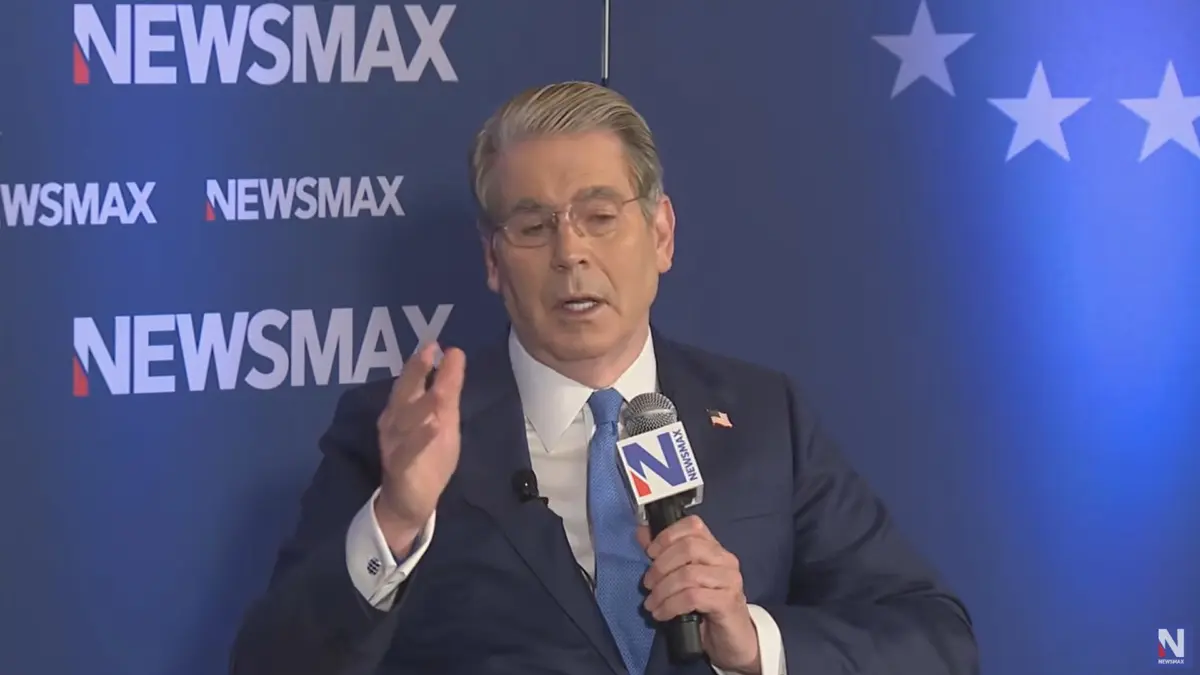
U.S. Treasury Secretary Scott Bessent has announced that American authorities are prepared to seize $1 billion in cryptocurrency from Iran as part of an aggressive financial enforcement effort. Speaking on Thursday at Newsmax’s NPolicy Summit in Washington, D.C., Bessent emphasized that current economic sanctions targeting the Middle Eastern nation are proving remarkably effective, signaling a severe escalation in financial pressure against Tehran.
The announcement highlights how Iran has increasingly turned to digital assets, including Bitcoin and various other cryptocurrencies, in a bid to circumvent sweeping U.S. sanctions. According to Bessent, the federal government began actively targeting cryptocurrency wallets linked directly to the Iranian regime earlier this year in April, steadily tightening the noose around illicit financial networks.
Reflecting on the unprecedented nature of the current strategy, Bessent told attendees at the policy summit that the ongoing operations against Iranian financial maneuvers represent a novel approach in modern economic warfare. "What we have done has never been seen before," Bessent stated during the event, framing the initiative as a paradigm shift in how global superpowers counter sanctions evasion via digital ledgers.
While the Treasury Secretary did not specify the exact types of cryptocurrencies slated for seizure or elaborate on the precise mechanisms the U.S. government intends to use, the statement underscores a growing intersection between national security, traditional foreign policy, and the digital asset ecosystem.
Industry analysts note that freezing or seizing native, decentralized assets like Bitcoin can present immense technical hurdles for law enforcement agencies, provided those assets are held in self-custody wallets outside the reach of centralized entities. Because Bitcoin is fundamentally censorship-resistant, direct protocol-level freezes are impossible. However, centralized stablecoins—such as Tether’s USDT—and funds held on centralized exchanges remain far more vulnerable to law enforcement intervention. Previous remarks from Bessent indicated that prior U.S. crypto seizures targeting Iran successfully intercepted assets denominated in popular stablecoins.
Despite these technical nuances, Tehran has leaned heavily into digital currencies to sustain vital economic sectors under intense geopolitical strain. Earlier this year, Iran reportedly established a Bitcoin-backed insurance service tailored specifically for its county shipping companies, seeking safe passage through critical maritime corridors such as the Strait of Hormuz.
Furthermore, a comprehensive report published by the Financial Times revealed that the Iranian central bank has actively encouraged domestic citizens and institutions to utilize any means necessary to support the national economy. This directive included leveraging Iranian cryptocurrency exchanges to facilitate and settle cross-border transactions, effectively creating an alternative financial conduit designed to bypass traditional Western-dominated banking infrastructure.
The aggressive posture toward Iranian digital assets aligns closely with broader geopolitical shifts initiated by the administration of U.S. President Donald Trump. Upon returning to office, the President swiftly revived his signature "maximum pressure" foreign policy campaign against Tehran. This intensified stance was formalized through a national security memorandum signed in February 2025, which mandated a sustained, multi-agency campaign by the Department of the Treasury to dismantle Iran’s shadow banking networks, international money laundering operations, and sophisticated sanctions-evasion apparatus.
As the Treasury prepares to execute the targeted $1 billion seizure, Bessent reiterated the administration’s overarching objective to completely sever the regime from the global financial system. Describing the transition from previous containment strategies, Bessent concluded that the current trajectory has moved past traditional pressure into a phase of total economic quarantine. "We’re probably going to seize $1 billion of crypto this week," he said. "We know where it is. We are isolating them. We did have a maximum pressure campaign, now we have an absolute isolation campaign and it’s working."



Leave a Reply