
The conversation surrounding the tokenization of real-world assets often focuses on speed, liquidity, and round-the-clock market access. However, according to BitGo CEO Mike Belshe, the true revolutionary potential of tokenization lies far beyond mere trading efficiency—it is fundamentally about expanding financial access.
In a recent interview on BMTV hosted by Patrick Green, Belshe broke down the historical origins of modern market infrastructure, tracing current financial disparities back to the operational bottlenecks of the 1960s. He explored how legacy clearing and settlement systems continue to favor institutional players while shutting out everyday retail investors, and how tokenized equities and emerging technologies could reshape that dynamic.
The 1960s Paper Crisis and the Architecture of Modern Markets
To understand why traditional financial markets operate the way they do today, Belshe explained that one must look back to the New York Stock Exchange in the 1960s. During this period, the market faced what is widely remembered as the "paper crisis." Trading volumes surged to levels that the manual, paper-based settlement system simply could not handle. Securities were represented by physical paper certificates that had to be physically moved, verified, and stored.
The backlog became so severe that the New York Stock Exchange was forced to shut down trading one day a week to allow back-office clerks time to process the mountain of paper certificates. To solve this systemic vulnerability, the industry engineered a centralized infrastructure designed to streamline processing and reduce physical movement.
While this infrastructure successfully averted systemic collapse, the structure built to fix the paper crisis ultimately created a legacy system that still caters primarily to the largest institutional players. It relies on a deep chain of intermediaries, custodians, and clearinghouses. According to Belshe, this architecture is optimized for institutional scale and risk management, but it inherently erects barriers that limit direct ownership and flexibility for everyday market participants.
Custody Concentration, Centralization Risks, and Eliminating Single Points of Failure
As the financial ecosystem evolves, questions naturally arise regarding whether modern custody concentration creates new centralization risks. Belshe addressed how modern digital asset infrastructure handles these security concerns, contrasting legacy models with cryptographic solutions.
Rather than relying on a single, centralized institution to hold assets—a model that creates a clear single point of failure—modern digital asset custody leverages advanced cryptographic mechanisms such as multi-signature (multisig) configurations and Multi-Party Computation (MPC). By distributing private key management across multiple independent parties or cryptographic shards, these technologies eliminate traditional single points of failure. This approach allows institutions and individuals to maintain high security standards without reverting to opaque, centralized custody models that concentrate risk in the hands of a few gatekeepers.
The K-Shaped Economy and the Inequality of Borrowing Power
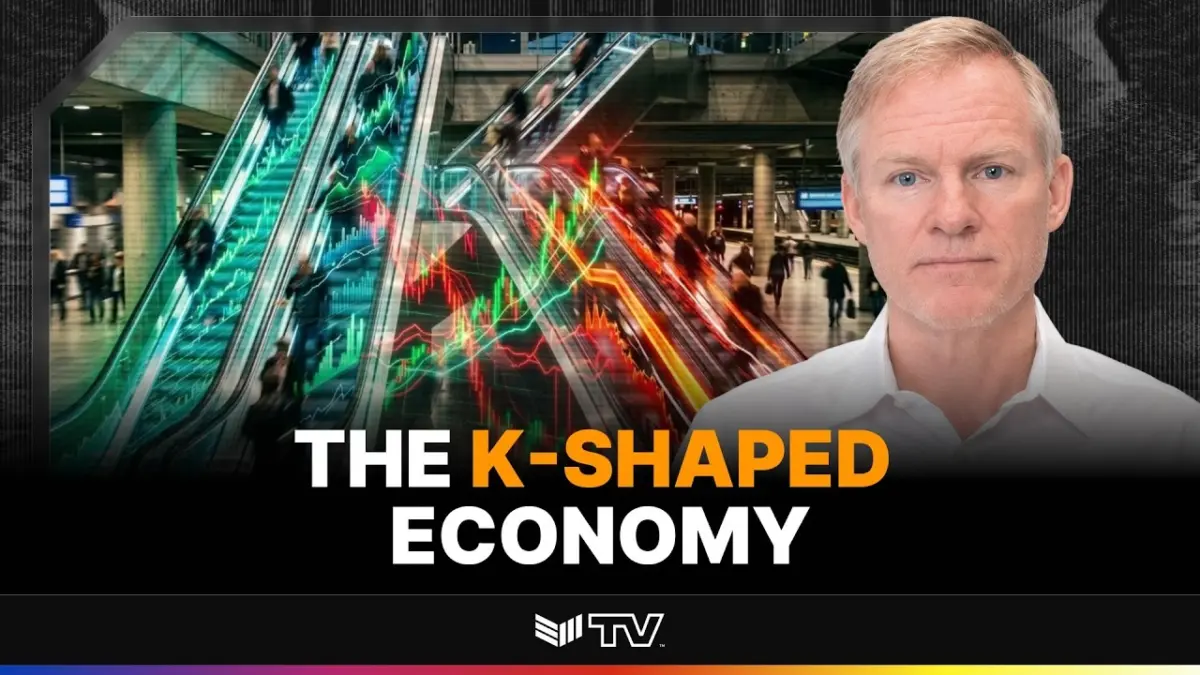
One of the central themes of Belshe’s analysis is the persistence of the K-shaped economy, where the wealthy steadily accumulate capital and expand their financial opportunities, while average earners struggle to keep pace. Belshe argues that this economic divergence is largely driven by a hidden inequality in liquidity mechanics: the ability to borrow against assets rather than being forced to sell them.
In traditional finance, wealthy individuals and institutional investors can leverage their asset portfolios to access liquidity. If they need capital, they can pledge stocks, real estate, or other holdings as collateral for low-interest loans. This allows them to maintain their investment exposure, benefit from long-term asset appreciation, and avoid realizing taxable events.
Conversely, retail investors often lack access to these same financial instruments. When everyday consumers need liquidity, they are frequently forced to liquidate their holdings entirely, triggering tax liabilities and missing out on future market gains. Belshe contends that this structural limitation is a primary engine of the K-shaped economy. By restricting borrowing capabilities to the upper tiers of wealth, the legacy financial system ensures that asset holders can compound their advantages, while retail participants face friction and capital drain whenever they need cash.
Ghost Stocks, Tokenized Equities, and Proof of Reserves
Tokenization offers a pathway to dismantle these structural barriers by bridging traditional securities with blockchain rails. Belshe discussed the concepts of "ghost stocks" and tokenized equities, exploring how bringing traditional assets onto a transparent ledger changes the landscape of ownership and utility.
When equities are tokenized, they can be programmed, transferred, and utilized with the programmability of native digital assets. However, this transition requires rigorous transparency to ensure that digital tokens accurately represent underlying real-world securities. Belshe highlighted the importance of robust proof-of-reserves mechanisms and innovative cryptographic approaches, such as time-locking shares to visibly demonstrate conviction and backing. These transparency tools ensure that market participants can verify that tokenized assets are fully backed by real securities, mitigating counterparty risks and building trust in decentralized financial products.
Regulatory Frameworks, Boardroom Decisions, and the Role of AI Agents
Beyond market structure, the conversation explored the current state of digital asset regulation in the United States and what market participants still need beyond basic regulatory clarity. Belshe noted that while regulatory clarity is frequently discussed, corporate boardrooms are often forced to make strategic, capital-allocation decisions in environments where a formal legislative path remains ambiguous. Company leaders must navigate risk management and compliance without the benefit of fully codified statutory frameworks.
Looking further ahead, the interview examined where emerging technologies, particularly artificial intelligence (AI) agents, fit into the future of asset management. As autonomous software agents begin to execute complex financial strategies, interact with decentralized protocols, and manage portfolios, the underlying infrastructure must be secure, transparent, and programmatic. Tokenized assets and cryptographic custody frameworks provide the ideal foundation for AI-driven financial management, ensuring that autonomous agents can interact with secure, programmable money and assets without relying on legacy bureaucratic processes.
Belshe also touched upon broader macroeconomic themes, clarifying previous remarks regarding the trajectory of the U.S. dollar and emphasizing how structural shifts in technology and monetary systems continue to challenge legacy assumptions about global finance.
Disclaimer: The views and opinions expressed in this show are those of the participants and do not necessarily reflect the official policy or position of BTC Inc., Bitcoin Magazine, or any affiliated entities. This content is provided for informational and educational purposes only and should not be construed as investment, legal, tax, or accounting advice. Nothing contained in this show constitutes a solicitation, recommendation, endorsement, or offer to buy or sell any securities or financial instruments. Viewers should consult their own advisors before making financial or business decisions.



Leave a Reply