
Just two years ago, the corporate landscape looked entirely different for go-to-market teams. The vast majority of companies did not employ a single go-to-market engineer, leaving sales, marketing, and customer acquisition to traditional operational silos. Today, however, this emerging professional role is rapidly taking root across the technology sector. Practitioners in these positions are leveraging advanced artificial intelligence and sophisticated automation tools to construct complex, high-performing revenue systems that historically required armies of people, dozens of fragmented software tools, and grueling manual processes.
This sweeping operational transformation raises profound questions for modern enterprises: What precisely changed in the underlying technology stack, and what does this seismic shift mean for the future of how companies discover, engage, and secure customers?
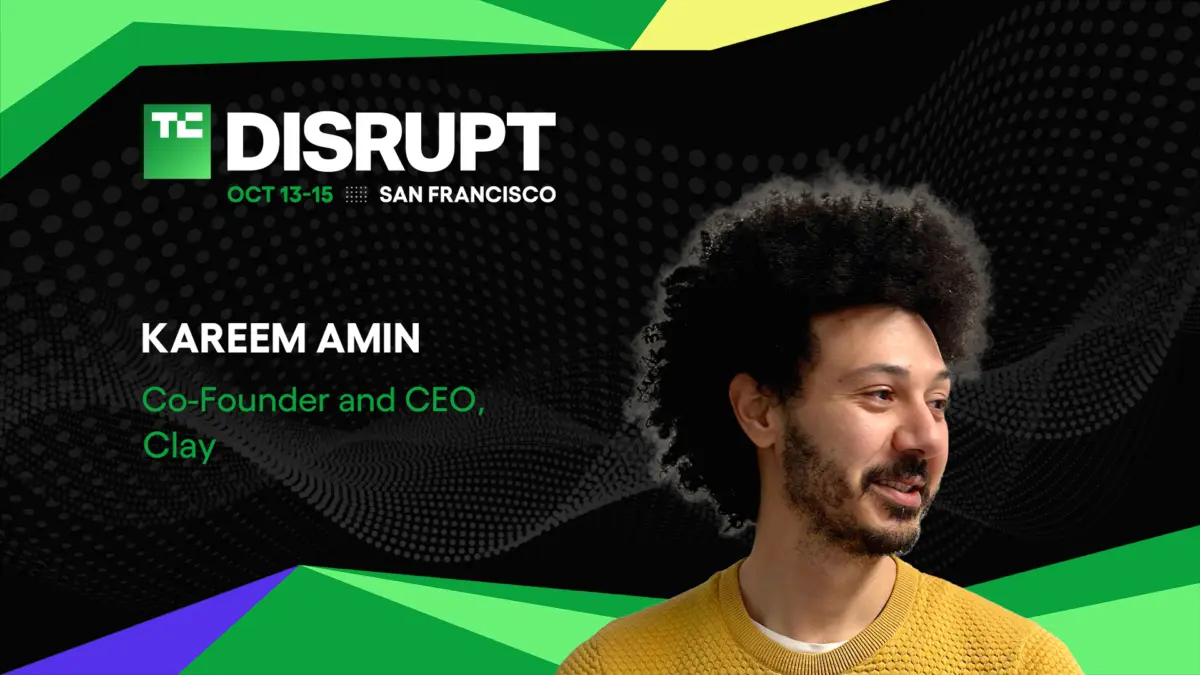
To unpack these developments, TechCrunch Disrupt 2026 is bringing industry pioneers to the forefront. Kareem Amin, co-founder and CEO of the data automation powerhouse Clay, will take the AI Stage for a keynote session titled “The GTM Engineer: How AI Created Tech’s Next Big Job Category.” Amin will trace the rapid evolution of the traditional go-to-market stack, explaining how the advent of artificial intelligence catalyzed an entirely new professional discipline. Attendees at the upcoming conference will receive an exclusive look at what AI-native go-to-market execution looks like in real-world practice and how it is permanently redefining company growth trajectories.
What Does a GTM Engineer Actually Do?
Traditional go-to-market strategies have long demanded endless hours of manual labor. Teams routinely spent days researching accounts, scrubbing messy spreadsheets, qualifying inbound leads, drafting personalized outreach, and frantically moving data between disparate, non-communicating software systems. GTM engineering fundamentally alters this paradigm. By merging artificial intelligence, robust data enrichment, and seamless automation, these practitioners transform tedious, repetitive tasks into repeatable, scalable software systems.
The Brooklyn-founded platform Clay is widely credited with coining the term in 2023. According to the company’s official GTM engineering documentation, these professionals distinguish themselves by building automated revenue workflows instead of executing individual pipeline tasks by hand. The economic ripple effects of this shift are already visible in the labor market. Clay reports that roughly 100 GTM engineering job listings now surface each month across the tech sector, appearing at high-growth companies such as Cursor, Lovable, and Webflow.
For founders, executives, and revenue leaders wrestling with capital allocation and headcount decisions, the rise of the GTM engineer presents a fundamental strategic choice. Decision-makers must weigh whether to continuously expand headcount to execute old, manual processes or instead invest in automated infrastructure that empowers existing teams to operate with unprecedented leverage.
At Disrupt, Amin will place this operational evolution into broader context, exploring the realities of AI-native revenue generation. The session offers a vital roadmap for anyone seeking to understand a professional discipline that barely existed a few years ago but is quickly dictating the operational tempo of modern sales and marketing organizations.
Clay Puts AI to Work Across the GTM Stack
Clay’s journey to becoming a cornerstone of modern go-to-market infrastructure began in 2017 with a singular mission: democratizing programming capabilities for a broader audience. The company’s initial product was a flexible spreadsheet environment that allowed users to connect disparate data streams and automate workflows without writing code. As salespeople, growth hackers, and agency operators organically adopted the platform to source and engage prospects, Clay leaned heavily into the go-to-market ecosystem.

Today, the company provides the foundational infrastructure that enables GTM teams to ingest massive datasets, execute agentic workflows, and launch highly targeted campaigns at scale. Its proprietary, OpenAI-powered agent, Claygent, automates complex web research and outreach tasks for sales, marketing, and recruiting departments alike.
This product-led evolution has fueled astronomical financial and market growth. TechCrunch reported earlier this year that Clay had successfully tripled its annual recurring revenue to $100 million within a 12-month window, alongside an employee tender offer valuing the enterprise at $5 billion. The company’s upward trajectory has continued unabated, highlighted by a massive $115 million Series D funding round in September that vaulted its valuation to $7.1 billion.
Beyond software development, Clay is actively investing in the human capital required to sustain this movement. In September, the company established a $1 million community scholarship fund specifically designed to train and cultivate the next generation of GTM engineers. For businesses striving to identify where artificial intelligence can deliver tangible, bottom-line revenue impact, Amin’s upcoming presentation will offer a transparent look at how market leaders operationalize these breakthroughs.
From Product Leader to a New GTM Approach
Kareem Amin’s path to redefining go-to-market engineering is rooted in a deep background in product development and software architecture. Having co-founded Clay in 2017, Amin previously served as vice president of product at The Wall Street Journal and co-founded Frame, a digital collaboration startup that was acquired by Sailthru in 2012.
Amin’s original vision for Clay centered on empowering non-technical workers with computational tools. The subsequent explosion of generative artificial intelligence provided a transformative vehicle for that vision, enabling revenue teams to construct sophisticated systems for prospect research, data enrichment, and multi-channel outreach independently, bypassing the need for dedicated software engineering resources for every operational tweak.
See What AI-Native GTM Looks Like in Practice at Disrupt
“The GTM Engineer: How AI Created Tech’s Next Big Job Category” anchors a comprehensive agenda featuring more than 200 sessions, roundtables, and interactive breakouts at TechCrunch Disrupt 2026, running from October 13 to 15 at Moscone West in San Francisco. The premier technology event is projected to draw over 10,000 founders, investors, operators, and industry leaders, alongside more than 250 expert speakers and upwards of 300 exhibiting startups.
Beyond the formal stage programming, the conference offers extensive networking, targeted matchmaking, and dealmaking opportunities designed to connect attendees with prospective clients, strategic partners, and venture capitalists navigating identical growth hurdles.
While GTM engineering represents a novel job title, it addresses an age-old commercial challenge: how to efficiently identify and win the right customers without simply throwing more human labor and software licenses at the problem. At Disrupt, participants will have a front-row seat to observe how artificial intelligence is rewriting that economic equation, courtesy of the architects building the future of enterprise growth.



Leave a Reply