
The new A20 Pro chip powers Apple’s recently announced iPhone 18 Pro and Pro Max models, and it will also serve as the beating heart of the anticipated foldable iPhone Duo. Built upon an advanced 2-nanometer manufacturing process, the formidable silicon architecture packs a 6-core CPU comprising two high-performance super cores and four efficiency cores. Furthermore, it features a 7-core GPU equipped with dedicated Neural Accelerators, alongside a dual 16-core Neural Engine designed to handle the heavy lifting of modern artificial intelligence tasks.

While architectural specifications and nanoscale measurements are standard fare in the tech industry, the ultimate question has always been whether this dense engineering translates into actual, quantifiable performance gains. To answer that question, extensive testing was conducted on a pristine, freshly activated iPhone 18 Pro running a controlled environment free of third-party applications and background processes. The results indicate that Apple’s latest hardware utterly dominates the smartphone landscape, leaving competing chipsets trailing far behind in synthetic benchmarks.
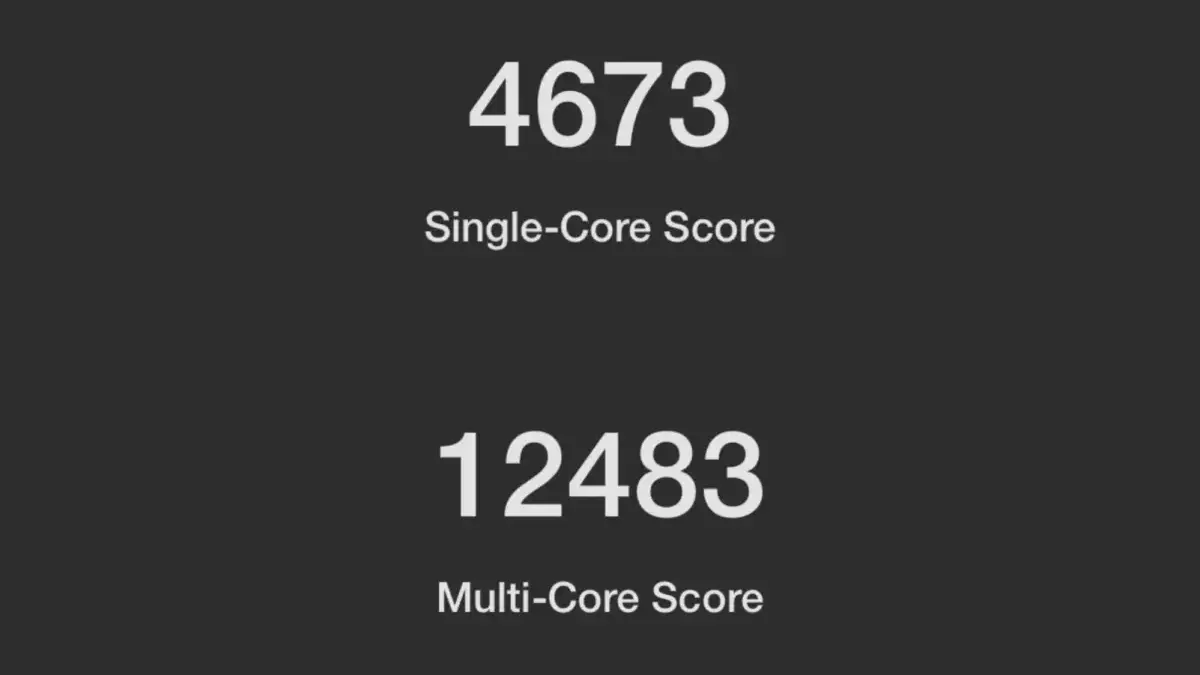
In Geekbench 7, the industry-standard benchmark suite utilized for evaluating both smartphones and laptops, the iPhone 18 Pro achieved a single-core score of 3,959 and a multi-core score of 10,854. Meanwhile, the device’s graphics processing capabilities proved equally formidable, pulling in a GPU test score of 61,194. To ensure historical context and seamless comparison with previous generations of devices, testers also deployed Geekbench 6. On that older testing framework, the numbers surged even higher, with the iPhone 18 Pro registering a massive single-core CPU score of 4,673 and a multi-core score of 12,483.

When placed side-by-side with competing flagship devices currently on the market, the performance chasm becomes starkly apparent. The closest competitor in the Android ecosystem—specifically the Qualcomm Snapdragon 8 Elite Gen 5 for Galaxy chipset housed within the Samsung Galaxy S26 Ultra—puts up a strong fight, yet it still fails to bridge the gap established by Apple’s in-house engineering. Across nearly every metric, Apple’s latest silicon outperforms rival hardware by a wide margin, continuing a trend that has defined the company’s mobile and desktop computing products for years.
This sustained dominance is a direct result of Apple’s multi-year transition to proprietary silicon, a monumental strategic shift that stands as one of the defining engineering and corporate achievements of leadership under John Ternus before his elevation to Chief Executive Officer. The fruits of that transition are visible not only in raw power, but in generational year-over-year gains. Compared directly to its predecessor, the iPhone 17 Pro Max, the new iPhone 18 Pro delivers an overall performance improvement of roughly 25 percent across the board, proving that Apple has avoided the diminishing returns that frequently plague mature semiconductor manufacturing cycles.

However, the reality of everyday consumer technology introduces a nuance to these astronomical figures: the question of whether everyday users will actually feel the difference in day-to-day use. The honest answer is both yes and no. There is no denying that the new iPhone lineup is definitively faster than any mobile device that has come before it. Yet, as noted in hands-on reviews of the hardware, those performance leaps are rarely noticeable to the average consumer unless they are upgrading from a significantly older device.
Apple’s recent iPhones have maintained a baseline of speed and fluidity that easily handles routine tasks, messaging, browsing, and media consumption. Consequently, the raw power of the A20 Pro functions largely as insurance for the future—an impressive engineering cushion that ensures the hardware will remain responsive for years to come. Unless a user is heavily invested in demanding professional workflows, intensive mobile gaming, or advanced, hyper-local artificial intelligence computing, they are unlikely to push the A20 Pro anywhere near its actual operational limits.

Beyond the standard slab-style Pro models, industry watchers are keeping a close eye on how the A20 Pro will perform within alternative form factors. The forthcoming iPhone Duo, Apple’s heavily discussed foldable device, will utilize the exact same A20 Pro chipset. Because the Duo features a fundamentally different physical layout—most notably anchored by an expansive foldable display and unique thermal constraints—analysts and reviewers are eager to see whether its benchmark scores mirror the traditional iPhone 18 Pro or deviate due to thermal dissipation and hardware configuration differences. Comprehensive evaluations of the Duo’s silicon efficiency will have to wait until retail units become widely available for hands-on testing.
Ultimately, the A20 Pro benchmark results reinforce a narrative that has been building for over a decade: Apple’s vertical integration of hardware and software design has created a distinct competitive moat. While the everyday smartphone buyer may find themselves scrolling social media or taking photographs without actively pondering the 2-nanometer architecture humming beneath the glass, the underlying silicon ensures that Apple’s mobile ecosystem remains firmly at the pinnacle of processing power.


Leave a Reply