
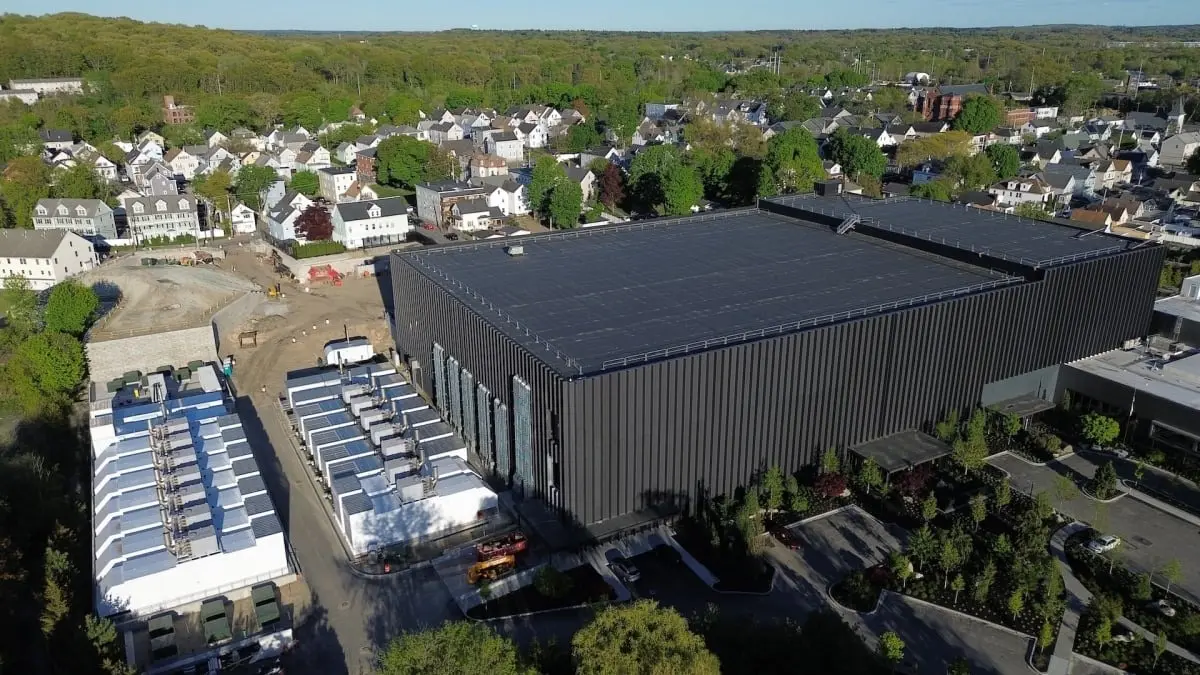
As global conflicts increasingly blur the lines between traditional military combat and digital infrastructure, data centers have emerged as a prominent and vulnerable frontline. When Ukraine launched a strike against Russian data centers earlier this week, it provided a stark reminder to the international community that these massive, unassuming facilities are no longer shielded by their mundane exterior architecture. Instead, they are rapidly becoming prime targets in modern warfare.
This kinetic vulnerability is not an isolated phenomenon confined to Eastern Europe. Earlier this year, in March, the Iranian military struck Amazon data centers located in the United Arab Emirates. The impact of that targeted attack was severe, leaving the facilities entirely out of service several months later. While these physical assaults on critical digital infrastructure may seem like a distant geopolitical threat to citizens in the United States, cybersecurity experts warn that domestic facilities remain exceptionally valuable targets for both physical and digital breaches.
To understand why these facilities are attracting hostile attention, one must look at the sheer volume of modern life that flows through them. According to Charles Brooks, an adjunct lecturer in cybersecurity at Georgetown University, everything an average person does online ultimately routes through a data center. The casual streaming of a television show on Netflix, the collaborative editing of a document on Google Docs, and the routine management of personal online banking all depend heavily on the vast arrays of servers housed within these heavily guarded complexes.
Beyond consumer conveniences, the stakes are exponentially higher for institutional and national security. Cloud computing services utilized by federal and local governments, intricate healthcare systems, major financial institutions, and critical commercial enterprises all rely on the continuous, uninterrupted operation of data centers. Furthermore, Brooks notes, these facilities are vital for Earth-to-space communications, anchoring the connective tissue of modern satellite networks and global positioning systems.
Given this reliance, stealing sensitive information from data center servers or disrupting their operations altogether has become an alluring strategy for state-backed criminal hackers and foreign intelligence operatives alike. The twenty-year-old adage that "data is the new oil" feels particularly resonant in the current geopolitical climate. Just as oil supplies, pipelines, and revenue streams have historically served as primary targets of war and government-backed pressure campaigns, digital data has evolved into a similarly prized commodity and a fundamental pillar of critical infrastructure.
Should a catastrophic breach or successful attack occur on U.S. soil, the repercussions would be immediate and severe. Brooks warns that the consequences of a major data center security failure in the United States could be catastrophic, rippling across society in ways that disrupt commerce, communication, and government functions.
3 threats to U.S. data centers
While a foreign drone-powered attack on an American data center remains a low-probability event, Brooks explains that these domestic facilities could still become the targets of physical breaches, potentially involving explosives. Even if the resulting structural damage were contained, such an attack would deliver a significant symbolic victory for terrorist organizations or violent extremist groups that harbor ideological opposition to artificial intelligence and the physical infrastructure that powers it.
Physical security vulnerabilities
To counter these evolving physical threats, Brooks argues that data centers must be fortified far beyond traditional security measures. Standard precautions such as surveillance cameras, audible alarms, and barbed-wire fences are no longer sufficient against sophisticated adversaries. Instead, he recommends implementing heavily fortified perimeters, including electrified fencing, heightened numbers of trained security guards, and meticulously engineered defensive spaces surrounding the core control centers and vital water-cooling systems that keep the servers from overheating.
The inside job
Despite external physical and digital threats, the most statistically probable source of a major security breach remains an insider. Employees, contractors, or maintenance personnel who already possess authorized access to servers, sensitive data, and physical infrastructure are uniquely positioned to compromise a facility. Whether an insider is disgruntled, financially motivated by a hostile adversary, or simply careless and prone to costly mistakes, their privileged access can provide bad actors with invaluable intel, hidden security vulnerabilities, or a direct pathway to interfere with critical operations.
To mitigate this persistent human risk, Brooks suggests deploying advanced AI-backed surveillance technologies capable of detecting unusual behavioral patterns and guarding against malicious insider activity. He believes that the inevitable trade-off involving potential false positives—where an innocent worker might be temporarily flagged for suspicious behavior—is well worth accepting given the immense value and sensitivity of the data stored within these facilities. Additionally, Brooks advocates for rigorous background checks that mirror the stringent vetting processes required for staff working in hospitals and nuclear power plants. The level of trust placed in data center personnel carries a responsibility that extends far beyond a normal corporate security job.
AI-powered hacking
On the digital front, the proliferation of artificial intelligence tools has allowed malicious actors to rapidly scale their hacking operations, increasing the frequency and sophistication of assaults directed at data center networks.
Highlighting this trend, Anthropic recently released a comprehensive security report detailing how various threat actors, including those backed by foreign governments, have begun weaponizing AI to automate cyber spying operations and execute advanced espionage campaigns. Brooks notes that AI significantly streamlines the efforts of criminal hacker groups, enabling them to efficiently scan the internet for subtle clues on how to digitally infiltrate an AI data center. This often involves executing targeted phishing campaigns against employees to compromise their system credentials and gain unauthorized network access. Malicious actors are scaling these attacks with a much greater capacity than ever before, leveraging specialized software to uncover security vulnerabilities they previously did not know existed.
Why Americans should care about U.S. data center security
Ultimately, Brooks contends that securing data centers is fundamentally a national security imperative, given that these facilities have transitioned into core components of national critical infrastructure.
Even if a digital intrusion into an American data center appears invisible to the public eye, it would almost certainly trigger a cascading ripple effect throughout everyday civilian life. Citizens might suddenly find themselves unable to work, conduct routine business transactions, or access essential services, while others could fall victim to debilitating ransomware attacks exposing their personal and sensitive information.
Addressing these vulnerabilities requires a collaborative approach, with data center security guided by active partnerships between the federal government and the private corporations that own and operate the facilities. Fortifying U.S. data centers is an essential undertaking, Brooks concludes, because these sites function as the ultimate repository for all key data underpinning modern society.


Leave a Reply