
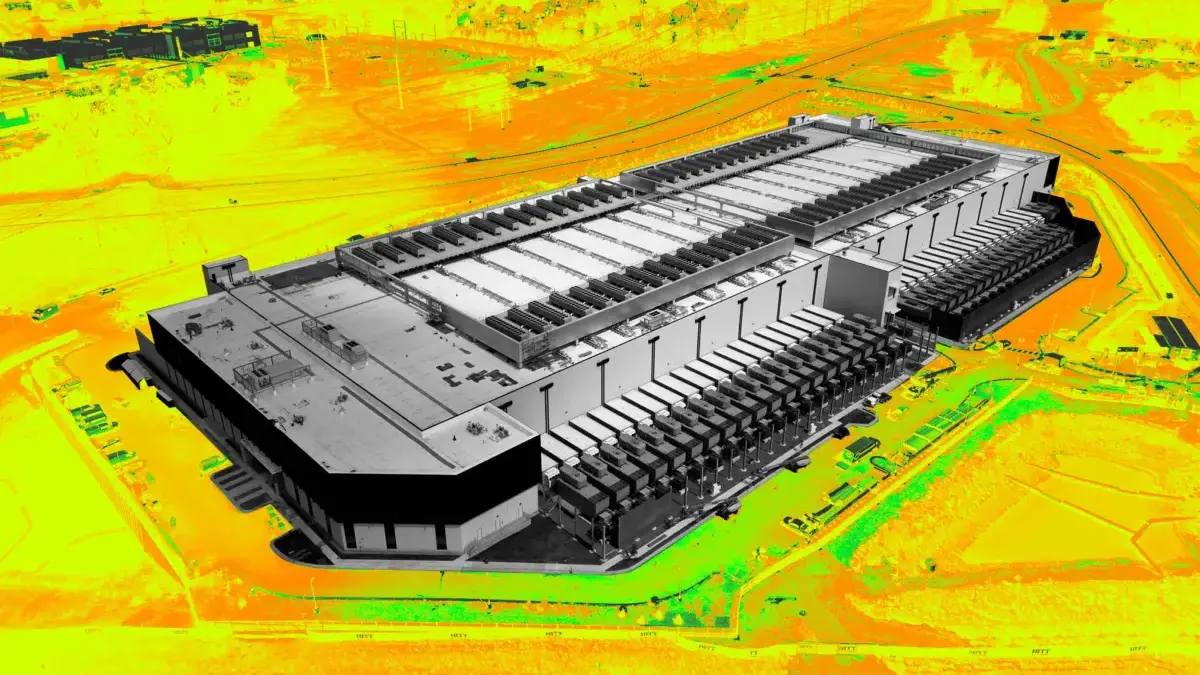
A rush of new data centers could bring air pollution roaring back to levels not seen since the 2000s in Texas, which has rapidly evolved into the epicenter of the physical infrastructure powering the generative artificial intelligence revolution. As tech companies scramble to secure unprecedented amounts of electricity to run massive server farms, the methods developers and utility companies choose to meet that insatiable demand—relying on either gas turbines or renewable energy—will ultimately determine just how severe the environmental toll will be. Thus far, according to environmental researchers and industry analysts, the trajectory of the state’s energy expansion is looking remarkably grim.
Tech companies and data center developers across the state are currently devising inventive ways to source sufficient electricity, including building out their own dedicated power generation sources. However, a new report from the Houston Advanced Research Center (HARC) reveals a troubling projection: if every planned data center project were to plug directly into the Lone Star State’s electricity grid and be powered by the anticipated grid mix, soot and smog-forming pollutants would skyrocket. In the span of just five years, the surge in emissions would be enough to completely wipe out decades of painstaking environmental gains in regional air quality.
"There is a good chance that our children and grandchildren will breathe dirtier air than we did," John Hall, CEO of HARC, said in a press release detailing the findings. For generations, local communities, the transportation sector, the state government, and various other stakeholders have worked diligently to bring these emissions numbers down to protect public health, and that hard-won progress is now hanging in the balance.
Under the worst-case scenario modeled in the HARC research, fine particle pollution, commonly known as soot, from the state’s power sector would more than triple, climbing to its highest level since 2006. At the same time, smog-forming nitrogen oxides, or NOx emissions, would increase by an alarming 136 percent, approaching levels of air pollution last seen in 2004. Furthermore, planet-heating carbon dioxide pollution would surge by 90 percent above projected baseline levels for 2025.
Fortunately, these catastrophic environmental outcomes are not yet set in stone. HARC modeled several distinct outcomes based on three different projections for future data center energy demand. Many of the proposed data center projects currently circulating through the planning pipeline are speculative in nature and could easily fall by the wayside as market conditions, financing, or regulatory hurdles shift. Moreover, developers still have the agency to limit the environmental footprint of their operations by integrating solar and wind farms directly onsite to handle a significant portion of their energy loads.
The operational choices made by developers in the coming months will be pivotal. For instance, NOx emissions could remain up to ten times lower if data centers pair standard grid power with clean, renewable electricity generated locally onsite. On the flip side, if developers decide to bypass long wait times for traditional grid connections by rapidly building out internal gas-fired engines to power their massive server facilities, the opposite scenario could easily play out, resulting in the highest possible tiers of regional air pollution.
Data center capacity is traditionally measured by the sheer volume of power they draw, and Texas has decisively claimed the crown as the leading data center market in the United States by this metric, boasting an astonishing 26 gigawatts of existing and under-construction capacity. Compounding this heavy energy footprint, Texas is also bracing for four times more proposed data center capacity running on power generated entirely onsite than any other state in the nation, according to a separate market report published in March by Wood Mackenzie. In many instances across the state, developers are turning to less efficient gas turbine technology simply to accelerate construction timelines and bring facilities online faster—a prevailing industry trend that is making the nationwide data center boom significantly more polluting than it structurally needs to be.
The collision between the explosive growth of artificial intelligence and local environmental health highlights a growing nationwide challenge: powering the digital economy without compromising the air we breathe. As Texas navigates this unprecedented industrial expansion, the decisions made by policymakers, utilities, and tech giants will leave a lasting legacy on the skies of the Lone Star State.



Leave a Reply