
Earlier this month, leaders from the global film industry, government ministries, and major studio production houses converged in the south of France for a high-level, one-day gathering known as the Lumière Summit. Co-hosted by French President Emmanuel Macron and South Korean President Lee Jae Myung, the event was designed to foster tighter international collaboration, address emerging challenges in cinema, and chart a unified path forward for the global creative economy.
The summit ultimately concluded with the signing of several thematic declarations. Among them was a prominent agreement focused on international cooperation against digital piracy, highlighting the growing anxiety among major studios over widespread unauthorized streaming and content distribution.
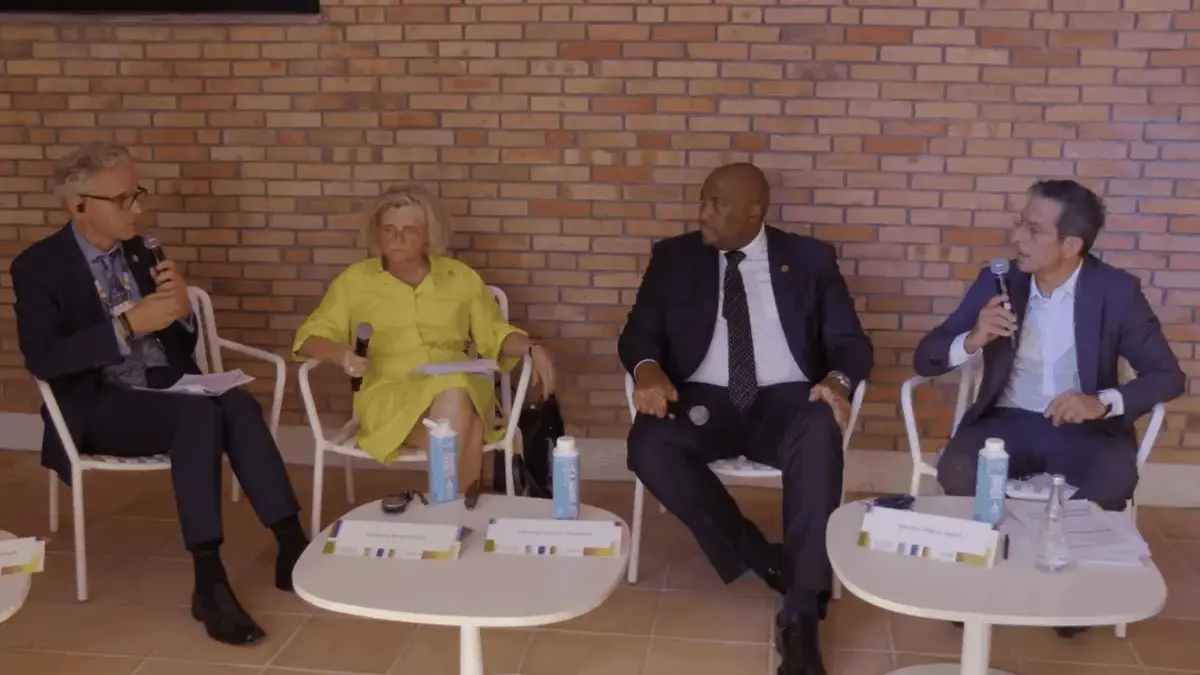
Yet, beneath the polished veneer of diplomatic consensus and coordinated industry pledges, friction quickly emerged. While the Motion Picture Association (MPA)—representing the heavyweights of Hollywood—was scheduled to anchor a key panel discussion titled “The Race Against Piracy,” its CEO, Charles Rivkin, was delayed by a pressing presidential meeting. In his absence, MPA EMEA President Emilie Anthonis stepped in briefly to help guide the proceedings. However, the true tone of the session had already been established much earlier in the day by an unexpected voice from the ministerial ranks.
Gayton McKenzie, South Africa’s Minister of Sport, Arts and Culture, took the stage alongside prominent figures including the chair of France’s independent media regulator ARCOM and a deputy director general of the World Intellectual Property Organization (WIPO). As these international officials detailed their respective anti-piracy track records, regulatory milestones, and enforcement metrics, McKenzie made it clear that while he agreed piracy as a general concept is harmful, he took profound issue with almost everything else being presented by Western entertainment executives and international regulators.
"We need to define what is piracy," McKenzie told the audience, launching into a critique of what he perceived as a pervasive double standard within the upper echelons of the global film industry. "There’s a failure by the people tasked to fight piracy not to define it definitively."
To illustrate his point, McKenzie drew upon an example that had unfolded earlier at the very same summit. During a morning session, an acclaimed filmmaker addressed the assembled delegates, revealing that his latest movie had been officially banned by government censors in Egypt. Despite this absolute legal restriction, the director noted that local audiences were still able to view the film through unauthorized channels. Instead of expressing outrage over this copyright infringement, the filmmaker remarked that he was genuinely glad local viewers could watch his work, prompting an approving round of applause from the professional audience in attendance.

McKenzie highlighted a similar scenario involving a Canadian production centering on a gay hockey player—reportedly the series Heated Rivalry—which is currently being heavily pirated in countries where its distribution has been legally prohibited by local authorities. Observing the reaction of the crowd, the minister pointed out the glaring contradiction. "Everybody in the industry is clapping," he noted, observing how the creative community eagerly celebrates unauthorized distribution when it serves to bypass oppressive state censorship or political bans.
Drawing on his own personal history, McKenzie recalled South Africa’s dark era under the apartheid regime, during which numerous films, political documentaries, and cultural works were strictly forbidden from public distribution. In those circumstances, underground copying and unauthorized distribution served as the only viable lifeline for populations desperate for uncensored art and information.
When dealing with banned content, political censorship, and authoritarian suppression, the entertainment industry suddenly views piracy through an entirely different, sympathetic lens, frequently praising the resilience of unauthorized distribution networks. Yet, when economically disadvantaged populations resort to unauthorized viewing simply due to a lack of affordable access or local availability, those same individuals face aggressive legal prosecution, severe fines, and criminal penalties. McKenzie sharply labeled this industry-wide attitude as "a bit schizophrenic," characterized by glaring "dual standards."
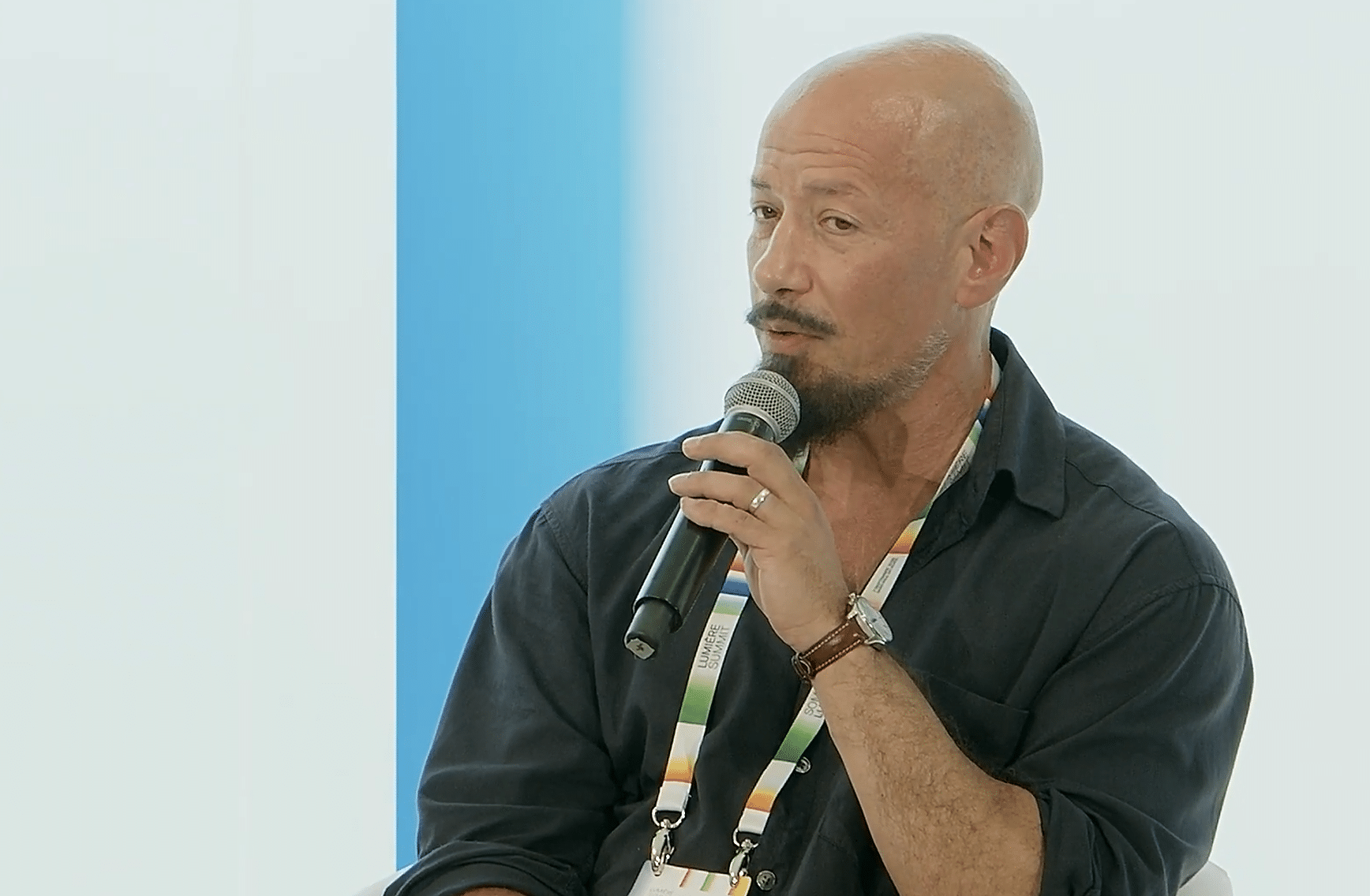
The filmmaker to whom McKenzie referred was Tarik Saleh, the prominent Swedish-Egyptian director behind critically acclaimed features such as The Nile Hilton Incident and Cairo Conspiracy. Both films are deeply rooted in Cairo yet remain officially banned from public exhibition in Egypt due to sensitive political themes and strict censorship boards.
During the opening session of the Lumière Summit, Saleh recounted the professional hurdles he faced early in his career, noting that he was effectively forced to leave Egypt before he could even begin shooting his first major feature film. "I was going to shoot my first film in Egypt and I was asked to leave. Uh, I’m putting it nicely. I mean, they said, ‘Get the f*ck out of here,’" Saleh told the audience, explaining how he ultimately relocated his productions to Morocco.
Saleh added that ordinary Egyptian citizens are nonetheless able to experience his cinematic work precisely because of underground file-sharing networks, a reality he views with pragmatic amusement. "Here is where piracy comes into the picture in a little reversed way. Egyptians love piracy, which is working very well for me," he said with a laugh.
Unlike the sympathetic response the director’s anecdotes might have generated in a purely creative setting, there was no applause from the institutional delegates in the room following his remarks. Instead, the panel moderator quickly intervened, suggesting that the regulatory experts on the afternoon’s piracy panel could be questioned about the nuance. Ultimately, no other panelist raised the issue; it was left entirely to Minister McKenzie to bring the contradiction to the forefront.
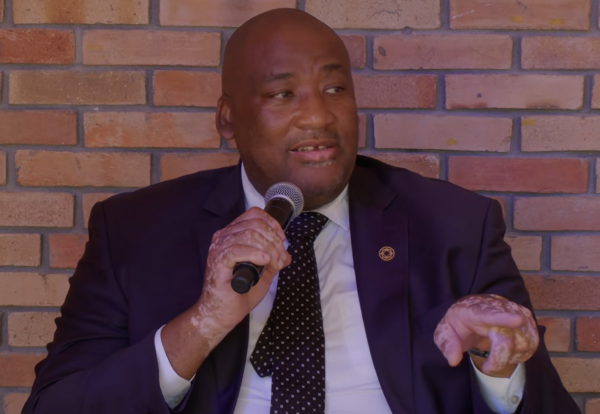
McKenzie’s second major critique was directed squarely at the regulatory officials seated beside him on the panel. Earlier in the discussion, ARCOM Chair Martin Ajdari had proudly reported that the French media authority had successfully issued more than 22,000 online blocking and delisting injunctions over a five-year period, including roughly 10,000 injunctions in 2026 alone. Ajdari also noted that overall audiences engaging with pirate sites in France had been cut in half since 2018.
While McKenzie acknowledged that these enforcement metrics were undeniably impressive, he stressed that localized successes in wealthy Western nations are rendered largely ineffective if developing countries are left to navigate the crisis with little to no structural support or resources. He compared the global piracy landscape to two people sitting in a sinking boat that happens to be taking on water exclusively on one side.
"We on the same boat. We both hate piracy," McKenzie said. "The boat is leaking on our side and you are praising, like, where we are sitting we’ve done this."
The South African minister also voiced strong frustration over the historical and ongoing pressure exerted on developing nations to comply with rigid Western legal frameworks. His comments followed a presentation by WIPO’s Sylvie Forbin, who outlined several strict intellectual property conditions that were tied to World Trade Organization (WTO) membership during the 1990s. This historical review visibly struck a nerve with McKenzie, prompting an immediate pushback against paternalistic international pressure.
"Don’t try to punish us like we are children, because we are not children," he asserted, making it clear that his critique extended beyond the immediate panel to broader diplomatic and trade dynamics.
South Africa has recent, direct experience with this exact form of international leverage. In 2020, powerful United States copyright advocacy groups formally petitioned the United States government to review South Africa’s preferential trade status under the Generalized System of Preferences. The lobby groups argued that the broad "fair use" provisions included in South Africa’s pending copyright legislation closely mirrored American legal frameworks in ways that they deemed overly permissive and detrimental to foreign copyright holders.
Toward the conclusion of the session, McKenzie emphasized that South Africa’s reservations had nothing to do with a shortage of financial resources. He maintained that South Africa possesses the economic capacity to fund robust domestic anti-piracy initiatives on par with nations like Sweden or the United Kingdom, but what his government truly desires is mutual respect and to be taken seriously as an equal sovereign partner.
"We don’t lack the money. There are countries that lack the money," McKenzie said. "Pero we don’t want to be treated like, here’s money for you, do one, two, three. We want you also to listen to our ideas."
"We are not beggars," he added firmly. "We want a partnership of equals."
Highlighting ongoing domestic efforts, McKenzie noted that the South African government is already actively cooperating with major pay-TV provider Canal+ to combat sports broadcasting piracy, noting that official anti-piracy public service warnings are now broadcast prior to every major football match in the country. He reiterated that South Africa remains fully committed to helping address the global challenge of content piracy, provided that international bodies and Western entertainment conglomerates are willing to treat developing nations as serious, respected partners rather than subordinate jurisdictions.
The Lumière Summit officially concluded with the formal signing of a declaration intended to strengthen international cooperation in the fight against film and audiovisual piracy. However, the voluntary agreement does not contain any legally binding commitments or hard enforcement mandates, and for the time being, it has not been signed by any official South African representative.
Leave a Reply