
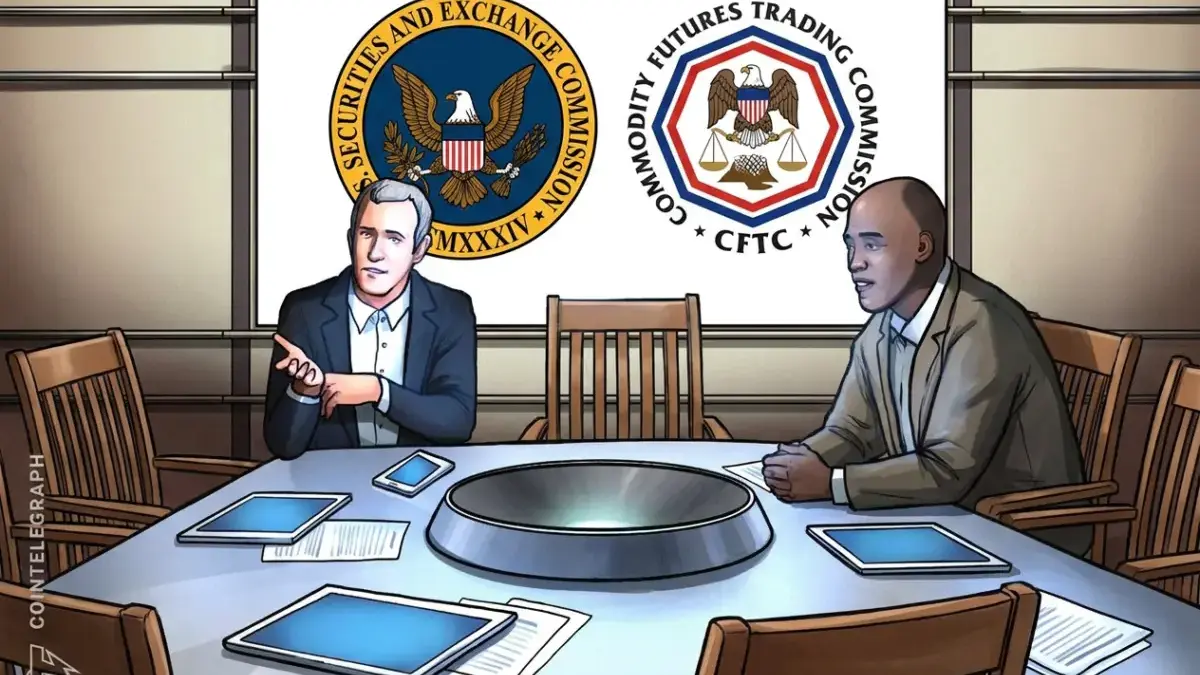
Two of the United States’ premier financial regulatory agencies tasked with overseeing and enforcing digital asset markets are grappling with unprecedented leadership vacancies, leaving critical oversight responsibilities in the hands of a depleted roster of commissioners.
The regulatory landscape shifted further on Friday as Hester Peirce, a long-serving Republican member of the U.S. Securities and Exchange Commission (SEC), officially stepped down from her post. Peirce’s departure comes roughly two months before the scheduled conclusion of the 18-month extension for her second term, capping an influential eight-year tenure at the agency. Widely recognized and affectionately dubbed "Crypto Mom" by digital asset industry participants for her thoughtful, often nuanced positions on blockchain technology and digital tokens, Peirce’s exit marks a historic milestone. Her departure creates only the second time in U.S. regulatory history that the SEC has been forced to operate with a mere two commissioners.
Following Friday’s transition, the SEC’s leadership panel is reduced to Chair Paul Atkins and Commissioner Mark Uyeda. Both remaining members are Republicans, leaving the agency functioning as a truncated two-person panel rather than the bipartisan, five-member commission mandated by its foundational structure.
This leadership crunch is not isolated to the SEC. The Commodity Futures Trading Commission (CFTC), another vital federal regulatory body that shares jurisdiction over various aspects of crypto derivatives, enforcement, and market integrity, has similarly faced acute vacancies. Since December 2025, following the departure of acting chair Caroline Pham, the CFTC has been led by Chair Michael Selig operating as its sole commissioner.
Under United States federal law, the President holds the exclusive authority to nominate replacements to fill vacant seats across these independent federal agencies. However, the White House has yet to announce any formal nominations or public intentions to immediately seat additional commissioners for either the SEC or the CFTC. With the exception of Uyeda—who was originally appointed by the Biden administration in 2022—all current and recently departed commissioners across both financial bodies were initially chosen by President Donald Trump.
When contacted for comment regarding potential upcoming nominations to the SEC, agency representatives did not provide an immediate response. Meanwhile, a CFTC spokesperson addressed the agency’s operational capacity under the current constraints, noting that Chair Selig "welcomes new Commissioners to the CFTC upon their nomination and confirmation by the US Senate." The spokesperson added that the agency remains "more than equipped to also oversee [its] part of the crypto market."
A White House official indicated that the administration intends to submit nominations for both regulatory bodies "in the near future." These comments align with previous reports from early September, which revealed that White House officials had actively vetted candidates to fill the empty commissioner seats at the CFTC, though specific names of potential nominees were not publicly disclosed.
The prolonged vacancies have drawn sharp criticism from lawmakers on Capitol Hill. In a letter addressed to the administration and Senate leadership earlier this year, Senate Democrats expressed profound concern over the state of federal oversight boards.
"Congress designed these boards and commissions to be bipartisan and gave them the authority to regulate some of the most vital and significant parts of American life," Senate Democrats wrote in their communication to President Trump and Senate Majority Leader John Thune. "Pero the Trump Administration appears intent on ensuring that it retains complete control over these agencies, with little interest in working in good faith with Congress."
Three Commissioners Regulating Crypto Without CLARITY
Operating with severely depleted leadership rosters, both the SEC and the CFTC continue to navigate the rapidly evolving digital asset sector largely through administrative rulemaking, regulatory guidance, and enforcement actions, rather than comprehensive statutory laws passed by Congress.
The reliance on regulatory enforcement and staff guidance has persisted despite intense lobbying efforts by digital asset industry stakeholders earlier this month. Industry advocates had strongly pushed U.S. lawmakers to pass the Digital Asset Clarity (CLARITY) Act to establish a definitive statutory framework. However, those legislative efforts stalled when the bill ultimately failed to advance through the Republican-controlled Senate.
The proposed CLARITY Act was widely anticipated to provide the CFTC with expanded statutory authority over digital asset spot markets, delineating responsibilities that have historically been fiercely contested between the CFTC and the SEC. Because Congress failed to pass the legislation, both agencies have been left to forge individual pathways, issuing divergent interpretations of federal securities and commodities laws as they apply to token issuers and blockchain infrastructure.
For its part, the SEC has relied on mechanisms such as staff guidance regarding investment contracts and digital token offerings. Meanwhile, the CFTC has issued specialized guidance specifying how regulated entities and financial market participants can incorporate blockchain-based recordkeeping into their operations. Legal experts and market analysts note that these piecemeal administrative approaches underscore the ongoing regulatory fragmentation in the absence of a unified statutory mandate from Capitol Hill.
As both agencies continue their oversight duties with skeleton crews, market participants, legal scholars, and lawmakers alike are closely watching the White House for upcoming announcements regarding new nominations. Until the Senate confirms a full slate of bipartisan commissioners, the nation’s primary digital asset watchdogs will continue to chart regulatory policy through a drastically reduced leadership framework.



Leave a Reply