
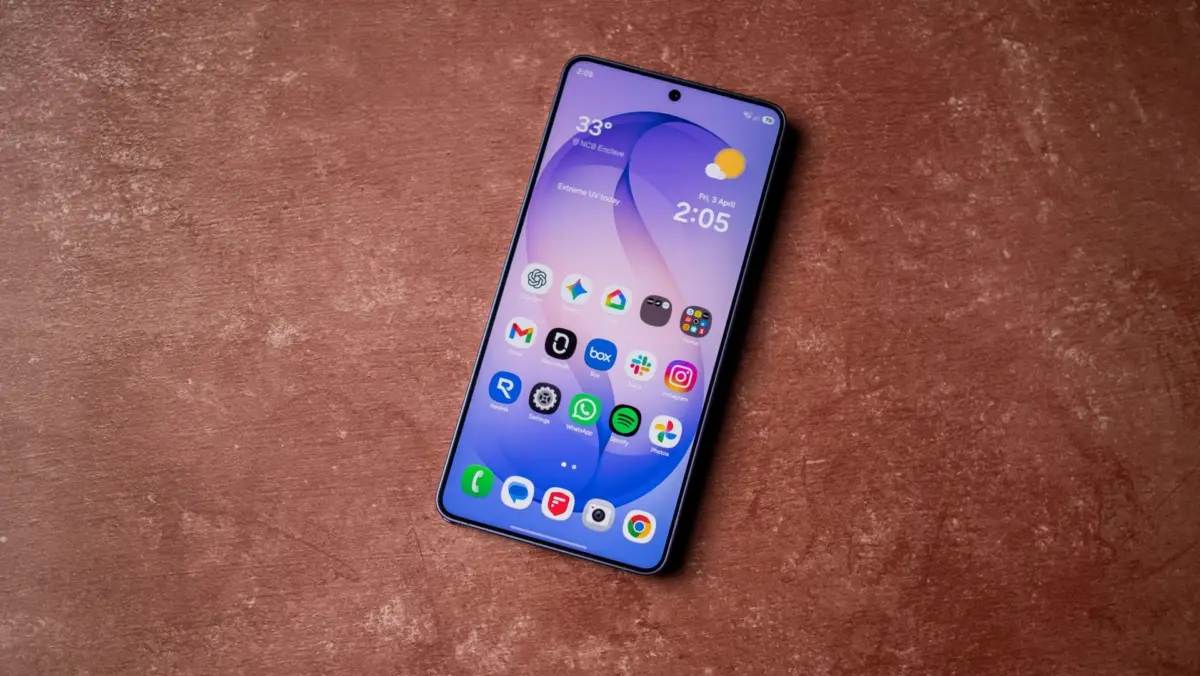
As consumers brace themselves for relentless technological inflation and escalating costs across nearly every consumer electronics sector, early intelligence surrounding Samsung’s upcoming flagship smartphone generation suggests a mixed bag of financial relief and strategic hardware segmentation. According to a fresh round of industry leaks, the anticipated Samsung Galaxy S27 lineup could debut in early 2027 with a restructured pricing tier that might spare entry-level shoppers from another aggressive round of price hikes. However, this potential financial breathing room appears to come with a significant compromise: the reservation of Samsung’s most advanced OLED display technology strictly for the company’s highest-priced models.
The leaked pricing details, first shared on the social media platform X by tipster @phonefuturist, outline a broader four-model strategy for the upcoming generation. If the preliminary targets hold true, the baseline Samsung Galaxy S27 could launch in the United States with a starting price of $899. Moving up the ladder, the Galaxy S27 Plus is projected to carry a price tag of $1,099. In a notable departure from Samsung’s traditional multi-tier strategy, the leak introduces an entirely new model to the mix—the Galaxy S27 Pro—slotted between the Plus and the Ultra at an estimated $1,299. Finally, the top-tier Galaxy S27 Ultra is expected to command between $1,399 and $1,499, with international pricing anticipated to fluctuate even higher depending on regional taxes, import duties, and specific hardware configurations.
This proposed four-tier structure represents a notable evolution in how Samsung packages its flagship offerings. By inserting a "Pro" model between the traditional Plus and Ultra variants, the manufacturer appears to be carving out a more granular selection of features and price points. Yet, while the prospect of an $899 entry point for the base Galaxy S27 will likely appeal to budget-conscious buyers who have watched flagship prices creep steadily toward and beyond the $1,000 threshold in recent years, a closer look at the leaked hardware specifications reveals a clear dividing line in display innovation.
The core controversy surrounding the leak centers on a notable hardware split across the four devices. According to the preliminary data, the standard Galaxy S27 and the Galaxy S27 Plus will feature Samsung’s M14+ OLED display panels. Meanwhile, the more expensive Galaxy S27 Pro and Galaxy S27 Ultra are slated to receive the newer, more sophisticated M16 panels. This technical discrepancy suggests that cutting-edge display innovations, potentially including advanced privacy-display technology and superior energy-efficiency metrics, will be withheld from buyers who opt for the cheaper models. For consumers who prefer a standard-sized or mid-tier device but still expect top-tier screen performance, this segmentation could feel like an artificial restriction designed to push buyers toward the most expensive options in the catalog.
Beyond the hardware disparities, industry analysts urge caution regarding these early pricing projections. Because the launch of Samsung’s next-generation flagship generation is still months away, these figures remain preliminary targets that are subject to change. Economic headwinds, shifting supply chain costs, and currency fluctuations could easily force Samsung to revise its pricing strategy prior to the official retail rollout. If inflationary pressures or component shortages force a last-minute upward adjustment, the perceived savings on the entry-level Galaxy S27 could vanish entirely by launch day, leaving consumers with both higher prices and segmented features.
Compounding these market dynamics is a complex financial backdrop involving Samsung’s broader corporate ecosystem. While the company’s semiconductor division has recently enjoyed a substantial profit boost driven by surging global demand for artificial intelligence infrastructure and tight memory supply conditions, those exact same macroeconomic pressures can create a ripple effect across consumer device manufacturing. High demand for advanced memory components and specialized silicon often translates to elevated production costs for mobile divisions, making it increasingly challenging for manufacturers to maintain accessible retail pricing without compromising on internal specifications or feature sets.
For everyday consumers and tech enthusiasts who value a reliable, high-performing smartphone without committing to an expenditure exceeding $1,000, the prospect of a more affordably priced baseline Galaxy S27 remains an enticing proposition. Yet, the underlying strategy of utilizing advanced display technology as a leverage point to steer consumers toward higher price brackets introduces a familiar consumer relations dilemma. The debate over whether premium everyday experiences should be gated behind ultra-premium pricing is longstanding, and if these leaks prove accurate, Samsung may face scrutiny from buyers who feel penalized for choosing smaller or more moderately priced handsets.
Ultimately, until Samsung makes an official announcement regarding the Galaxy S27 series—typically expected in the early months of the year—these leaked figures and hardware specifications should be viewed strictly as an early guide to the company’s developmental roadmap. As production schedules progress and final supply chain agreements are locked into place, a clearer picture will emerge regarding whether Samsung can successfully balance accessible entry-level pricing with the advanced display technology demanded by modern flagship purchasers.



Leave a Reply