
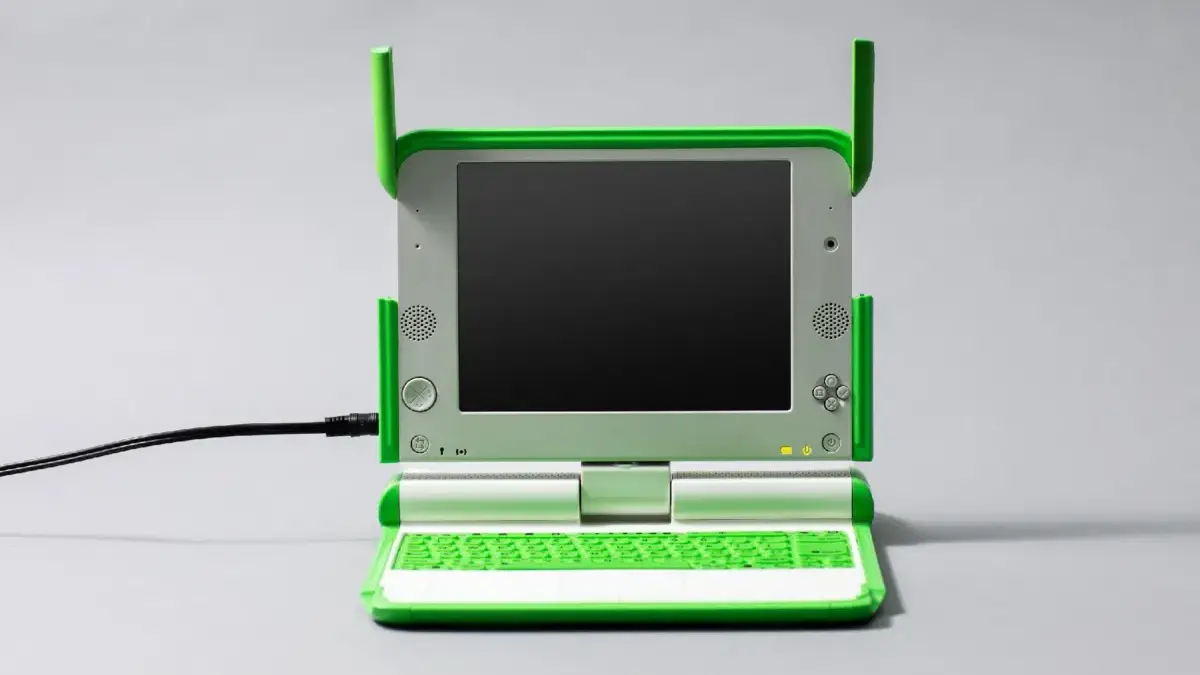
The premise was breathtakingly ambitious, carrying the kind of utopian optimism that only Silicon Valley in the mid-2000s could fully summon: What if every child on the planet, regardless of geography or economic standing, could be handed their own personal computer? For a powerful echelon of technologists, educators, and corporate executives, this vision felt nothing short of a panacea—a way to democratize knowledge, bridge the global digital divide, and fundamentally rewrite the future of education in the developing world.
Yet, the One Laptop Per Child initiative, anchored by its iconic, lime-green-and-white XO-1 laptop engineered specifically to be manufactured in massive quantities and distributed to children in developing nations, proved to be vastly more complicated than its creators ever anticipated. What began as a grand crusade to revolutionize global learning collided head-on with the messy realities of hardware engineering, supply chain logistics, pedagogical skepticism, and economic friction.
In the upcoming episode of Version History, host David Pierce sits down with The Verge’s Adi Robertson and tech journalist David Imel to dissect the complicated legacy of the OLPC movement. Together, the panel explores the core questions that have haunted tech historians for nearly two decades: Why did the OLPC initiative ultimately fail to achieve its world-changing ambitions? Was there genuine genius hidden within the XO-1’s unconventional hardware design? And, looking back from the vantage point of modern technology, could an initiative built on giving away computers ever truly succeed in the modern era?
This deep-dive into the XO-1 marks the midpoint of the fifth season of Version History, a podcast series that has taken listeners on an engaging, nostalgic tour through the defining educational technology icons that shaped generations of students in classrooms around the world. Throughout the current season, the podcast has examined the cultural and functional impact of various learning tools, offering listeners a chance to reflect on how technology has historically intersected with education. Previous episodes have featured fascinating conversations with the lead game designer of The Verge’s beloved digital archive, Oregon Trail, as well as a fond, retrospective look at why The Verge’s Nilay Patel held such a deep and enduring affection for his trusty TI-82 graphing calculator.
The story of the One Laptop Per Child initiative traces back to the Massachusetts Institute of Technology’s Media Lab, where visionary computer scientist Nicholas Negroponte championed the concept of a rugged, low-cost laptop priced at just one hundred dollars. The machine was envisioned not as a scaled-down corporate notebook, but as a completely reimagined educational device tailored specifically to the needs of children in the Global South. To hit that elusive price point and ensure the laptops could survive harsh environments without reliable access to stable electrical grids, the engineering team had to throw out the conventional playbook of personal computing.
The resulting XO-1 was a marvel of unconventional thinking. It featured a transflective liquid crystal display designed to be readable under direct, blazing sunlight, a hand-crank or pull-string charging mechanism in its earliest conceptual iterations, and a mesh networking capability that allowed laptops to communicate with one another and share an internet connection even in remote areas devoid of traditional Wi-Fi infrastructure. Its operating system, Sugar, was built from the ground up to encourage collaborative, exploratory learning rather than mimicking the traditional desktop paradigms established by Microsoft Windows or Apple’s macOS. The bright, rubberized casing was designed to withstand drops, dust, and moisture, signaling that this was a tool meant for rugged, everyday use by young hands.
However, the journey from grand blueprint to classrooms in countries like Peru, Uruguay, and Rwanda was fraught with friction. The target price of one hundred dollars proved to be a moving target, creeping upward as manufacturing realities and component costs set in. Governments that were expected to purchase the laptops in massive bulk orders often hesitated, caught between the high initial outlay for unproven hardware and existing pressures within their own domestic educational systems. Critics at the time also questioned whether dropping laptops into communities without simultaneously investing heavily in teacher training, localized digital content, and sustained technical support was a sustainable model for improving educational outcomes.
As technology landscapes evolved, the rise of cheap netbooks, and eventually affordable smartphones and tablets, altered the competitive terrain. The premise that a child needed a dedicated, purpose-built educational laptop began to shift as generic, low-cost consumer hardware flooded global markets. Yet, the influence of the OLPC project can still be felt today. Concepts pioneered or popularized by the initiative—such as pushing for lower hardware costs, rethinking user interfaces for children, and focusing attention on the digital divide in developing nations—left a permanent imprint on the tech industry.
For listeners interested in diving deeper into the nuances of the OLPC experiment, its design philosophy, and its ultimate geopolitical and educational fallout, a wealth of historical documentation, retrospectives, and archival reporting exists to map out the initiative’s trajectory. These resources capture a unique moment in tech history when the industry genuinely believed that hardware could bypass systemic social and economic hurdles to engineer a better world.
As the debate on Version History highlights, the story of the XO-1 is neither a straightforward tale of absolute failure nor a clean-cut triumph of altruistic innovation. Instead, it serves as a cautionary and inspiring case study in the complexities of hardware design, global deployment, and the enduring allure of trying to change the world through technology.



Leave a Reply