
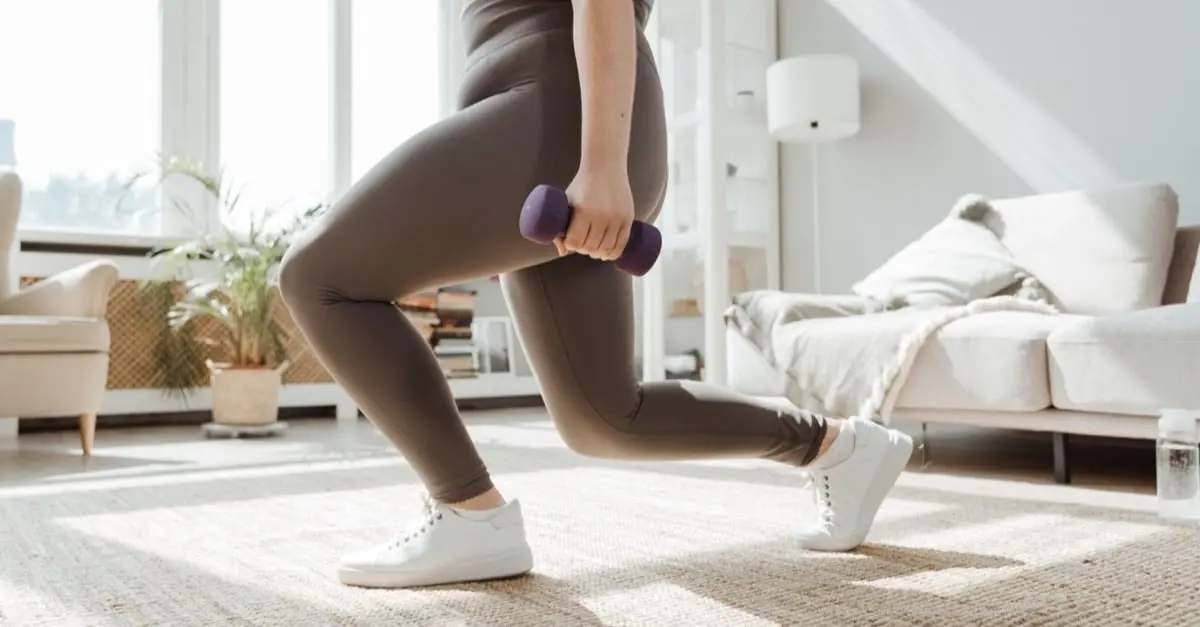
When it comes to home fitness regimens for women, failure usually arrives quietly around month two. It typically starts not with a deliberate choice to quit, but with a minor disruption—a missed session due to a shifted schedule, a week of inactivity, and the quiet realization that the program has collapsed under the weight of its own ambition. Industry experts suggest that the downfall of most home workout programs is not a lack of effort, but a structural flaw: they are collected as massive, overwhelming piles of isolated exercises rather than structured, manageable plans anchored by a reliable safety net for bad weeks.
Fitness professionals point out that the typical home routine is often built around unrealistic expectations. Consider a hypothetical reader named Carla, who has a pair of eight-pound dumbbells tucked under the bed, a resistance band sitting unused in a kitchen drawer, and a history of abandoned fitness starts behind her. What Carla does not need is yet another exhaustive list of complicated isolation exercises. Instead, she requires a concrete framework detailing exactly what to execute on a given Monday, how to gradually increase the difficulty by week three, and precisely how to recover during a week when life gets in the way and nothing goes according to plan.
The Structure of a Sustainable Six-Week Plan
To bridge the gap between abandoned intentions and long-term consistency, fitness frameworks designed for home environments rely on a minimalist approach: two sessions a week for the initial four weeks, expanding to three sessions during weeks five and six. Every single session revolves around the same five foundational movement patterns: a squat, a hinge, a push, a row, and a carry. Sets are typically programmed for eight to twelve repetitions, with rows counted per side and carries timed rather than counted. An entire session takes between 20 and 30 minutes to complete.
Crucially, every week incorporates a scaled-down "floor version," which serves as the absolute minimum requirement that still counts as having trained. During the first two weeks, a session consists of two sets of each movement, translating to 8 to 12 repetitions for squats, hinges, and pushes, 8 to 12 reps per side for rows, and 30 seconds per side for carries, with one to two minutes of rest between sets. By weeks three and four, the volume increases to three sets of each movement, with carries extended to 45 seconds per side. In weeks five and six, the frequency bumps up to three days a week while maintaining the three-set structure, with load added incrementally. Meanwhile, the floor version remains completely unchanged throughout the entire six-week period, consisting of just a single set of each movement. This ensures that a difficult or stressful week never demands more from the practitioner than they can comfortably manage.
This two-day-a-week frequency is far from a beginner’s compromise; it aligns directly with federal baselines for adult physical activity, which recommend muscle-strengthening exercises covering major muscle groups on at least two days a week, paired with 150 to 300 minutes of moderate aerobic activity. Health authorities routinely emphasize that some activity is vastly superior to none. The aerobic component is easily fulfilled through regular walking, requiring simple arithmetic rather than complex gym equipment. A 30-minute walk on five days of the week achieves the 150-minute threshold, meaning walks should be integrated into most days, including the days dedicated to lifting.
Five Fundamental Movements and Household Substitutes
The core of the program rests on five compound patterns: squat, hinge, push, row, and carry. Together, these movements load the legs, hips, lower back, chest, shoulders, upper back, grip, and trunk, effectively covering all major muscle groups. Each movement features a practical household alternative, ensuring that a lack of specialized equipment never serves as a barrier to entry.
For the squat, practitioners stand in front of a dining chair holding a dumbbell against the chest with both hands, sitting back until touching the seat before standing up. The chair regulates depth and provides security. For those without weights, performing the movement bodyweight-style with a slow three-count on the way down offers a viable alternative. The hinge pattern involves holding weights in front of the thighs with a soft bend in the knees and a flat back, pushing the hips backward and sliding weights down to mid-shins before returning to a standing position by squeezing the glutes.
The push pattern utilizes a kitchen counter, with the body held in a straight line from heels to head, lowering the chest toward the surface and pressing away. As strength improves, practitioners can transition to a sturdy chair seat and eventually the floor. Rows are performed by bracing one hand and one knee on a chair seat while pulling a dumbbell to the ribs with a tight elbow tracking close to the body, completing repetitions on one side before switching. Alternatively, resistance bands anchored to a door or banister can replicate the pulling motion, preventing the upper back from being neglected. Finally, the carry pattern involves picking up a heavy object—such as a dumbbell or a loaded grocery bag—holding it at one side, and walking for 30 seconds while keeping the shoulders level.
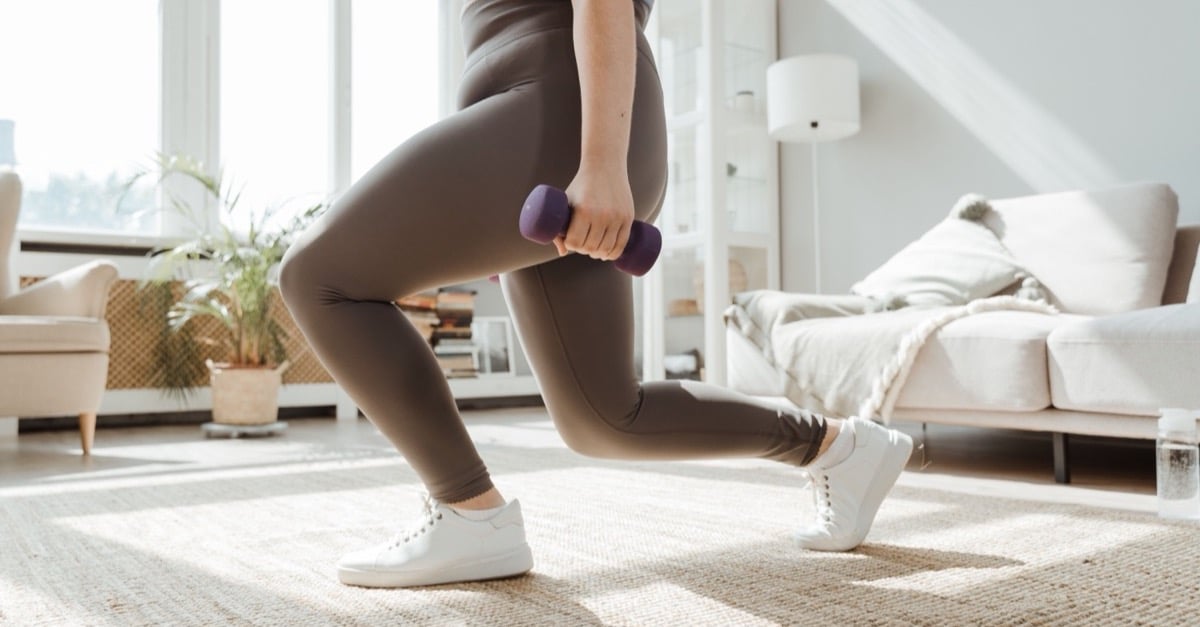
When it comes to equipment, experts recommend a pragmatic purchasing hierarchy: starting with one pair of adjustable dumbbells spanning roughly five to 25 pounds, followed by resistance bands, and eventually utilizing household items if necessary. Everyday substitutes include a gallon jug of water weighing approximately 8.3 pounds, a loaded backpack held at the chest for squats, or a filled canvas tote bag for carries.
Managing Sets, Repetitions, and Progressive Overload
The prescribed parameters—eight to twelve repetitions, two to three sets, and two to three sessions a week—mirror guidelines established by the American College of Sports Medicine (ACSM) for novice lifters. Rest periods between sets generally range from one to two minutes, though practitioners are encouraged to use their breath as a timer; once a full sentence can be spoken without gasping, it is time to begin the next set.
A common concern among women training at home with limited weights is whether lighter loads are sufficient to trigger muscle growth. Research indicates that when sets are taken close to the point of muscular fatigue—where another clean repetition is nearly impossible—lighter loads of 40, 60, and 80 percent of a one-rep maximum produce comparable muscle growth in studies, although heavier loads yield greater gains in maximal strength. For practitioners using household dumbbells, a weight is effective as long as the final two repetitions of each set are genuinely difficult to finish.
Progression is managed through a specific rule: once an individual can comfortably complete one or two repetitions beyond their target on a set while maintaining proper form, the load is increased by two to ten percent. Because home equipment rarely features micro-weights, repetitions are prioritized over load increases. The carry pattern progresses independently by adding five seconds per side each week until reaching 45 seconds, after which the practitioner transitions to a heavier object and resets the duration.
The Floor Version and the 48-Hour Recovery Rule
The innovation that prevents home programs from collapsing is the inclusion of the floor version combined with a strict restart protocol. When a scheduled session is missed due to life circumstances, the practitioner is required to return within 48 hours, and the workout they return to is exclusively the floor version—never the missed session and never a punitive double workout.
This approach is designed to prevent the psychological spiral where a single missed workout cascades into a week of inactivity, eventually leading a person to abandon their fitness goals entirely. By shrinking the restart requirement to a manageable seven-minute routine consisting of a single set of each movement, the program lowers the psychological barrier to re-engaging with exercise, ensuring that consistency survives inevitable disruptions.
Setting Realistic Expectations and Consulting Professionals
While home resistance training yields significant long-term benefits, experts emphasize clear boundaries regarding what the practice can and cannot achieve. Muscle size changes gradually, accumulating over months and years of steady work rather than within a brief six-week window. Targeted resistance training strengthens underlying muscles but does not dictate where the body selectively loses fat, meaning localized spot-reduction remains a myth. Furthermore, while resistance training can support bone mineral density over time, light-intensity home regimens operate below the high-intensity thresholds most strongly associated with significant skeletal improvements in clinical studies. Finally, unfamiliar resistance exercises frequently induce muscle soreness during the first week, a normal physiological response that typically diminishes in subsequent sessions.
Before embarking on any new exercise regimen, individuals with underlying health conditions, recent injuries, cardiovascular concerns, or those who are pregnant or postpartum are advised to consult a qualified healthcare clinician to ensure the program is properly adapted to their needs. By prioritizing sustainable routines, manageable progressions, and built-in flexibility for difficult weeks, home strength training can transition from a cycle of abandoned attempts into a lifelong habit.



Leave a Reply