
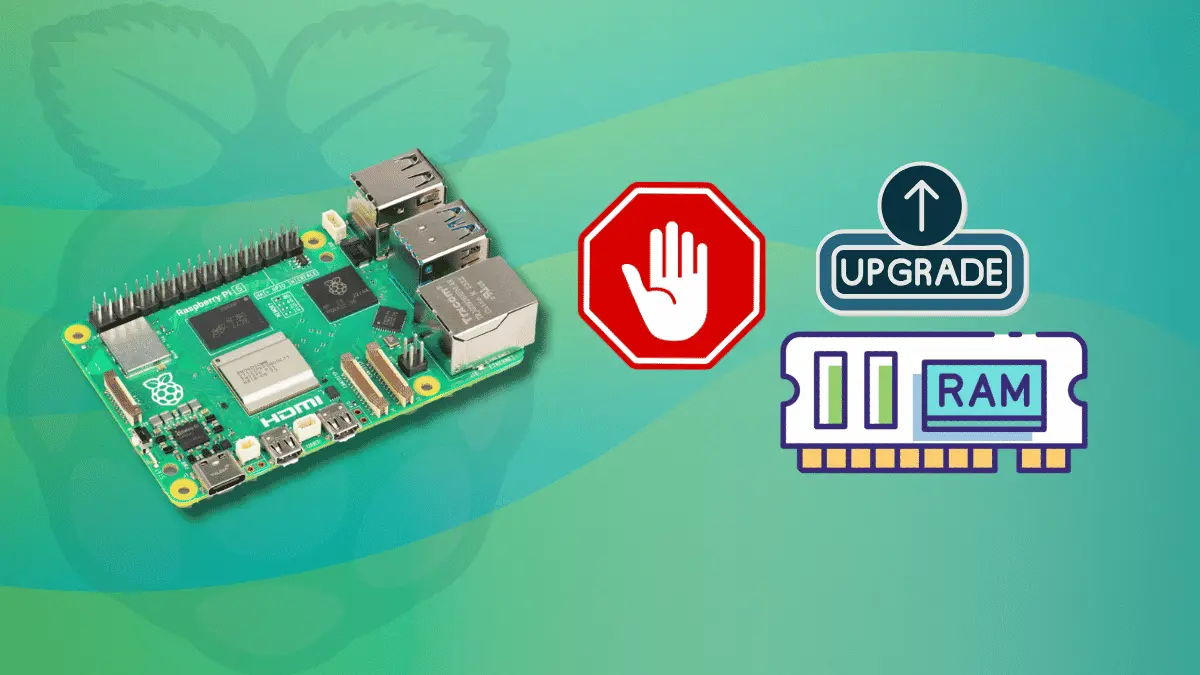
A quiet change rolled out by the Raspberry Pi Foundation has resurfaced in community discussions, drawing renewed attention to how the popular single-board computer handles internal hardware modifications. A recent post on the self-hosted online community platforms has reminded users that the Raspberry Pi 5 will now outright refuse to boot if it detects memory modules that do not precisely match the factory-recorded memory configuration. This enforcement mechanism relies on a firmware update introduced late last year, transforming how the bootloader interacts with physical RAM components and raising deeper questions about device ownership in the maker community.
The behavior stems from a firmware update that many developers and hobbyists have identified as the September 23, 2024 build. When this update was initially released, the accompanying change logs were notably brief and understated, featuring a generic note indicating that minor updates had been applied to align with manufacturing tests. There was no explicit mention in the official release notes that the firmware would begin locking out unapproved or mismatched memory configurations. However, the practical implications of this update quickly became apparent to tinkerers attempting custom hardware modifications or repairs.
What It Does and Why
When a Raspberry Pi 5 boots using firmware at or beyond this specific threshold, it executes a security and validation check during the initial boot sequence. The system compares the installed random-access memory against a specific hardware configuration profile permanently stored within the system-on-chip’s one-time programmable memory, commonly known as OTP memory. If the firmware detects a discrepancy between the physical components and the factory profile, the boot process halts immediately.
The system throws what is officially designated as "code 9," which corresponds to an SDRAM mismatch error, completely preventing the board from initializing any further. Crucially, this is not merely a basic capacity check. Even memory chips of the exact same size sourced from another legitimate Raspberry Pi 5 board can trigger the error if they fail to match other specific device attributes and manufacturing parameters recorded in the OTP storage.
Similar hardware modification challenges had already surfaced months prior, when adventurous tinkerers attempted to upgrade the RAM on compute modules, such as moving a Compute Module 5 from two gigabytes to four gigabytes of capacity. Discussions on official support forums involving community members and engineers from the Raspberry Pi team ultimately clarified the company’s official stance: memory capacity swaps are intentionally and permanently blocked by design. Furthermore, identical capacity swaps between different physical boards are not guaranteed to succeed because the modern firmware records and verifies additional device-level attributes beyond the sheer gigabyte figure.
Engineering representatives from the company have noted that while swapping an identical part-code chip for legitimate repair purposes remains physically possible for technicians with advanced micro-soldering skills, the ever-increasing variety of memory SKUs supported across different generations means that timing and configuration parameters will inevitably vary from one individual device to another.
Who It’s Meant to Catch
From the perspective of the Raspberry Pi Foundation, this stringent validation mechanism is designed to combat widespread hardware-associated fraud. A recurring issue in the secondary market involves unscrupulous sellers acquiring lower-capacity boards, soldering cheap, unverified, or untested third-party RAM chips onto the printed circuit boards, and then fraudulently reselling the modified hardware as higher-capacity models.
This deceptive practice has caused headaches for both consumers and manufacturers for years. Previous community bug reports highlight instances where buyers purchased what appeared to be legitimate, high-capacity Raspberry Pi boards, only to find that the hardware abruptly failed to boot following a routine system firmware update. When analyzed under older firmware versions, these boards often passed basic memory tests without immediate errors, concealing the underlying hardware tampering until a firmware update forced a rigorous cryptographic or OTP validation check. Company engineers reviewing memory dumps from these affected units frequently confirmed that the boards had indeed been modified prior to retail sale.
Does It Make Sense?
The prevalence of hardware fraud is an undeniable reality, and the frustration experienced by the manufacturer is entirely understandable. When counterfeit or improperly modified hardware reaches unsuspecting consumers, it frequently results in unstable system performance, data corruption, and a subsequent wave of unwarranted technical support requests directed at official channels. Protecting the integrity of the product line and ensuring that consumers receive the exact hardware specifications they paid for is a legitimate operational goal.
However, the specific technical mechanism chosen to combat this fraud affects far more than dishonest vendors and counterfeiters. Raspberry Pi has long occupied a unique and cherished position in the global hardware and software ecosystem. While it has never operated as an open-hardware project in the strictest ideological sense, the platform built an immense reservoir of community goodwill and loyalty on the foundational premise that a purchased board belonged entirely to the person holding it.

For over a decade, enthusiasts have thrived on a culture of deep experimentation. Users routinely run custom operating systems, strip away default peripherals, overclock processors far beyond their factory limits, and occasionally disassemble the hardware down to the silicon level to understand how it functions. This culture of absolute ownership and hackability is a cornerstone of what made the platform a cultural phenomenon.
Implementing a bootloader that cross-references one-time programmable memory at every single boot sequence to strictly enforce factory-set RAM configurations represents a notable shift. It utilizes a software-driven mechanism to effectively close down hardware modification pathways. While the manufacturer remains legally and commercially within its rights to secure its supply chain and product ecosystem, balancing those corporate protections with the traditional freedom of tinkerers to experiment has become a delicate tightrope walk. Consumers looking to purchase hardware on the secondary market are increasingly reminded of the necessity to carefully verify the credibility of sellers and retail storefronts.
For users who find themselves directly impacted by this firmware enforcement and wish to continue experimenting with custom hardware configurations, the primary workaround involves maintaining an older firmware version predating the September 23 threshold. Affected operators typically disable the automated EEPROM update services within their operating systems to prevent the board from automatically fetching and installing newer, restricted firmware builds during routine system maintenance.


Leave a Reply