
The market for high-performance external storage continues to evolve rapidly, offering consumers increasingly sophisticated ways to repurpose internal solid-state drives. Following previous hands-on evaluations of hardware like the TerraMaster D1 SSD Plus, technology reviewers have turned their attention to the latest generation of ultra-fast connectivity standards. At the center of this shift is the new ORICO X50, an external enclosure that leverages the capabilities of Thunderbolt 5 to promise double the bandwidth of its predecessors while maintaining broad compatibility across multiple operating systems, including Linux.
Designed to accommodate standard NVMe storage media, the ORICO X50 arrives on the desk of hardware reviewers seeking to test its limits under real-world conditions. Operating on systems running Ubuntu with modern Linux kernels, recent testing highlights how these advanced enclosures perform when paired with existing hardware, as well as the inherent limitations imposed by current host device ecosystems.
Hardware Specifications and Design Philosophy
At its core, the ORICO X50 is engineered around the cutting-edge Thunderbolt 5 interface, which boasts a staggering 80Gbps bidirectional bandwidth. This architecture is designed to be fully backward compatible with previous iterations, including Thunderbolt 4, Thunderbolt 3, and standard USB4 ports. When paired with compatible hardware and high-performance PCIe Gen4 or Gen5 M.2 NVMe drives, the enclosure is rated to deliver speeds of up to 6000 MB/s for reading and 5800 MB/s for writing operations.
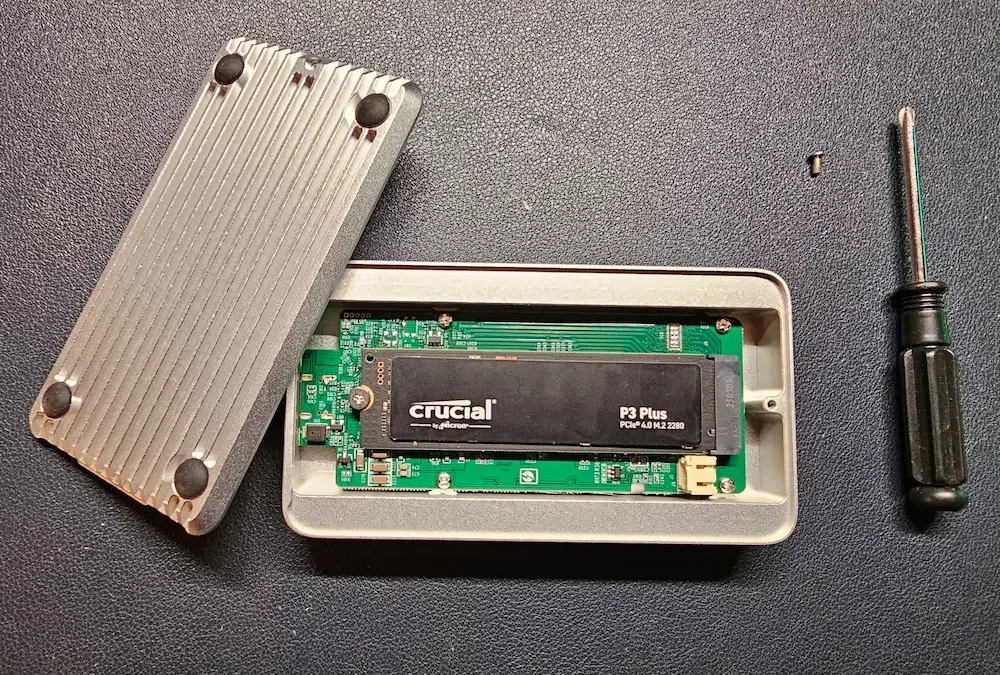
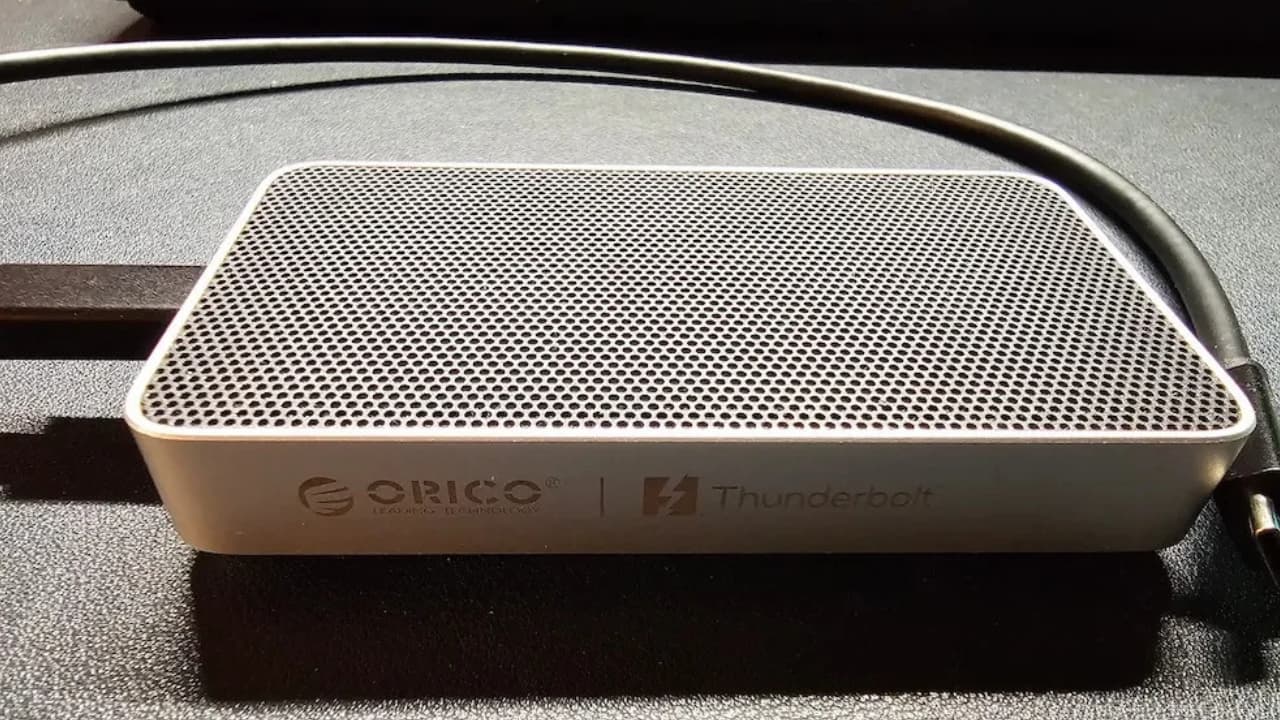
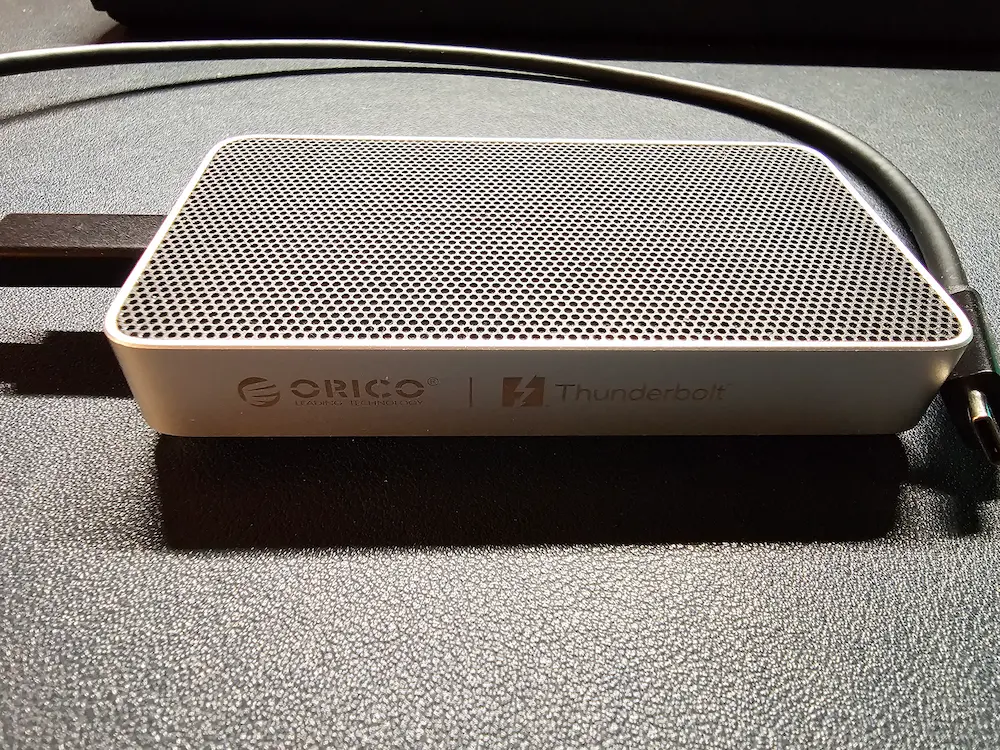
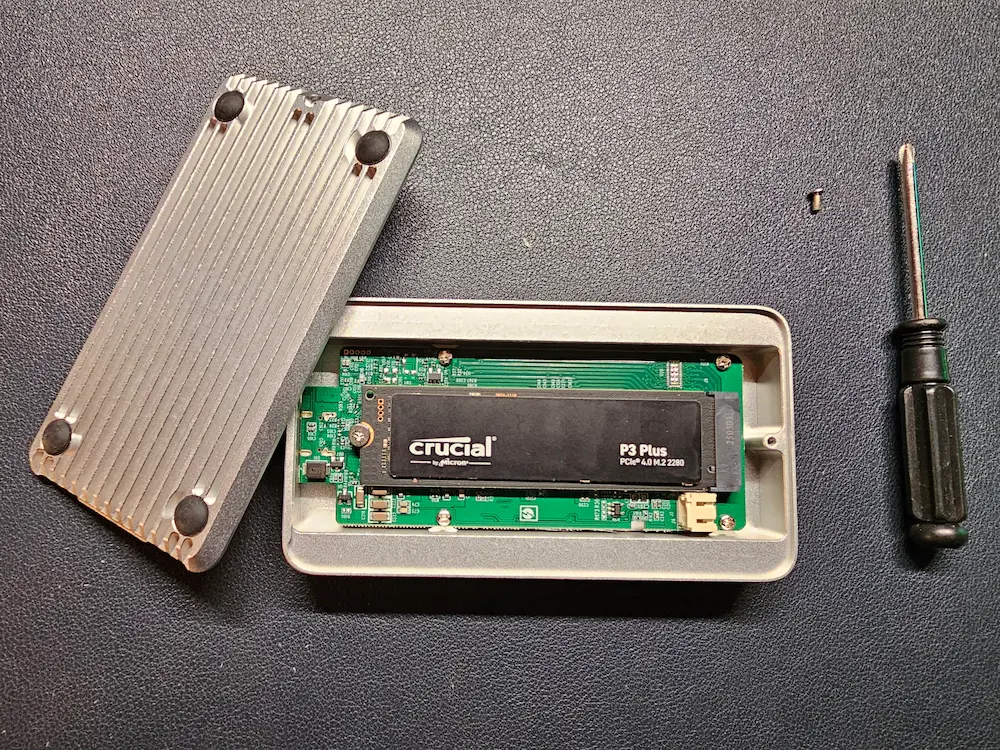
Constructed from a sleek silver aluminum alloy, the X50 presents a slim, professional profile that easily slides into a standard laptop bag. Its aesthetic heavily mirrors modern portable computing hardware, making it a natural fit for users integrated into ecosystems like Apple’s MacBook lineup. Unlike some bulkier alternatives on the market, it manages to remain compact while incorporating clever thermal engineering. The bottom chassis features a series of micro-fins designed to maximize surface area for heat dissipation. Operating entirely without an active cooling fan, the enclosure relies on passive cooling supported by included thermal film and paste, ensuring completely silent operation during intensive tasks.

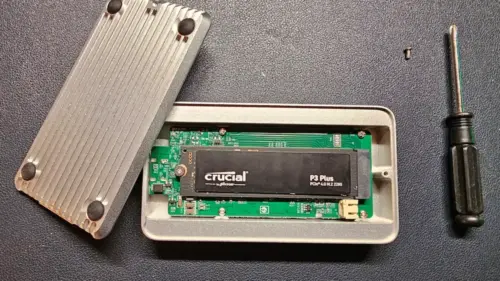
The retail package for the diskless version of the X50 includes the aluminum enclosure itself, a high-quality 0.5-meter USB-C to USB-C cable capable of handling the full 80Gbps throughput, and thermal application materials. Users should note that the enclosure is strictly limited to 2280-size M.2 NVMe solid-state drives. It does not support older SATA M.2 drives, smaller 2230 form-factor modules commonly found in handheld gaming devices, or drives equipped with bulky factory-installed heatsinks such as the Samsung 9100 Pro variant.
The Linux Integration and Plug-In Experience
For open-source and Linux enthusiasts, external storage solutions can occasionally present hurdles regarding native hardware monitoring and driver support. However, testing the X50 on Ubuntu distributions running recent Linux kernels reveals a remarkably seamless plug-and-Play experience. Upon connection, the storage medium is recognized immediately, allowing users to format the drive using standard file systems like ext4 for immediate mounting without the need for manual configuration or proprietary drivers.
Because the enclosure tunnels PCIe lanes directly over the Thunderbolt protocol rather than standard USB mass storage protocols, the operating system treats the peripheral as a native internal NVMe device rather than a generic USB disk. This architectural distinction yields a significant advantage for system administrators and power users: native access to SMART health data. Commands such as nvme smart-log function directly without requiring users to fiddle with custom USB bridge flags in monitoring utilities like smartctl, granting immediate visibility into drive health metrics and operational temperatures straight from the terminal.
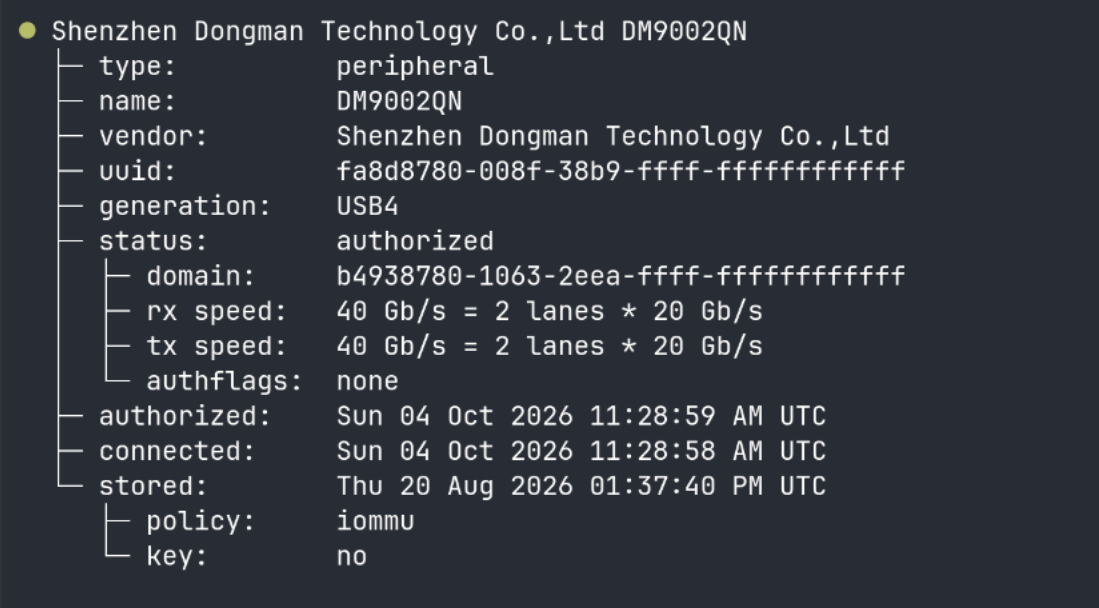
Using diagnostic tools like boltctl, the device authenticates automatically upon connection. Interestingly, system logs often identify the controller interface under manufacturing identifiers rather than the consumer-facing brand, a common occurrence in specialized high-bandwidth peripherals.
Performance Benchmarks and Real-World Caveats
Evaluating a Thunderbolt 5 device on hardware that lacks native Thunderbolt 5 ports presents an important scenario for modern tech consumers. Tested primarily on an ASUS Zenbook S14 equipped with Thunderbolt 4, the connection link was necessarily capped at 40Gbps—representing half of the maximum potential bandwidth for which the ORICO X50 was engineered. Consequently, the performance figures gathered reflect the capabilities of a Thunderbolt 4 or USB4 host environment rather than the absolute peak performance achievable on a next-generation Thunderbolt 5 machine.
Simulated benchmarking using standard storage testing suites demonstrated impressive results within the boundaries of the host connection. Sequential read speeds routinely approached 3878 MB/s, effectively saturating the ceiling of the 40Gbps link. Meanwhile, sequential write speeds reached approximately 2810 MB/s, outperforming the baseline ratings of the test drive due to the aggressive intervention of the internal SLC cache. Real-world file transfers mirrored these synthetic metrics, executing a 10-gigabyte single file copy in just under 12 seconds, while handling a workload of 5,000 small four-kilobyte files in roughly 17.5 seconds.
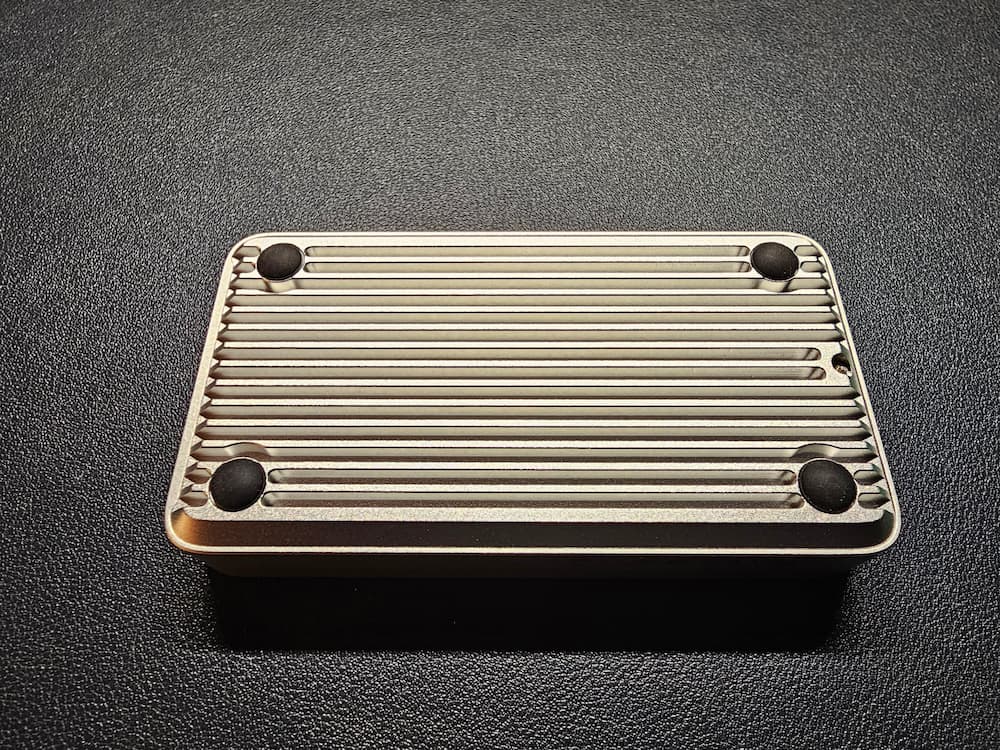
Thermal performance during sustained workloads proved particularly noteworthy. During an intensive 13-minute continuous write test moving 250 gigabytes of data in a warm room environment, the internal drive temperatures remained consistently stable between 58 and 68 degrees Celsius. While write speeds experienced a notable drop after the initial burst phase—a characteristic behavior of QLC NAND storage media once the SLC cache is exhausted—the thermal dissipation design prevented any sudden drops attributable to overheating. The passive aluminum fins and thermal materials successfully prevented thermal throttling throughout the prolonged stress test.
Market Positioning and Comparison with USB4 Alternatives
When weighed against other options in the portable storage landscape, such as the TerraMaster D1 SSD Plus, the ORICO X50 occupies a premium tier. While both enclosures deliver virtually indistinguishable performance when constrained by current Thunderbolt 4 or USB4 laptop hardware, their price points and physical designs diverge. The TerraMaster offers a more budget-friendly entry point with broader capacity support at a lower cost, whereas the ORICO commands a higher price tag for its slimmer profile and future-proof Thunderbolt 5 headroom.
Ultimately, the ORICO X50 serves as a compelling option for users who possess compatible high-performance NVMe storage and wish to invest in an enclosure that will remain relevant as Thunderbolt 5 adoption expands across the PC and laptop market. Its robust aluminum construction, reliable passive thermal management, and flawless out-of-the-box Linux compatibility make it a strong contender for professionals seeking high-speed external storage without sacrificing terminal-level hardware visibility.


Leave a Reply