
Rightsholders and anti-piracy advocates have long sought to draw public and legislative attention to the darker undercurrents of copyright infringement. For nearly three decades, the entertainment industry and intellectual property coalitions have attempted to link digital piracy not merely to lost revenue for creators, but to transnational criminal networks, drug cartels, and violent extremists. This narrative, which first gained traction during the late 1990s and early 2000s, has evolved alongside technology, shifting from physical counterfeit compact discs to modern streaming boxes and internet protocol television.
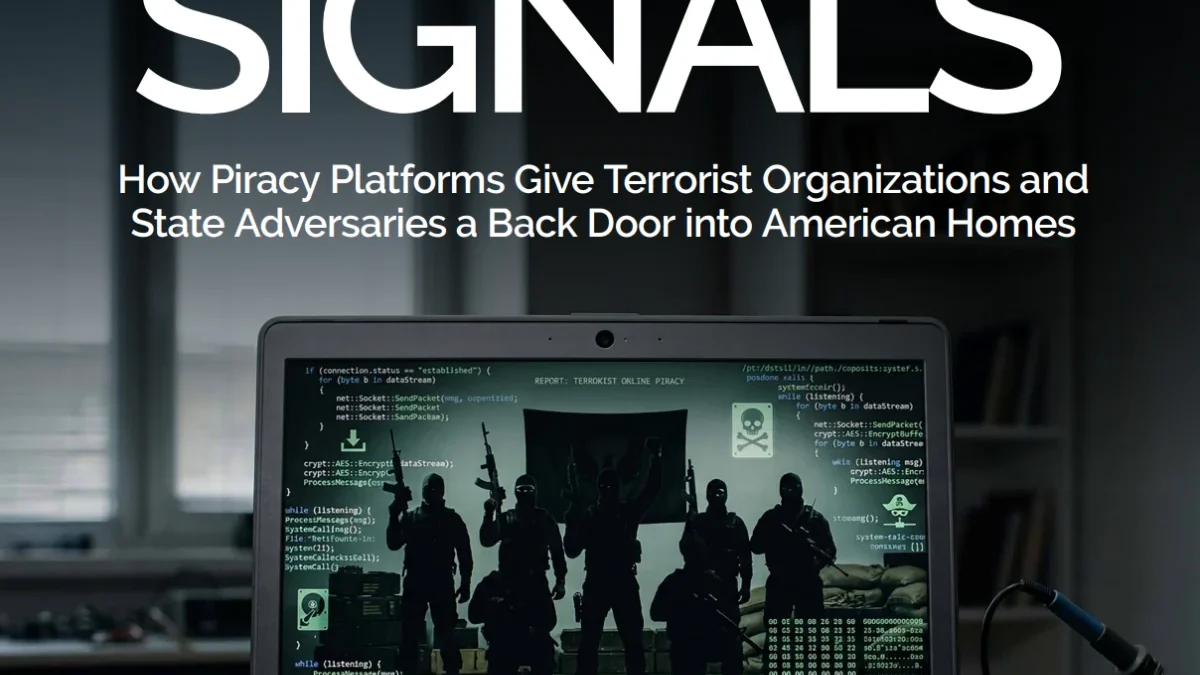
A newly released study from the Washington, D.C.-based Digital Citizens Alliance, produced in collaboration with Atlanta-based cybersecurity firm risk3sixty, breathes new life into this long-running framing. Titled "Hostile Signals," the report asserts that unauthorized streaming networks do more than merely siphon copyrighted content away from legitimate broadcasters. Instead, the authors argue that these platforms can function as unregulated, sanction-circumventing distribution channels for state adversaries and designated terrorist organizations, effectively bypassing decades of targeted government enforcement.
The Evolution of the Piracy-Terrorism Nexus
The conceptual merging of copyright infringement and national security threats is far from a recent phenomenon. The framing first emerged prominently in the late 1990s, when the International Federation of the Phonographic Industry raised alarms regarding sophisticated criminal syndicates smuggling pirated compact discs across international borders.
The national security and terrorism angle was formally introduced in 2003 during a U.S. House of Representatives hearing dedicated to exploring piracy’s direct links to organized crime and terrorism. Around that same period, then-Interpol Secretary General Ronald Noble testified before Congress, famously characterizing intellectual property crime as the preferred method of funding for a number of violent terrorist organizations operating globally.

The most frequently cited connection between these disparate worlds appeared in 2009, courtesy of a motion picture industry-funded RAND Corporation report. That study examined the complex interplay between film piracy, organized crime syndicates, and terrorist financing. Although subsequent analysts noted that the RAND study frequently blurred the distinct lines between physical counterfeiting and digital piracy, its core conclusions have been widely cited by rightsholders and policymakers for over a decade.
In recent years, the Digital Citizens Alliance has actively maintained this advocacy tradition. In 2017, the organization released a report that bundled online piracy alongside violent extremist recruiting videos, malware dissemination, and fake news. More recently, in May of this year, the group published findings connecting unauthorized IPTV services to broader illicit economies involving narcotics, illegal weapons, and organized mafia syndicates.
The release of the "Hostile Signals" report continues this trajectory, arriving with notable timing. With the twenty-fifth anniversary of the September 11 terrorist attacks approaching, the report leans heavily into historical resonance, explicitly closing its executive summary with the phrase "Never Forget."
Pirate IPTV Services Carry Designated Terrorist Channels
To investigate the technical reality of these claims, researchers from risk3sixty acquired and evaluated 25 distinct pirate IPTV services utilizing standard residential U.S. internet connections between May and August. According to the findings, 17 of the 25 tested platforms carried at least one television channel directly tied to a designated terrorist organization or a sanctioned state broadcaster.

The presence of these networks varied across the evaluated services, but specific outlets appeared with notable frequency. Al-Manar, the primary television broadcast station operated by Hezbollah—an organization with a long history of anti-Western attacks and responsibility for hundreds of U.S. casualties over the decades—was available on all 17 of the pirate platforms found to be carrying restricted content.
Other sanctioned media outlets also appeared across the tested services. The Houthi-run Al-Masirah television channel was accessible on nine of the platforms, Iran’s state-backed Al-Alam network appeared on seven, and Al-Aqsa TV, operated by Hamas, was identified on two of the services.
The report highlights several specific unauthorized streaming providers operating within the ecosystem, including Lion OTT, Sansat VIP, OTTOcean, Belitvision, and Wish IPTV, all of which were easily accessed from ordinary U.S. internet connections without specialized evasion tools.
This accessibility represents a significant regulatory challenge for American authorities. The United States government officially banned Al-Manar’s satellite transmission feed back in 2004, and federal prosecutors subsequently secured a 69-month prison sentence for a Brooklyn resident convicted of providing material support to a terrorist organization after he sold the channel’s programming to local customers. Despite these historic federal crackdowns and subsequent domain seizures, the report argues that pirate IPTV networks have inadvertently restored what decades of government action sought to eliminate.

Examining the Context and Nuance of the Findings
While the conclusions presented in the "Hostile Signals" report are framed in stark and alarming language, the document itself acknowledges several important contextual nuances regarding viewership and actual impact.
The report concedes that its findings do not provide empirical data concerning the actual viewership or audience engagement levels of these specific terrorist-linked channels within the broader pirate ecosystem. Furthermore, the broadcasts in question are transmitted entirely in Arabic, typically without English subtitles or translation aids, making them unlikely to attract casual Western consumers who primarily subscribe to pirate services for mainstream sports, premium movies, or popular television series. These controversial channels generally represent a tiny fraction of the thousands of international live television feeds bundled into typical pirate IPTV packages.
Additionally, many of the streams identified in the report, including Hezbollah’s Al-Manar, remain freely accessible on the open internet through the broadcasters’ own web infrastructure. For instance, while the U.S. Department of Justice seized 13 Hezbollah-linked domain names in 2023—including seven that explicitly incorporated the channel’s name—the station’s primary web portal continues to operate beneath Lebanon’s national top-level domain. Because this infrastructure falls completely outside direct U.S. legal jurisdiction, it continues to stream its programming openly to international visitors, including those in the United States.
While the widespread availability of these feeds on the open web may slightly diminish the shock value of finding them embedded inside private IPTV subscription packages, it ultimately serves to reinforce the central policy argument advanced by the report’s authors and rightsholders alike.

Pushing for Expanded Site-Blocking Legislation in Washington
Rather than merely documenting the presence of sanctioned broadcasters within unauthorized streaming networks, the Digital Citizens Alliance report utilizes these findings to advocate for a specific legislative remedy. The organization argues that existing site-blocking mechanisms, which are frequently proposed to combat routine copyright infringement and digital piracy, could similarly be leveraged to intercept and block foreign terrorist content and state-sponsored propaganda.
The findings are intended to reinforce the urgent need for the United States to adopt robust legal frameworks that prevent overseas piracy and hostile media networks from easily operating within domestic communication networks.
The timing of this renewed advocacy aligns closely with ongoing legislative debates in Washington. Federal lawmakers have repeatedly considered various legislative proposals aimed at curbing unauthorized digital distribution. Bills such as the American Copyright Protection Act, sponsored by Representative Darrell Issa, and the Foreign Anti-Digital Piracy Act, sponsored by Representative Zoe Lofgren, have kept the issue active on Capitol Hill. Representative Issa has previously indicated that a bipartisan, bicameral site-blocking legislative package is moving closer to reality.
These domestic legislative efforts mirror international discussions. Earlier in the year, leadership from the Motion Picture Association alongside federal intellectual property enforcement officials utilized high-profile domain seizures surrounding major sporting events to advocate for mandatory site-blocking mandates across Internet Service Providers.

As policy discussions continue within legislative committees, content owners, rightsholders, and national security advocates are expected to leverage the "Hostile Signals" report as fresh evidence that enforcing stricter anti-piracy measures could yield broader security benefits beyond the protection of intellectual property.


Leave a Reply