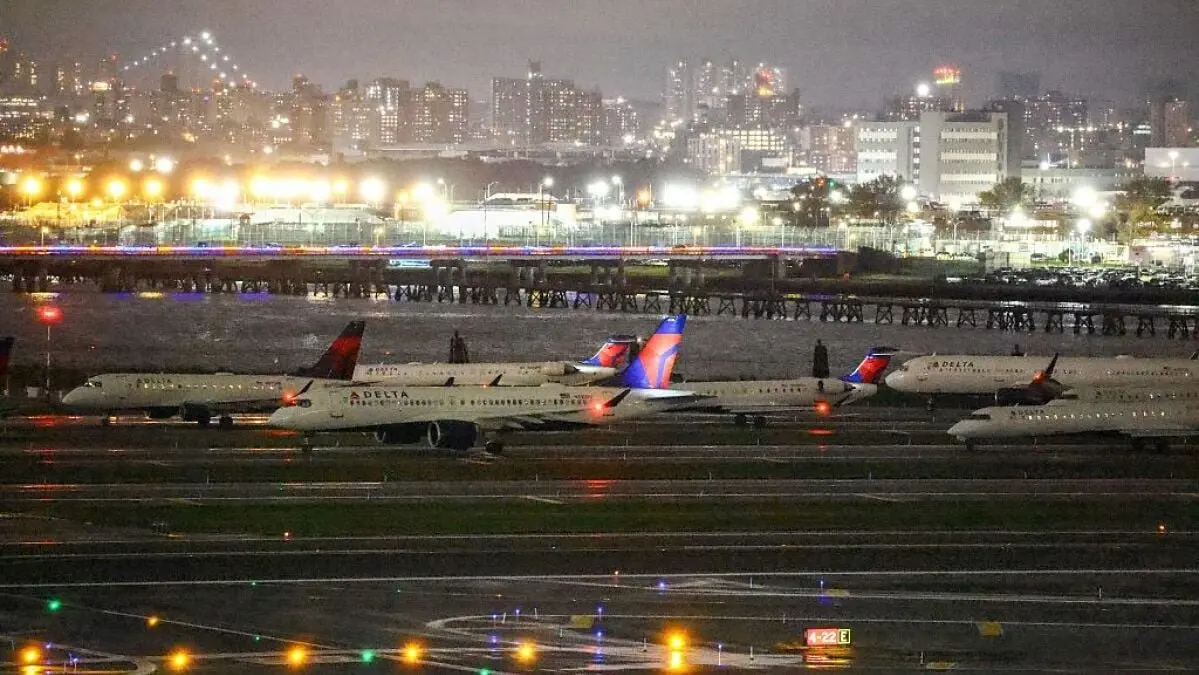
For only the second time since the tragic events of September 11, 2001, all air travel across the United States has been temporarily and completely halted. The unprecedented nationwide disruption occurred on a Friday afternoon, instantly throwing the country’s complex aviation network into disarray and leaving countless travelers stranded, confused, and frustrated at airports from coast to coast.
The Federal Aviation Administration (FAA) issued the rare nationwide ground stop as air traffic controllers and federal authorities scrambled to address a sudden system-wide malfunction. According to federal officials, including Secretary of Transportation Sean Duffy, the sweeping stoppage was triggered by a severe communications issue. As air travel came to a grinding halt, the precise underlying cause of the breakdown remained entirely unknown at the time of publication, plunging the agency and aviation experts into an urgent investigation to determine how such a massive technical failure could occur.
The immediate ripple effects of the directive were felt instantly across every major aviation hub in the nation. Thousands of passengers attempting to catch weekend flights, business trips, and family visits found themselves stuck indefinitely in terminal lines and holding areas. Major airlines scrambled to adjust operations, while airport operators worked to provide initial updates to bewildered travelers who suddenly watched departure boards transition from on-time statuses to blanket cancellations and indefinite holds.
Naturally, the single question on the minds of millions of affected travelers, airline executives, and industry analysts alike was simple yet urgent: When will the ground stop be lifted? Unfortunately, federal authorities could not provide an immediate answer. CNN reported that Homeland Security Secretary Markwayne Mullin addressed the unfolding crisis by stating that the government had "not discussed any timeframe" for restoring normal operations as the scope of the communications failure continued to be assessed.
Mullin emphasized the gravity of the situation during early briefings, signaling to the public that a quick fix should not be expected. "It’s going to take some time," Mullin said, according to CNN. "And so this isn’t going to just be resolved and turned around within the hour."
That sobering assessment made it clear that the disruption could very well last through Friday evening at the absolute minimum, threatening to ruin weekend travel plans for a massive volume of domestic and international passengers. To put the current crisis into perspective, federal aviation records show that the last nationwide ground stop occurred in January 2023, when a failure in the FAA’s Notice to Air Missions (NOTAM) system forced a temporary halt to departures. However, that previous incident lasted about 90 minutes before systems were successfully rebooted and cleared for safe travel. In contrast, Secretary Mullin’s cautious rhetoric and the ambiguous nature of the current communications failure suggested that this incident could take considerably longer to diagnose, repair, and safely clear before the skies could reopen.
As the afternoon stretched on, federal transportation and security agencies continued to coordinate emergency response protocols, working around the clock to isolate the technical glitch and ensure that any potential vulnerabilities were thoroughly addressed before authorizing the resumption of flights. Meanwhile, stranded travelers across the country hunkered down in terminals, awaiting further updates from airlines and federal officials regarding accommodations, rescheduling options, and an eventual timeline for when American airspace might finally be cleared for takeoff.