
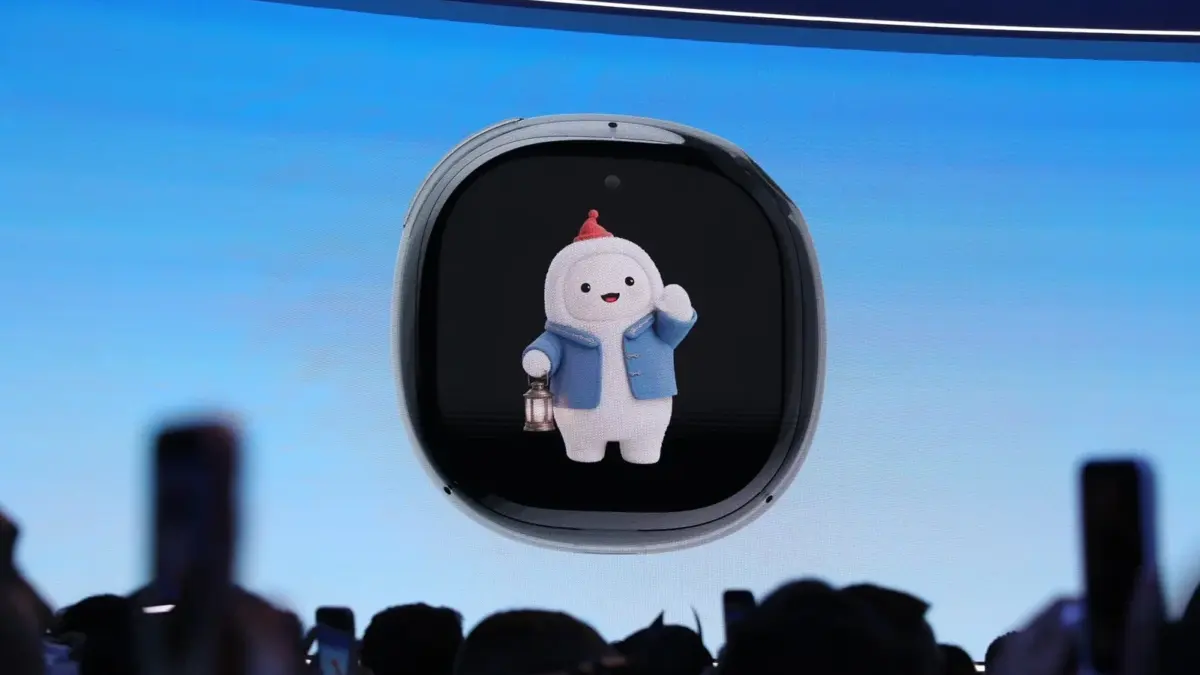
Meta is making a bold push into dedicated artificial intelligence hardware with the introduction of the Muse Charm, a pocket-sized device built specifically to house and operate its new Muse AI agent. The hardware was briefly shown off by Meta CEO Mark Zuckerberg during the closing moments of the Meta Connect presentation, catching attendees and industry watchers by surprise as the company outlines its vision for post-smartphone computing.
The Muse Charm immediately draws comparisons to a chunky smartwatch stripped of its wristband, presenting itself as a standalone gadget featuring a prominent, high-resolution screen accompanied by a convenient lanyard for carrying the device around the neck or wrist. Despite its compact footprint, the device packs an array of input sensors designed for seamless, hands-free interaction.
According to Meta, the Muse Charm features a dedicated fingerprint sensor situated on the top right corner of the casing. Users can simply press this sensor to instantly wake the device and begin speaking directly to the Muse AI agent without needing to unlock a smartphone, navigate through a crowded home screen, or launch a specific mobile application.
In addition to the biometric sensor and microphone arrays—which appear to consist of at least three distinct audio holes on the front for optimal voice pickup—the Muse Charm is equipped with a small, integrated camera. This optic suggests that the device will eventually be capable of processing visual data from the user’s environment, allowing the AI agent to see what the user sees and offer context-aware assistance. However, during the brief presentation, Zuckerberg did not elaborate on the specific connectivity architecture the device uses to communicate with Meta’s remote servers, leaving open questions regarding cellular integration, Wi-Fi dependency, or companion smartphone pairing.
The timeline for bringing the Muse Charm to consumers is exceptionally aggressive, even by consumer electronics standards. Meta plans to ship the device in time for the holiday shopping season this December. Yet, Zuckerberg candidly admitted that the company has "only built a few of these so far," underscoring just how early the hardware prototype stage is. The tech giant is still actively finalizing the device’s physical casing and "the finishing material," indicating that the industrial design remains subject to change before mass production ramps up.

Throughout his keynote address, Zuckerberg leaned into the device’s experimental roots, teasing its potential aesthetic directions and making specific references to a translucent exterior housing. Such a design choice would allow users to peer directly inside the gadget to view its internal circuitry and components. Describing this vision as an "elevated hacker aesthetic," Zuckerberg promised that the company would share comprehensive specifications, pricing, and availability details "soon."
The debut of the Muse Charm comes at a time when the Muse AI agent itself is still remarkably young, having been introduced less than a month prior to the presentation. Despite its brief existence online and within Meta’s ecosystem, the bot has rapidly evolved into a buzzy flagship product for the company. Muse is engineered to move past simple conversational prompting by proactively taking complex actions on a user’s behalf across software platforms.
During the Meta Connect keynote, Zuckerberg dedicated a significant portion of his presentation to demonstrating powerful new capabilities being integrated into the agent. These upgrades include advanced computer use functionality on macOS systems, enabling the AI to navigate operating systems autonomously, alongside direct control over user email addresses for managing correspondence, scheduling, and digital organization.
The race to define and conquer the emerging category of dedicated AI hardware has attracted numerous competitors, resulting in a landscape that remains largely experimental and undefined. The closest functional and philosophical analog to the Muse Charm currently on the market is the Rabbit R1, a similarly sized, pocket-friendly gadget designed to house an interactive AI agent. However, early devices like the R1 frequently struggled with performance limitations, often lacking the deep ecosystem integration and processing capabilities necessary to make carrying a secondary standalone gadget worthwhile for everyday consumers.
Meta Connect served as an unmistakable reminder of how intensely Meta wants to capture the leadership position in whatever hardware platform ultimately succeeds the smartphone. By moving with remarkable speed to package its flagship AI agent into a dedicated physical form factor, Meta is testing whether an independent, wearable device like the Muse Charm can secure a permanent place in the daily routines of consumers.


Leave a Reply