
Meta’s Superintelligence Lab has officially entered the frontier artificial intelligence arena with the release of two new state-of-the-art models, Muse Wonder and Muse Wonder Full. Announced on Monday, these models represent a significant turning point for the company, marking its very first dedicated foray into frontier-class model development following a major internal restructuring of its artificial intelligence division last year.
The release follows earlier iterations such as the Muse Spark model, which was designed primarily as a lightweight, low-latency alternative for rapid interactions. In contrast, the newly unveiled Wonder models are substantially larger, more capable, and engineered to tackle highly demanding workloads. According to benchmarks shared by Meta, the models demonstrate superior performance across complex reasoning tasks, including advanced software coding, positioning Meta directly alongside industry competitors in the high-end generative artificial intelligence market.
Initial performance evaluations detailed in the official model card indicate that Wonder and Wonder Full achieve benchmark scores comparable to established high-end systems such as Fable 5.1 and GPT-6 Astra. Meta described the dual release as an essential progression in its long-term technological trajectory. In its official blog post accompanying the launch, the company stated that the models mark the next step on its scaling ladder and represent a major leap toward achieving personal superintelligence.
This elevated scale and capability are similarly reflected in the commercial pricing structure for enterprise and developer access. Distributed through the Meta Model API, the standard Wonder model will be priced at $4 per million input tokens and $20 per million output tokens. This places its operational cost on par with comparable frontier systems like GPT-6 Sol and Opus 5.5.
However, distribution strategies differ for the more powerful variant. Muse Wonder Full will not be accessible through the standard API; instead, access will be restricted exclusively to Muse Code subscribers. Both models will also serve as the underlying computational engine powering the broader Muse agent ecosystem.
A core focus of Meta’s current generative artificial intelligence strategy is the creation of proactive personal assistants capable of executing multi-step tasks over extended periods. To realize this vision, Meta has placed heavy emphasis on what it terms "active memory"—a specialized capability designed to allow the models to retain, organize, and synthesize contextual information provided by users over prolonged interactions.
To quantify and demonstrate improvements in long-term data retention, Meta highlighted the MemoryBench benchmark, a rigorous evaluation framework engineered to test continual learning and memory construction in neural networks. According to internal testing metrics, Muse Wonder currently surpasses competitors including Fable, Opus, and Astra on the MemoryBench scale.
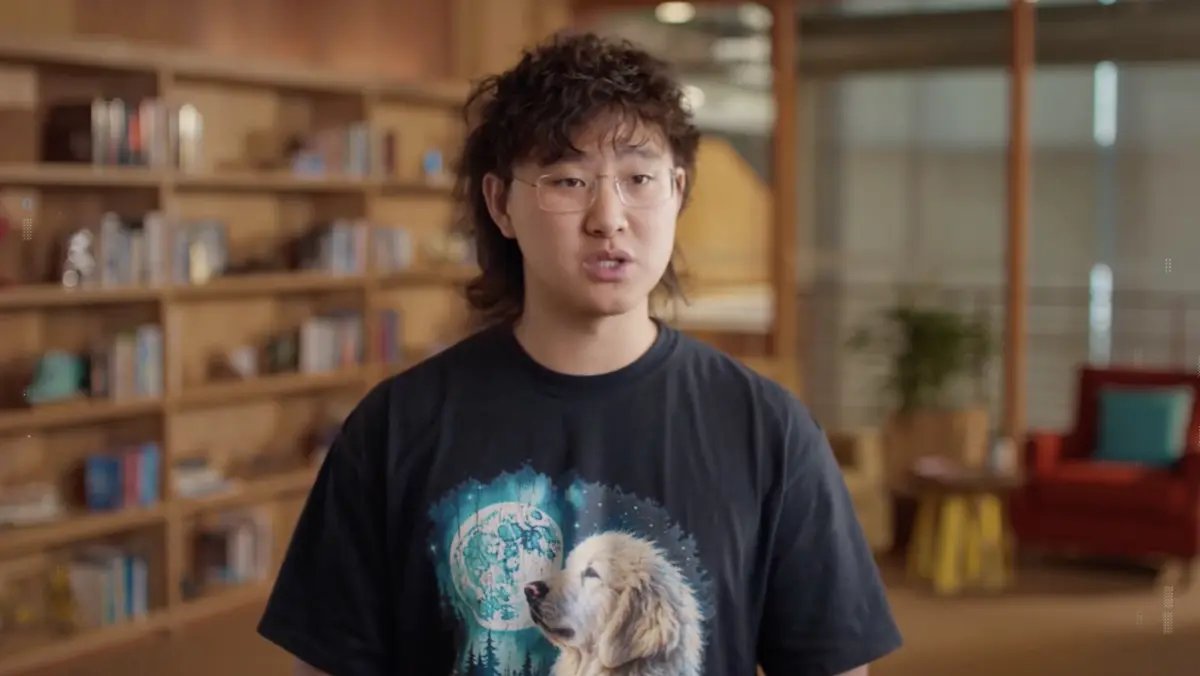
During a video presentation accompanying the launch, research scientist Kavya Kopparapu elaborated on the engineering investment required to achieve these memory milestones. She explained that the research team dedicated a tremendous amount of effort to ensuring the models can securely remember and reference information that matters to users across days, weeks, months, and beyond.
The debut of the Wonder models also serves as a strategic milestone for Meta’s overarching organizational structure. This is the first major frontier model release to emerge since Scale AI founder Alexandr Wang assumed leadership to restructure Meta’s artificial intelligence initiatives in August of last year. In the months following that reorganization, Meta focused on iterative releases, including the lightweight Muse Spark and the broader Muse agent ecosystem, while deliberately avoiding the aggressive, state-of-the-art flagship releases traditionally associated with competitors like OpenAI and Anthropic.
The computational foundation required to train these massive models stems from Meta’s cutting-edge infrastructure investments. According to the company’s announcements, Muse Wonder and Wonder Full were trained at the Prometheus data center located in central Ohio, a high-capacity facility that officially came online earlier this year.

Leave a Reply