
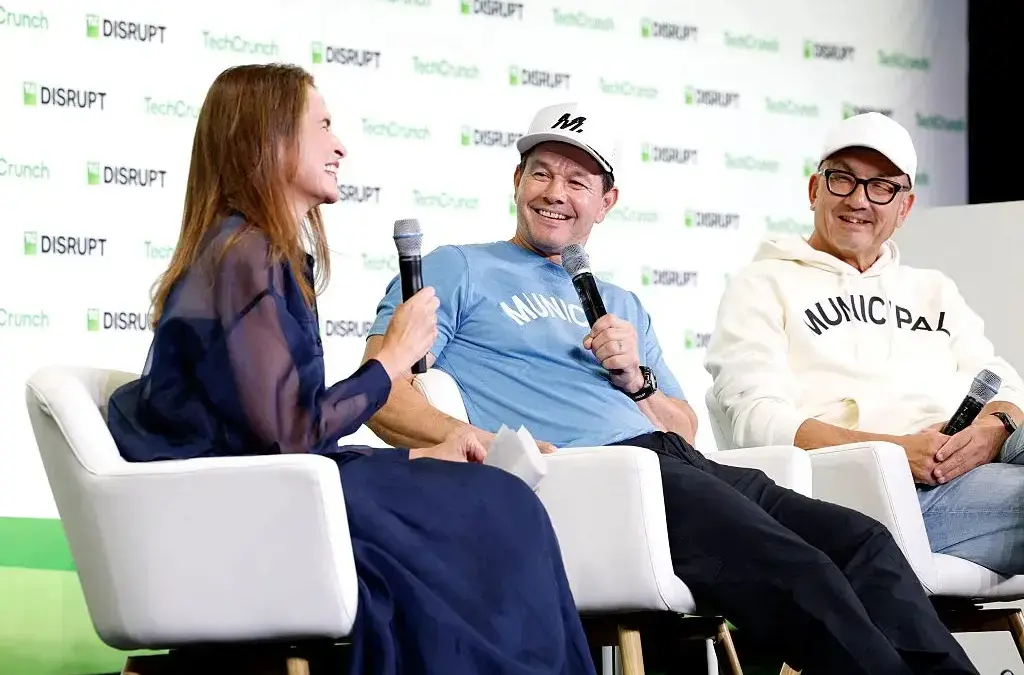
Mark Wahlberg has built an expansive portfolio of business ventures, ranging from production companies to fitness and nutrition brands, but his latest undertaking has generated a level of enthusiasm that outpaces anything else in his decades-long career. Speaking at TechCrunch Disrupt in San Francisco, the actor and entrepreneur discussed the upcoming launch of the very first Municipal Gym, a massive 32,000-square-foot facility scheduled to open its doors just outside Las Vegas this coming December.
The club ventures directly into a booming, venture-backed segment of the health market centered on expensive, diagnostics-heavy wellness and longevity services. However, Wahlberg is positioning his enterprise differently than many established players. Instead of targeting ultra-wealthy clientele with steep, exclusive pricing models, Municipal Gym aims to deliver a comparable suite of advanced health offerings at a fraction of the cost, making comprehensive wellness accessible to a broader demographic.
The Las Vegas flagship location is equipped with an extensive array of cutting-edge health and recovery amenities. Members will have access to on-site blood work, epigenetic testing, specialized recovery gear, compression therapy, and cold plunges. The facility also features a dedicated café serving protein muffins and other health-conscious nutritional options. This setup represents the physical evolution of a broader business strategy that originally took root seven years ago with the launch of a casual sportswear line.
The Municipal clothing brand officially debuted during the COVID-19 pandemic—a timing that Wahlberg readily acknowledges was far from ideal. Entering the apparel sector in 2020 proved to be a challenging endeavor as widespread retail disruptions forced prominent names, from J.Crew to Brooks Brothers, to seek Chapter 11 bankruptcy protection. Despite the macroeconomic headwinds, the apparel line was born out of observations Wahlberg made while serving as a celebrity fitness spokesperson over the years.
Having collaborated with various brands and frequently fielding requests to act as a brand ambassador, Wahlberg noticed a recurring pattern across the industry. Most companies approached him with a singular objective: selling T-shirts and sneakers. Craving a more substantial and holistic influence on consumers’ daily lives, he wanted to address the complete wellness picture, encompassing dietary habits, supplementation routines, training methodologies, and recovery practices. Clothing served merely as the initial stepping stone for a larger vision. The goal from the outset was to establish a foothold in the apparel space and progressively build outward into a comprehensive lifestyle brand, driven by a philosophy of pursuing projects that serve as authentic extensions of his personal passions.
Even within a stabilized retail environment, the apparel industry remains notoriously unforgiving, as evidenced by recurring quality-control and manufacturing challenges faced by major athletic brands like Lululemon. Yet, Wahlberg remains undeterred, viewing the integration of physical retail locations as a vital asset for the Municipal brand. Opening large-scale fitness centers provides consumers with a tangible environment where they can physically interact with and experience the clothing line before making a purchase. Furthermore, physical fitness represents an integral component of the holistic lifestyle ecosystem the brand aims to foster.
The timing of Municipal Gym’s entry into the market coincides with a massive surge of venture capital and corporate investment into high-end longevity and wellness clubs. Industry leaders have increasingly concentrated their efforts on the ultra-luxury tier. Fountain Life, a longevity company co-founded by figures such as Tony Robbins, raised $18 million to expand its network of diagnostic centers tailored to wealthy clients, with comprehensive annual subscriptions running upwards of $21,500. Similarly, The Estate, another venture co-founded by Robbins and hospitality executive Sam Nazarian, has outlined plans for wellness centers requiring annual memberships of $35,000. Traditional fitness giant Equinox has also entered the space, taking reservations for a $36,000 longevity add-on program designed to operate on top of standard gym memberships.
In contrast, Municipal aims to capture that same high-end diagnostic tier while drastically lowering the financial barrier to entry. Emphasizing a model centered on tangible outcomes, Wahlberg asserts that the brand offers superior value and concrete results compared to existing luxury competitors. As an illustration of this pricing strategy, he noted that members could receive services such as three rounds of comprehensive blood work alongside a dedicated one-hour consultation with a physician to identify potential health predispositions for a modest fee of $99, with professional guidance on supplements and hormone therapy readily available within the facility.
When questioned about whether the gyms would function primarily as storefronts for his existing business interests, such as his personal protein and supplement brand, Wahlberg described the connection as a cohesive health and wellness ecosystem designed to provide comprehensive, end-to-end support for members. While he has not publicly disclosed a specific numerical target for nationwide expansion, he characterized the overarching growth strategy as aggressive. Real estate developers and landlords touring the initial Las Vegas site have reportedly responded enthusiastically, offering prime AAA real estate locations under highly favorable lease terms alongside substantial tenant-improvement allowances to support the construction and build-out process.
Wahlberg’s history within the fitness industry has not been without its cautionary tales. His deep involvement with the F45 training franchise—chronicled in his reality series "Wahl Street"—began in 2019 when he invested in the company at a valuation of $450 million. Although the fitness chain went public in 2021, it faced severe market pressures and was ultimately delisted from the New York Stock Exchange in 2023 following a steep collapse in its share price. Reflecting on the turbulent experience, Wahlberg noted that the primary lesson learned involved aligning exclusively with partners who share a unified operational philosophy and long-term vision.
While F45 found success catering to consumers seeking rapid, time-efficient 45-minute workouts, Wahlberg’s vision for Municipal favors a traditional big-box model where members are encouraged to spend extended periods utilizing a diverse array of diagnostic, training, and recovery services. He expressed skepticism toward standard fitness industry business models that rely heavily on attracting members who rarely utilize their memberships, stating that such a philosophy runs counter to his personal approach to health and community.
The selection of the name Municipal holds deep personal significance for Wahlberg, who grew up in working-class Boston as one of nine children, spending his formative years playing sports on public basketball courts and golf courses. The lessons learned on public blacktop courts—navigating victory, defeat, competition, and resilience—helped shape his professional and personal outlook. Open about the hardships of his youth, which included a brief period of incarceration during his teenage years, Wahlberg credits key mentors, including Father Jim Flavin, a Boston-area parish priest who has remained in his life since he was 13 years old, with helping him redirect his path.
Through Municipal Gym, Wahlberg hopes to recreate that sense of camaraderie, support, and community engagement. He envisions the facilities not merely as places to exercise, but as environments where individuals can challenge themselves to achieve personal growth and support one another. Emphasizing the personal stakes of the venture, he reflected on his journey from humble beginnings to his current position, expressing a desire to inspire at-risk youth and inner-city children by demonstrating that difficult circumstances can be overcome through persistent hard work and dedication.
Now at age 55, Wahlberg notes that his personal fitness objectives have evolved considerably from the aesthetics-driven goals of his earlier years. Today, his primary focus is on feeling physically well upon waking and maintaining the vitality necessary to manage a packed professional and personal schedule. Juggling the final preparations for the gym launch alongside an upcoming film role portraying baseball legend Pete Rose and supporting his daughter’s competitive equestrian career leaves him with little downtime. While he is not actively hunting for additional business ventures, he remains open to unexpected opportunities that align with his core passions, though his immediate energy remains firmly fixed on bringing the Municipal Gym vision to life in Las Vegas this December.



Leave a Reply