
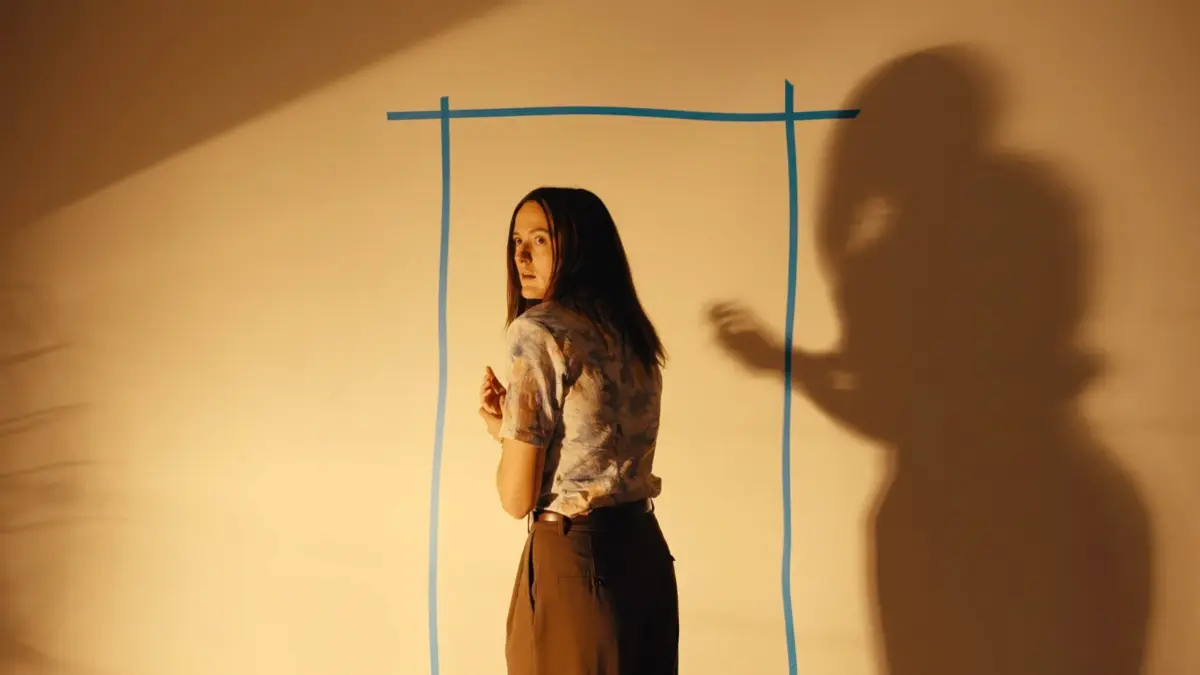
If 2026 has proven anything to cinema enthusiasts, it is that the horror genre is currently firing on all cylinders, delivering an unprecedented wave of critically acclaimed and commercially successful releases. Earlier in the year, Curry Barker dissected modern intimacy through the chilling, nightmare-fueled lens of Obsession, while Damian McCarthy constructed a masterclass in spatial dread and localized folklore with Hokum. Continuing the dark and gritty threads established in 28 Years Later, filmmaker Nia DaCosta expanded Alex Garland’s post-apocalyptic mythos with a riveting second entry characterized by her signature visual flair and relentless cinematic momentum. More recently, Zach Cregger transformed raw survival panic into a high-art cinematic experience with Resident Evil. It has been an unusually stacked year for moviegoers, offering an uncompromising lineup of terrifying features that leave audiences with little time to catch their breath between major theatrical drops.
None of these acclaimed titles, however, have quite managed to top the pervasive, viral liminal nightmare of Kane Parsons’ Backrooms. A film that successfully translated internet mythos into a box-office-shattering theatrical event, Backrooms takes the eerie familiarity of sterile, fluorescent-lit architecture and transmutes it into pure existential terror. For those who missed the feature during its lucrative big-screen run, or for enthusiasts simply looking to get lost in its endless, unsettling yellow maze once more, the movie is finally making its home-viewing debut. Backrooms begins streaming on HBO Max, cementing its status as the absolute essential streaming release of the autumn horror season.
From Urban Legend to the Silver Screen
At the center of the narrative is Clark, portrayed with weary precision by Chiwetel Ejiofor, a struggling furniture store owner whose professional and personal life has not gone quite the way he had originally planned. While conducting a routine exploration of the cluttered, forgotten basement beneath his shop, Clark stumbles upon a bizarre, structurally impossible crack in the wall. This anomaly serves as a threshold leading directly into a seemingly infinite, labyrinthine network of interconnected, windowless spaces.
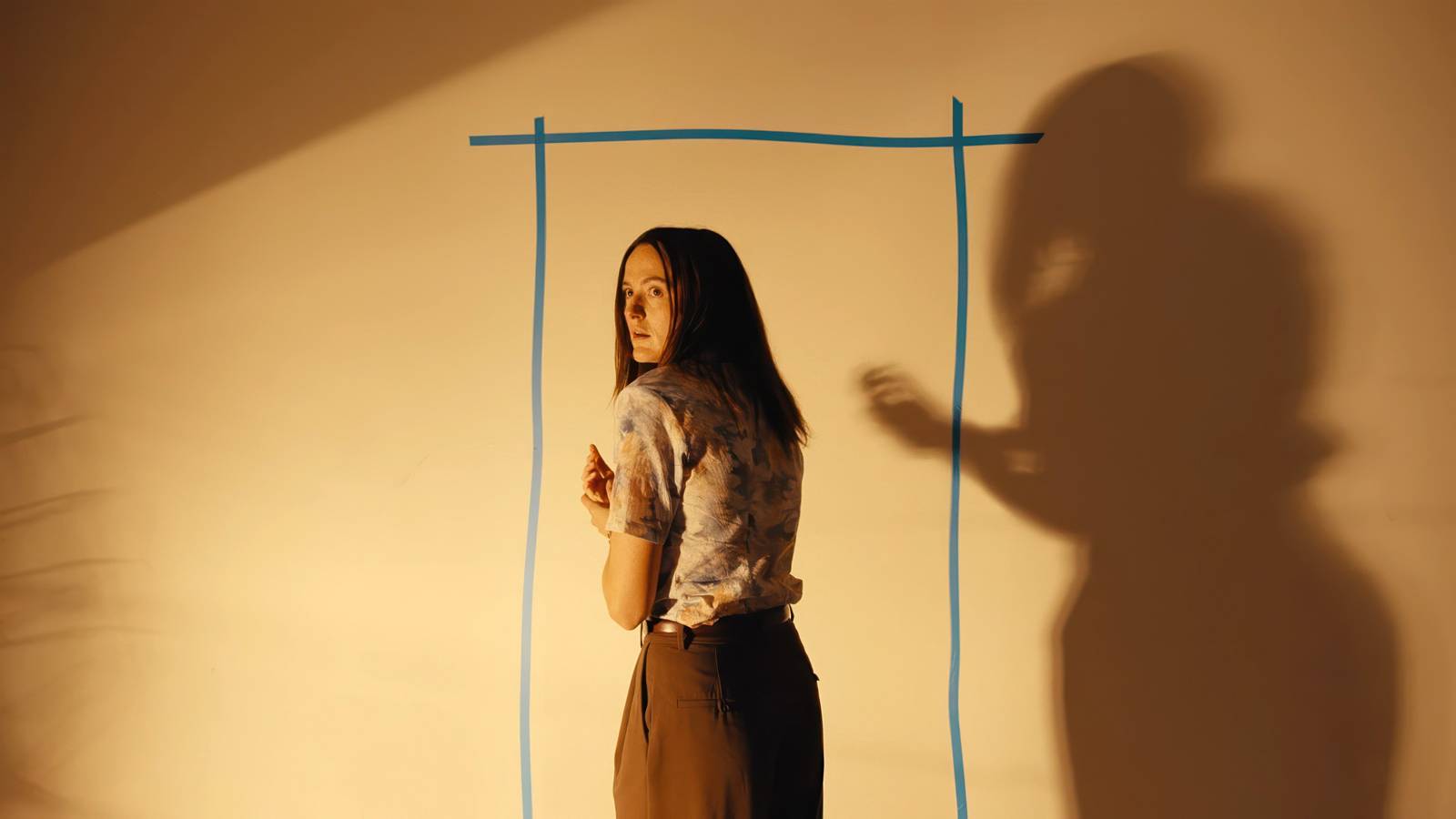
At first, the incredible discovery feels almost like a bizarre, stroke-of-luck gift. Clark begins systematically documenting, mapping, and photographing the strange space, even brazenly stealing some of the pristine vintage furniture left scattered within the anomalous rooms as he attempts to comprehend the physics of the world he has stumbled into. But the deeper Clark ventures into the endless corridors, the more undeniable it becomes that the Backrooms are not merely a fascinating architectural curiosity or a secret underground bunker. They are something infinitely more vast, alien, and predatory.
The feature film is rooted deeply in Parsons’ viral Kane Pixels web series, a project that famously originated from a solitary, cryptic 2019 4chan post detailing the concept of "noclipping" out of the bounds of baseline reality. While the original internet mythos remained a static, low-resolution image of a monochromatic yellow room, Parsons’ subsequent YouTube shorts breathed terrifying, atmospheric life into the concept. He engineered a sprawling, sophisticated analog horror universe, utilizing degraded VHS tracking textures, faux-documentary framing, and a shadowy, fictional 1990s research initiative tasked with documenting hazardous expeditions into an infinite, non-Euclidean labyrinth. Even in their initial, bite-sized digital format, Parsons’ videos proved remarkably adept at transforming empty office rooms, buzzing fluorescent light fixtures, and outdated industrial carpeting into potent sources of existential dread.
Expanding the Lo-Fi Terror
The feature-length adaptation takes that same lo-fi terror and scales it up into a massive, cohesive cinematic narrative. It constructs an entire mythology around the core feeling of being lost in a space that defies logic, all while thoughtfully advancing the intricate story Parsons had already begun telling online. More importantly, the film understands a fundamental truth about why the Backrooms resonate so deeply with audiences: they are frightening precisely because they are so mundane.

The dread of an endless maze of vaguely familiar commercial rooms, arranged in nonsensical configurations, is rooted in an unsettling psychological blend of false nostalgia and the uncanny valley. As Clark documents his increasingly perilous expeditions deeper into the maze, Parsons occasionally integrates the degraded, glitchy VHS textures that made his original YouTube uploads so hypnotic. While these sequences are used sparingly in the feature film, they are remarkably effective at imbuing the narrative with an authentic found-footage texture that grounds the supernatural terror in a chilling sense of documentary reality.
Backrooms successfully expands on the visual language of the original shorts without simply attempting to replicate them shot-for-shot, finding fresh narrative ways to make the physically impossible feel strangely, disturbingly mundane. Parsons understands that liminal spaces operate on a specific, fragile psychological mechanism: they are architectural transition zones—corridors, lobbies, transit hubs, and empty retail husks—strictly designed to be passed through, never to be inhabited by human beings. When a character finds themselves permanently trapped in a non-space, the human brain instinctively scrambles for a spatial context and geographical coordinates that simply do not exist.
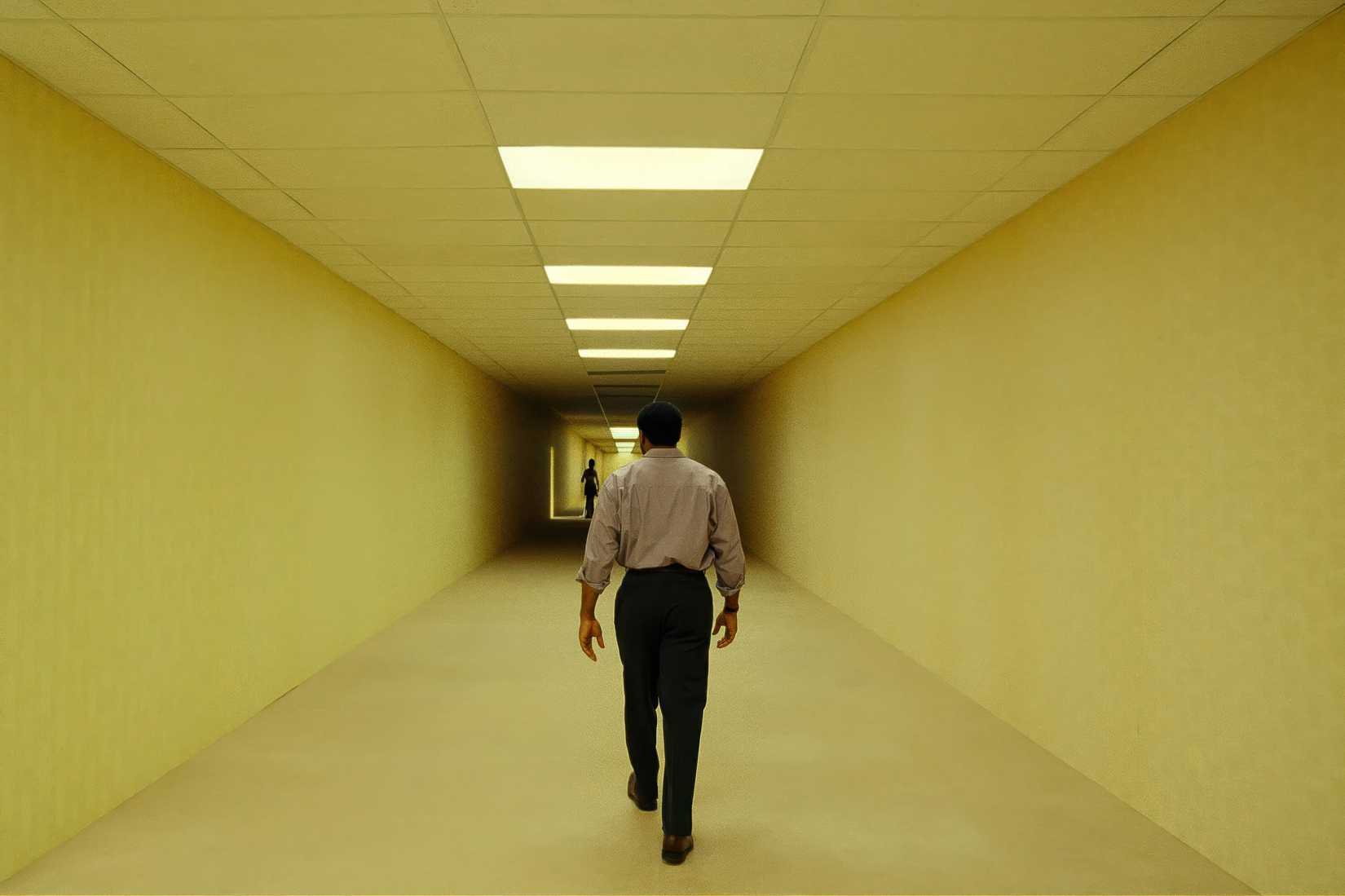
Audiences readily recognize the cheap synthetic carpet, the faded, peeling wallpaper, and the sickening, jaundiced tint of the overhead fluorescent bulbs, but their purposeless, looping arrangement creates a profound psychological dissonance. Parsons constantly weaponizes this architectural unease, contrasting the infinite scale of the hostile environment with a suffocating, claustrophobic isolation. Without relying on cheap, telegraphed jump scares or standard creature-feature tropes, the film extracts its terror from pure spatial disorientation, sensory decay, and the low-frequency hum of absolute solitude.
More Than Just a Meme
Beyond its technical mastery of spatial dread and atmosphere, Backrooms succeeds because it treats its web-native origins not as a fleeting novelty to be flattened for commercial appeal, but as a rich, foundational mythology ripe for expansion. Parsons’ original YouTube project famously captured the collective imagination of the internet by melding lo-fi found-footage aesthetics with a sprawling pseudo-history involving corporate bureaucracy, hidden government-style scientific experiments, and anomalous spatial incidents reported around the globe.
The feature film functions less like a streamlined, audience-friendly reboot and more like a high-budget, definitive chapter in that ongoing digital lore. It rewards long-time followers of the channel with subtle archival callbacks and visual motifs, while simultaneously offering newcomers a grounded, deeply human anchor through Clark’s harrowing journey and the parallel struggles of fellow trapped travelers like Mary, portrayed by Renate Reinsve. Rather than neatly wrapping up the cosmic anomaly or over-explaining the impossible geometry of the void, Parsons leaves deliberately terrifying blank spaces on the map, signaling that this theatrical release is merely the cornerstone of a much larger, unfolding narrative universe.
Backrooms stands as that rare viral internet phenomenon that genuinely earns its growing legend, proving beyond a doubt that digital folklore can be successfully translated into high-concept cinematic art. Arriving on HBO Max, the film establishes itself as the undisputed crown jewel of 2026’s horror renaissance. It serves as essential streaming for anyone who appreciates uncompromising, director-driven horror—and functions as a fair warning for viewers who might never look at a standard, fluorescent-lit office hallway the same way again.


Leave a Reply